
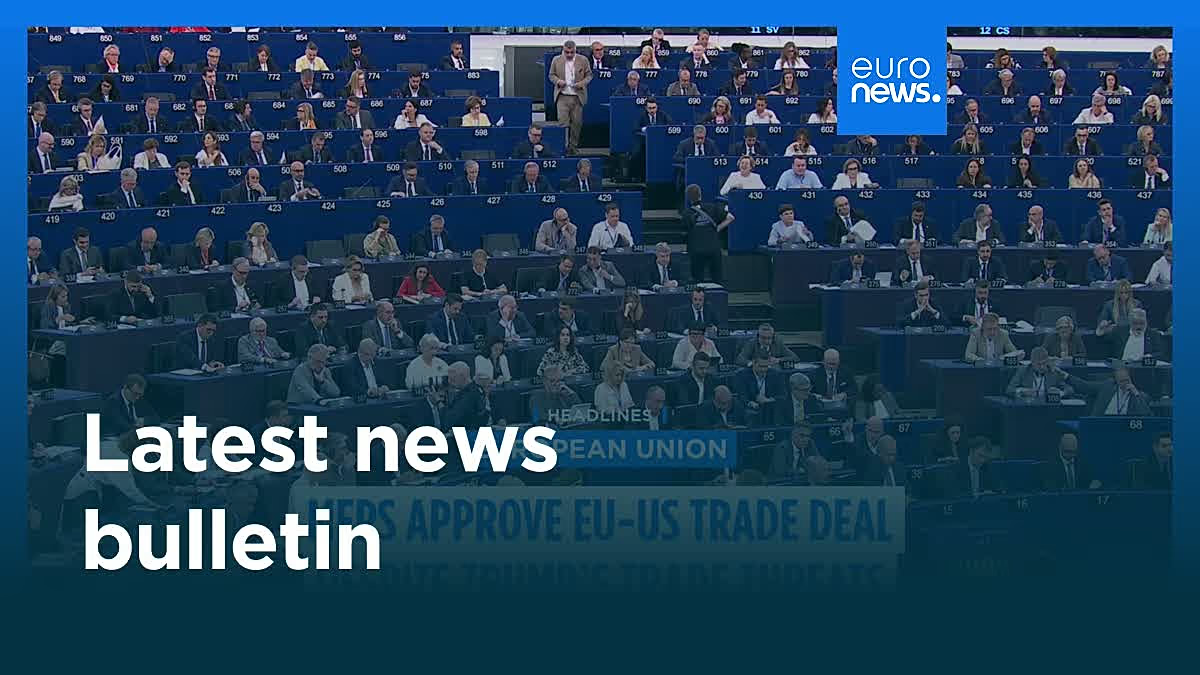


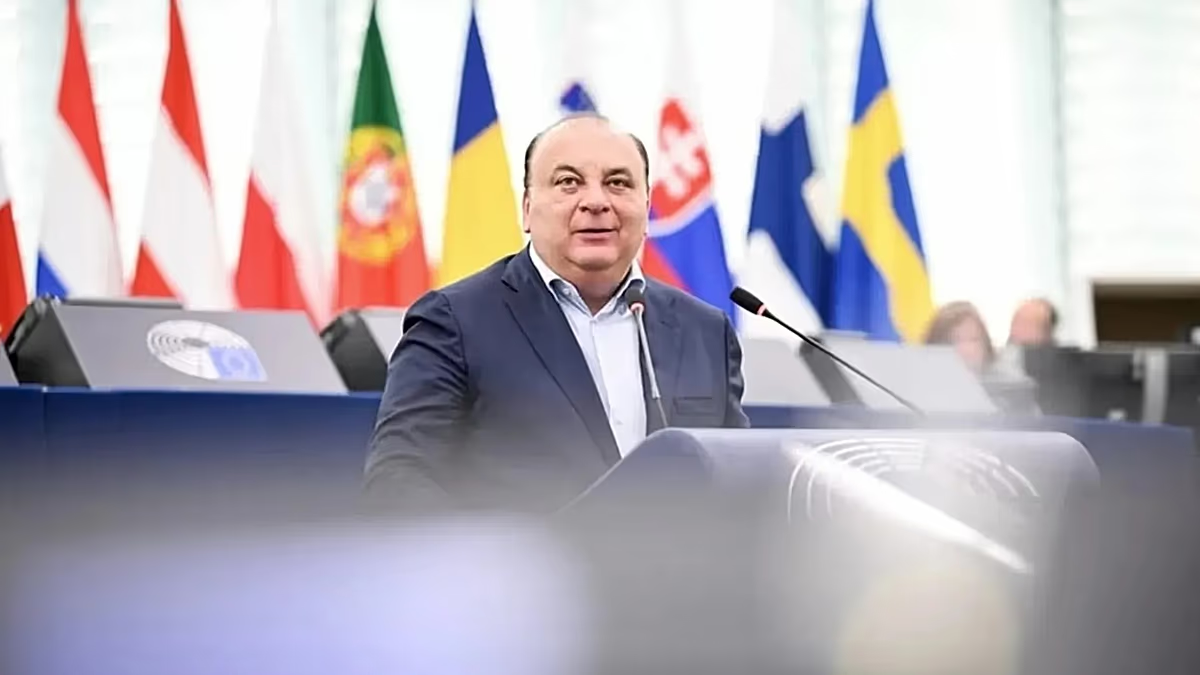
On June 16, 2026, the European Parliament took a significant and somber step in a major political corruption investigation, voting to lift the parliamentary immunity of Italian MEP Fulvio Martusciello. This action, passed with 344 votes in favor, 234 against, and 25 abstentions, clears the way for Belgian prosecutors to pursue potential charges against him. The core allegation is that Martusciello, a member of the center-right European People’s Party (EPP), was part of a network engaged in illicit lobbying and corruption on behalf of the Chinese telecommunications giant Huawei. The vote underscores a painful moment for the EU, as it confronts the vulnerability of its democratic institutions to foreign influence and internal misconduct, aiming to demonstrate that no member is above the law.
The investigation centers on a specific action: a 2021 letter, promoted by Martusciello and signed by eight Members of the European Parliament, which urged the European Commission to avoid banning foreign 5G equipment on national security grounds. While the letter did not explicitly name Huawei, prosecutors contend it was a deliberate attempt to shape EU policy in the company’s favor, coming at a time when Huawei faced intense scrutiny over security concerns. An internal EU Parliament official stated that Martusciello not only authored the letter but that his office actively lobbied fellow MEPs from his own political delegation to sign it. Furthermore, a parliamentary report notes that during the same period, Martusciello tabled amendments to competition policy resolutions that appeared to be “formulated in the interest of Huawei,” creating a pattern of advocacy that aligns suspiciously with the company’s lobbying goals.
This alleged influence campaign was not portrayed as an isolated act, but as part of a coordinated scheme. Belgian authorities suspect a corrupt network led by Huawei lobbyist Valerio Ottati, who allegedly paid MEPs to support the company’s interests. The scandal erupted into public view in March 2025, when Belgian police conducted raids on Huawei’s Brussels offices and within the European Parliament itself. The probe led to charges against five individuals, and in May of that year, Belgian prosecutors requested the immunity of five MEPs be waived. Notably, Martusciello has publicly denied any wrongdoing, stating to Euronews, “I have never received either promises or pressure to sign the letter,” and claiming only superficial knowledge of the key lobbyist, Ottati. His defense paints a picture of routine political engagement, starkly contrasting with the prosecution’s narrative of a calculated corruption plot.
However, in a decision highlighting the Parliament’s careful—some might say inconsistent—application of legal standards, immunity was maintained for three other MEPs named in the request: Italian EPP member Salvatore De Meo, Maltese Socialist MEP Daniel Attard, and Bulgarian Renew Europe MEP Nikola Minchev. The Parliament justified this by citing a “flagrant scarcity of concrete elements” in the requests against them. A fourth MEP, Italian Giusi Princi, was removed from the list as she was not in office during the alleged events. This divergence in outcomes reveals the complex legal and political calculations at play, suggesting that the evidence against Martusciello was deemed more substantial or compelling by a majority of his peers, leading to his isolation in this phase of the scandal.
The implications of this vote are profound and extend far beyond one politician’s fate. At its heart, this is a story about the integrity of the European Union’s legislative process. The allegations strike at the core of democratic governance: that elected representatives should act in the public interest, not as paid agents for a foreign corporation. The specter of MEPs being influenced by money transfers or perks like football match tickets to sway decisions on critical infrastructure like 5G networks represents a severe threat to public trust. This case forces a uncomfortable reckoning with how lobbying, a legitimate part of the political ecosystem, can cross the line into corruption, potentially allowing geopolitical rivals to undermine EU sovereignty from within.
Ultimately, the European Parliament’s decision to lift Fulvio Martusciello’s immunity is a defensive action for transparency and accountability. It is an attempt to reclaim institutional credibility by cooperating with judicial authorities and affirming that parliamentary privilege is not a shield against criminal investigation. As the case now moves to the Belgian judicial system, it will test the strength of the evidence and the robustness of the EU’s defenses against foreign interference. This saga serves as a stark warning and a potential catalyst for stricter ethical reforms, reminding everyone that the health of a democracy depends on its willingness to confront its own vulnerabilities, no matter how politically damaging that confrontation may be.