


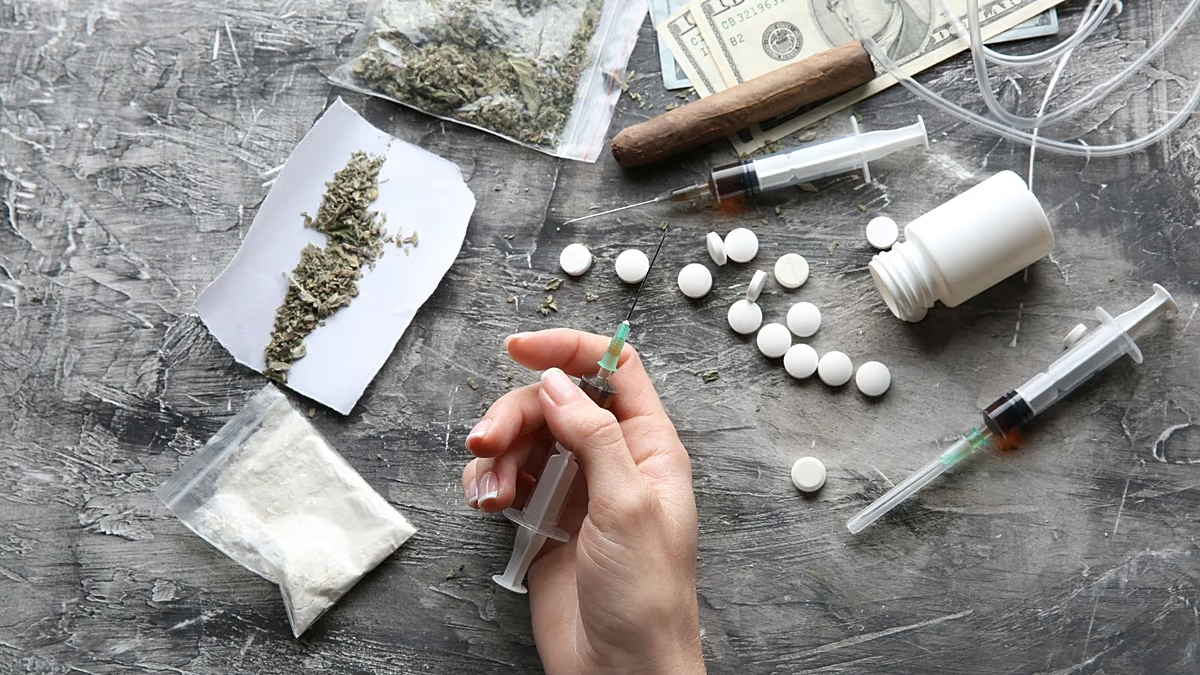
The European Union has taken a decisive and unified step to confront a drug crisis of unprecedented scale and complexity. In response to a harrowing report from the European Union Drugs Agency (EUDA) revealing that over 83 million adults have used illicit substances and that overdose deaths exceed 7,600 annually, the bloc has unanimously adopted a comprehensive new strategy. This plan represents a paradigm shift, moving from a reactive to a proactive stance, and acknowledges that the traditional lines between public health and security have blurred in the face of a volatile, adaptable, and increasingly violent market. The crisis is no longer defined merely by consumption but by a sophisticated industrial-scale criminal enterprise, with Europe now serving as both a major production hub and a destination market for potent, often adulterated, substances.
The landscape of drug use and trafficking within the EU has evolved into a formidable challenge. Cannabis remains the most consumed drug, with cocaine a prevalent second, evidenced by rising residues in wastewater across European cities. However, the market is now dominated by more dangerous trends: the proliferation of synthetic opioids like nitazenes, which have an alarmingly narrow margin between a dose and a fatal overdose, and the spread of crack cocaine, which is placing immense strain on emergency and harm-reduction services. Simultaneously, criminal networks have grown exceptionally resilient, fragmenting massive cocaine shipments—330 tonnes were seized last year—into smaller consignments via major ports like Antwerp and Rotterdam, while also shifting operations to smaller harbors and utilizing postal services to evade detection. This is coupled with a staggering domestic production capacity, with authorities dismantling thousands of illicit cultivation sites and laboratories annually.
Recognizing that this dual threat requires a dual response, the EU strategy is meticulously structured around five interconnected pillars. The first pillar focuses on preparedness, mandating faster data collection and cross-border information sharing to anticipate trends rather than simply respond to them. The second strengthens prevention and treatment, aiming to broaden access to evidence-based care and social reintegration programs, acknowledging that supporting individuals into recovery reduces long-term societal costs. The third pillar directly assaults the criminal infrastructure, calling for a dedicated ports strategy, enhanced public-private cooperation to scan postal packages, and a crackdown on the chemical precursors used in synthetic drug production. This holistic approach is designed to dismantle networks from multiple angles simultaneously.
Complementing this overarching framework is a robust Action Plan targeting the financial and logistical engines of organized crime. It proposes concrete measures such as forming alliances between major EU ports to improve coordination, introducing blanket bans on key precursor chemicals, and implementing tighter controls on high-speed boats used for trafficking. The plan also seeks to systematically target the vast finances of these criminal enterprises, understanding that profit is their primary motive. By integrating health monitoring, like city-level surveillance and distributing take-home overdose reversal medicines, with these stringent security measures, the EU aims to create a environment where the market is harder to operate in and the harms to citizens are significantly reduced.
The success of this ambitious plan hinges entirely on seamless cooperation between EU agencies and member states, who must now adapt their national structures to implement the strategy. As EUDA Executive Director Dr. Lorraine Nolan notes, this is an “aggressively improving situation” built on partnership. EUDA will serve as the evidence and monitoring hub, while Frontex will guard the external borders and Europol will act as the intelligence and coordination center for cross-border investigations. Member states will tailor priorities to their specific challenges: Belgium and the Netherlands must fortify port security, while countries like Germany, Italy, and France, with higher numbers of people who inject drugs, need to amplify health and social care initiatives. This nuanced, collaborative effort is critical.
Ultimately, this strategy embodies a profound recognition that the drug crisis cannot be solved by enforcement or healthcare alone. It is a societal challenge that demands an integrated response, protecting citizens from both the violence of organized crime and the tragedy of addiction. By weaving together stronger security, smarter prevention, compassionate treatment, and relentless international cooperation, the EU seeks not just to disrupt a market, but to build resilience within its communities. The path forward is complex, but this unified plan represents a committed and necessary step toward reclaiming safety and health for millions of Europeans.