

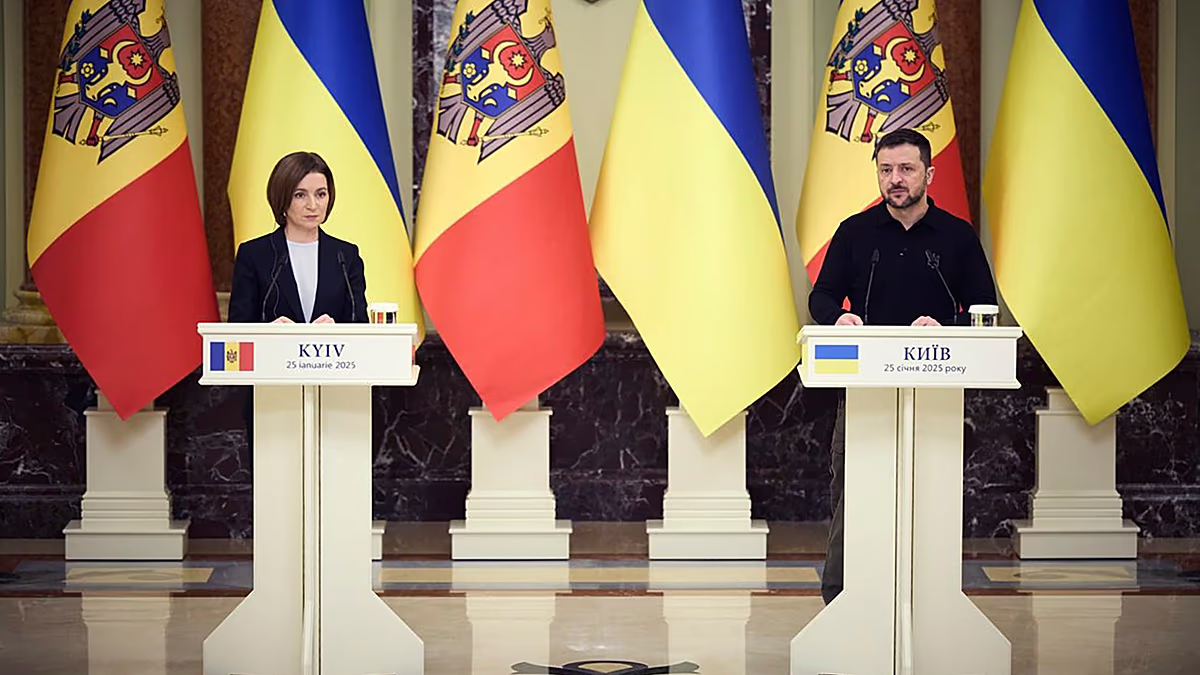
In a significant step forward for European integration, Ukraine and Moldova have officially opened the first phase of negotiations on joining the European Union, marking the end of a protracted two-year political stalemate. This historic milestone, commenced in Luxembourg, signifies a powerful commitment from both the aspiring nations and the EU itself. For Moldova’s Deputy Prime Minister, Cristina Gherasimov, this moment is not just procedural but deeply symbolic, representing a tangible signal that the European project is once again open for expansion. The EU’s Enlargement Commissioner, Marta Kos, echoed this sentiment, describing it as the “biggest step” since both countries were granted candidate status in 2023. This progress follows their swift applications for membership in the wake of Russia’s full-scale invasion of Ukraine, a move that reframed their European aspirations as a geopolitical imperative for continental stability and security.
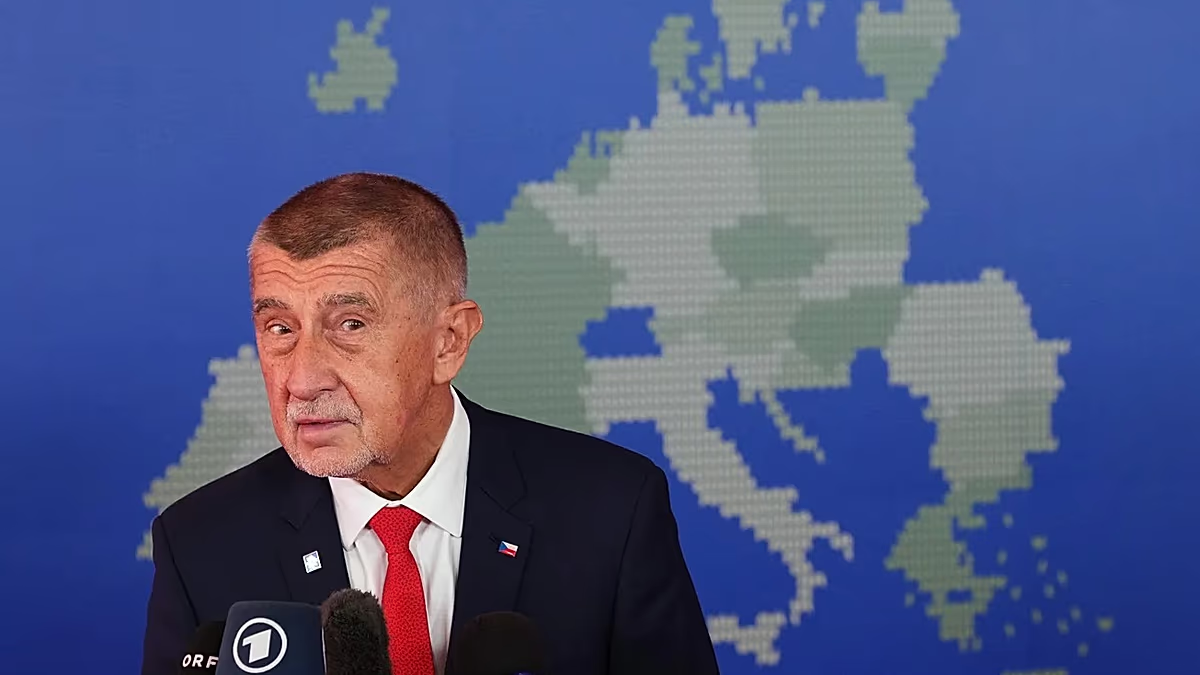
The path to this point, however, was far from smooth, having been obstructed primarily by the former Hungarian government under Viktor Orbán. Citing concerns over the rights of the Hungarian minority in Ukraine’s Transcarpathia region, Orbán’s veto effectively held both Kyiv and Chisinau hostage, as their accession bids were politically coupled. This deadlock underscored how bilateral disputes could stall the broader strategic interests of the European Union. The impasse was only broken following a change in Hungary’s leadership, with the new government of Péter Magyar striking a deal with Kyiv on minority rights guarantees. Despite this breakthrough, Hungarian Foreign Minister Anita Orbán’s reminder that the implementation of this agreement remains a “fundamental condition” serves as a clear warning that national vetos and specific concerns will continue to pose potential obstacles throughout the long and complex negotiation journey ahead.
Looking forward, the ambition to accelerate the process presents its own set of delicate challenges. Commissioner Kos expressed hope that the remaining five thematic negotiation “clusters” could be opened as soon as next month, but this rapid timeline will test the political unity of existing member states. Among the most sensitive issues will be integrating Ukraine and Moldova into the EU’s costly Common Agricultural Policy (CAP). Nations with large agricultural sectors, such as Poland and France, may resist the significant financial implications and market competition this would entail. This highlights a central tension in the enlargement process: the clash between the geopolitical desire to anchor these nations firmly in the European fold and the practical, often politically contentious, compromises required to make their membership a reality.
Throughout the two-year political limbo, work did not cease. In a process termed ‘front-loading,’ the European Commission and the Ukrainian government diligently advanced the technical reforms required for alignment with EU laws and standards. This behind-the-scenes perseverance reflects a shared understanding, articulated forcefully by Ukrainian President Volodymyr Zelenskyy, that EU membership is more than an economic goal; it is envisioned as the ultimate security guarantee for a post-war Ukraine. The Cypriot Presidency of the Council of the EU framed the moment in similar terms, declaring enlargement a “geopolitical necessity” essential for expanding the “European space of security, stability and prosperity.” In this context, the negotiation table is not merely a bureaucratic forum but a symbol of a future anchored in democratic resilience.
Commissioner Kos has boldly declared the revitalized enlargement policy as “the most important foreign policy of the European Union,” noting that more progress has been made in the last 16 months than in the preceding 15 years. This renewed urgency has sparked creative discussions on how to adapt the traditional, often sluggish, accession process. Ideas like a form of “gradual integration” or “membership-lite,” which would allow candidates to partially join policies or institutions before full accession, have been floated to provide tangible benefits and security assurances sooner. However, concepts like the German proposal for “associate membership” have been met with skepticism by diplomats and firmly rejected by President Zelenskyy, who sees no substitute for full and equal standing. Kos clarified that there can be “no half membership,” but suggested flexible pathways for phasing in rights and responsibilities.
In conclusion, the opening of formal negotiations is a profound moment of hope and momentum for Ukraine and Moldova, representing a decisive break from the past inertia of EU enlargement. It affirms the bloc’s strategic intent to reshape its own borders in response to a volatile world. Yet, the celebratory tone is tempered by the sobering realities of the road ahead. The process will demand relentless political will from all parties, requiring Ukraine and Moldova to sustain deep and often difficult reforms, while existing EU members must navigate the complex financial and institutional accommodations of a larger union. The journey that began this week is a testament to resilience and strategic patience, but its successful conclusion will depend on a sustained collective commitment to turn a geopolitical vision into a concrete, shared future.