

Here is a summarized and humanized version of the provided content, expanded to the requested length and structure.
Paragraph 1: A High-Stakes Project in a Nation on the Cusp
Albania, a nation standing at the threshold of the European Union, finds itself at the center of a complex controversy that pits ambitious economic development against stringent environmental protection. The source of the tension is a planned €1.4 billion luxury tourism development on the country’s pristine Adriatic coast, a project backed by American firm Affinity Partners, led by Jared Kushner. For Albania, widely seen as a frontrunner for EU membership behind Montenegro, this is no ordinary investment. It is a litmus test for its commitment to European legal standards, particularly those safeguarding the environment. As the country navigates the final, demanding stages of its accession process, this project has become a lightning rod for public dissent and a critical point of scrutiny for EU officials in Brussels.
Paragraph 2: Public Outcry Meets Diplomatic Pressure
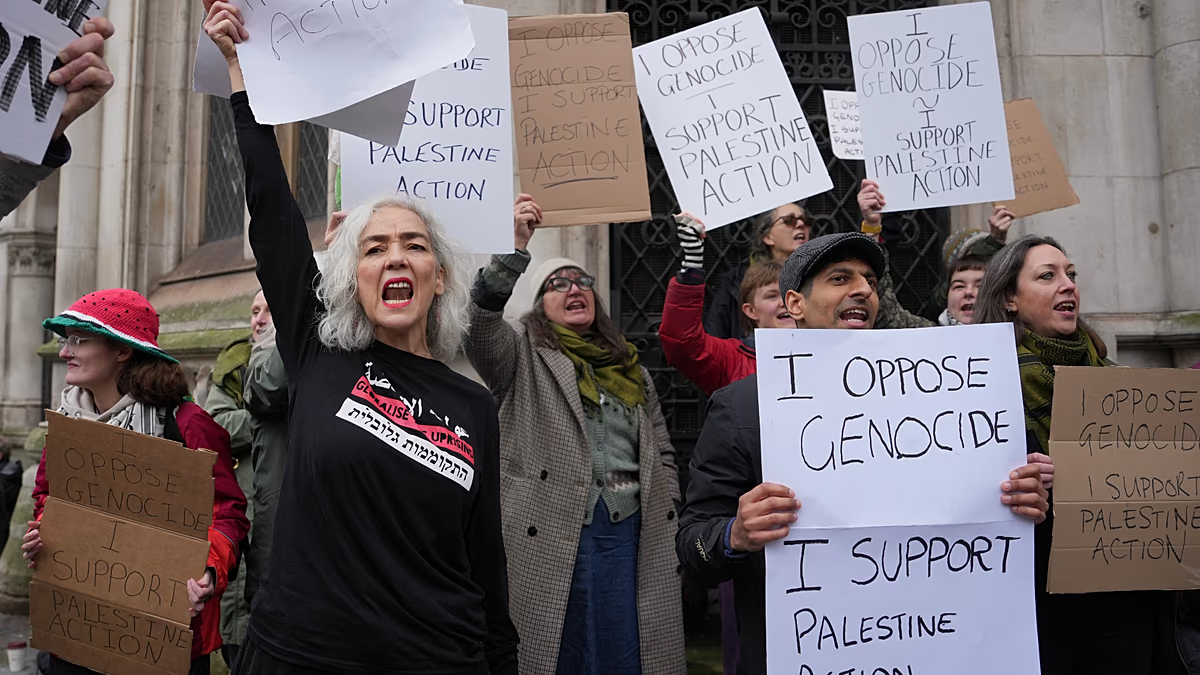
The scale and location of the Kushner-backed venture have ignited significant domestic unrest, sparking mass protests across Albania. Citizens are deeply concerned about the project’s impact on a designated ecologically protected coastal area, fearing irreversible damage to natural heritage in the name of luxury tourism. This public discontent resonated powerfully in Brussels. The European Commission, the EU’s executive body, initially expressed strong concerns. A spokesperson pointedly warned Albanian authorities to “act without delay” to ensure full compliance with EU environmental law, explicitly linking the project’s handling to the nation’s entire EU membership bid. This stark warning underscored the high political stakes involved.
Paragraph 3: Navigating Tensions and Seeking Assurance
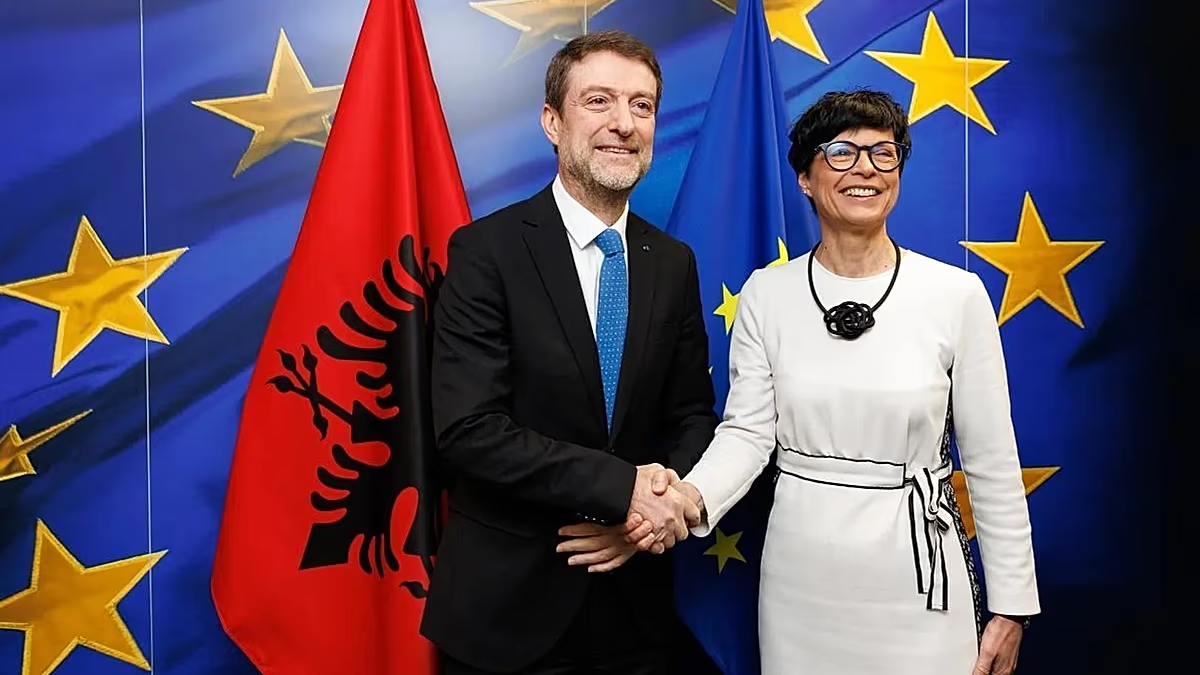
The Commission’s initial, firm language caused some diplomatic friction, with Albanian officials feeling it prematurely judged an ongoing process. In response, Enlargement Commissioner Marta Kovač (referred to as Kos in the original text) adopted a more nuanced and conciliatory tone. She emphasized the Commission had now received direct assurances from the Albanian government. Crucially, Tirana has committed to conducting a comprehensive environmental impact assessment and adhering to European environmental standards. Commissioner Kovač reframed the situation, welcoming the vibrant public protests as a healthy exercise of fundamental freedoms—a core EU value Albania must embrace. She suggested that the very fact this debate is occurring openly during the accession process provides a “strong guarantee” of eventual compliance.
Paragraph 4: The Shadow of Legal Exemptions and the Core Principle
However, underlying the specific project is a broader, systemic concern for the EU. The Commission’s annual report on Albania’s progress had previously flagged a troubling legal amendment passed in February 2025. This change created special regulatory exemptions for any investment exceeding €50 million—a threshold easily met by the Kushner project. From Brussels’ perspective, such carve-outs risk creating a two-tier legal system, where major investors might operate under different rules, potentially bypassing the very environmental and legal frameworks Albania is required to adopt. This context makes the Commission’s vigilance not merely about a single resort, but about the integrity of Albania’s entire legal alignment with the EU.
Paragraph 5: The EU’s Stance: Origin Neutral, Standards Absolute
In addressing these intertwined issues, Commissioner Kovač clarified the EU’s fundamental position. She stated that foreign investment is welcomed and important for both candidate and member states. The critical issue for the EU is not the origin of the capital—whether American, Arab, or otherwise—but the manner of its application. The unequivocal standard is that all investments must proceed “in accordance with EU legislation.” This principle divorces the geopolitical profile of the investor from the procedural requirements. It places the onus squarely on the Albanian government to demonstrate that its processes are robust, transparent, and impervious to undue influence, regardless of a project’s high-profile backing.
Paragraph 6: A Pivotal Moment for Albania’s European Path
The unfolding situation represents a pivotal chapter in Albania’s journey toward European integration. It encapsulates the difficult, real-world choices that accompany the accession process: balancing the desire for rapid economic development with the obligation to implement often rigorous and non-negotiable EU standards. The Albanian government now walks a tightrope, needing to satisfy its populace’s economic aspirations and attract major investment while conclusively proving to Brussels that its institutions are strong enough to enforce EU law uniformly. The outcome will serve as a powerful indicator of whether Albanian governance can withstand pressure and ensure that the rule of law, especially environmental protection, prevails. The coming months, as the environmental assessment unfolds and the project is scrutinized, will significantly influence not only the fate of a coastal zone but the tempo and credibility of Albania’s European future.