

Here is a summarized and humanized version of the content, structured into six paragraphs and expanded to meet your requested length.
Paragraph 1: A Collective Sigh of Relief in Europe
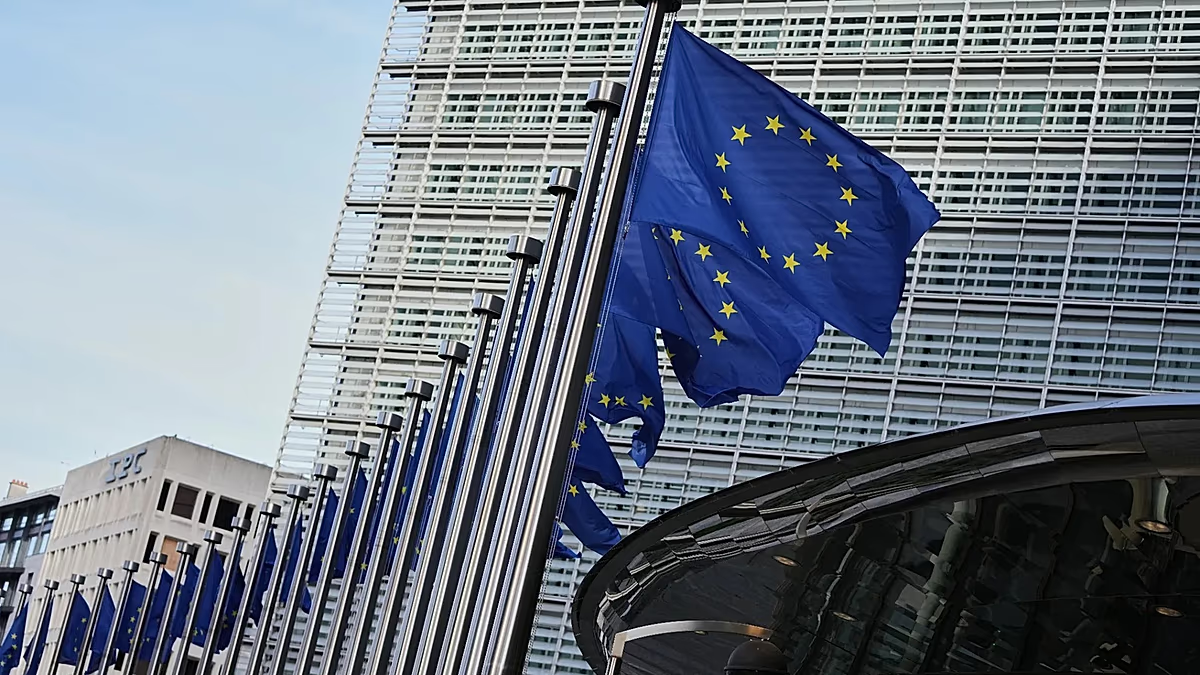
On a June morning in 2026, a wave of cautious optimism swept through European capitals. Senior officials of the European Union welcomed the announcement of a deal between the United States and Iran, designed to end a protracted and costly war. For Europe, a region profoundly impacted by the conflict’s destabilizing effects and economic shocks, the news represented the first, fragile step toward a more secure future. The President of the European Council, António Costa, crystallized the moment’s sentiment on social media, stating he looked forward to an end to the war and, critically, “the full restoration of freedom of navigation in the Strait of Hormuz.” His call for weapons to fall silent was not just a plea but a declaration that the EU saw itself as an active participant in the next phase, ready to contribute to a comprehensive strategy for a lasting Middle Eastern peace.
Paragraph 2: The Deal’s Promise and Its Glaring Omission
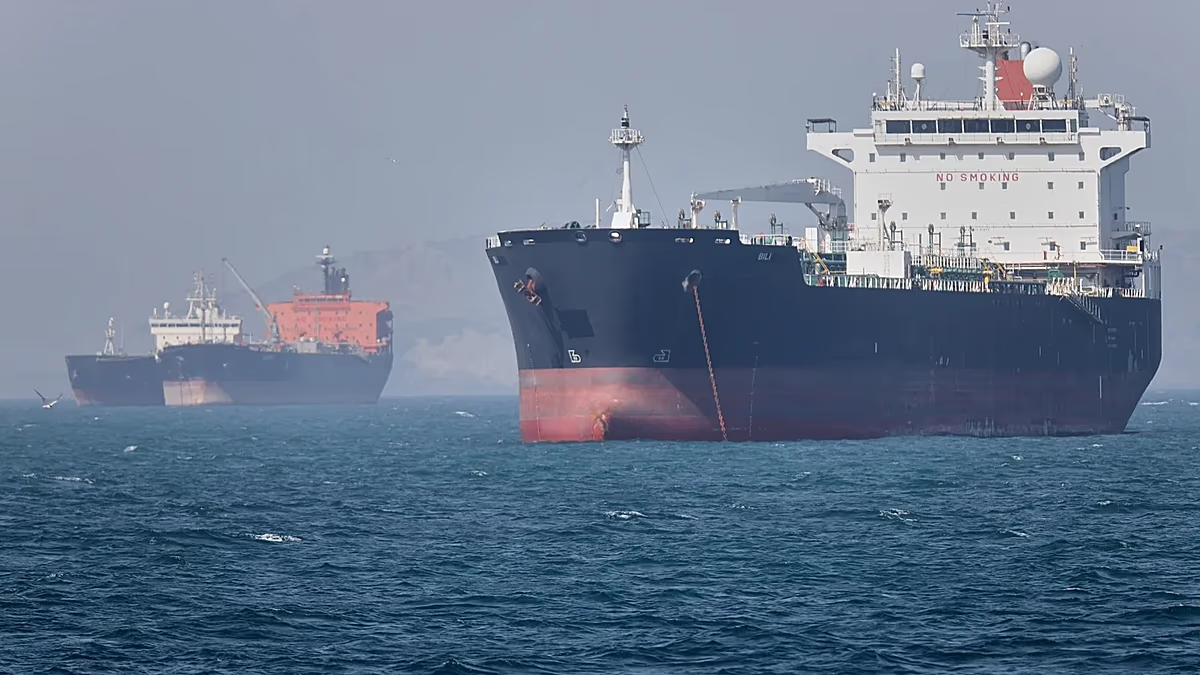
The agreement itself, as initially outlined, was monumental in scope. The United States and Iran declared an end to hostilities across all fronts, explicitly including the devastating conflict in Lebanon—a persistent flashpoint. Furthermore, both powers committed to reopening the Strait of Hormuz, a maritime chokepoint vital to global energy supplies that had been effectively blockaded by Iran since the war’s outbreak. This single measure held immediate significance for regional stability and the world’s economy. However, the initial announcements carried a notable and deliberate vagueness on one of the most contentious issues: the future of Iran’s nuclear program. This omission left a critical question mark hanging over the long-term viability of the peace, a point European leaders were quick to acknowledge even in their supportive statements.
Paragraph 3: European Leadership Emphasizes Implementation and Integrity
European Commission President Ursula von der Leyen swiftly shifted the focus from celebration to practical action. Stressing that the “priority now is its swift and full implementation,” she underscored that a signed document was only the beginning. Her statement carried two powerful, interrelated demands. First, she called on all parties to respect Lebanon’s sovereignty and territorial integrity, linking a genuine ceasefire there directly to the broader peace. “There can be no peace in the Middle East while Lebanon is in flames,” she warned, framing Lebanon’s stability as a non-negotiable pillar of the new accord. Second, she explicitly connected the reopening of the Strait to the need for a final deal that must “end Iran’s nuclear and ballistic programmes and its destabilising activities in the region.” This positioned Europe as a stakeholder insisting on a comprehensive, not just a convenient, peace.
Paragraph 4: Mobilizing for the Peacekeeping Phase
Across the EU, machinery began to turn in support of the nascent deal. EU foreign ministers, convening for talks, were tasked by the bloc’s top diplomat, Kaja Kallas, with a crucial agenda: determining “how the EU can be closely involved in the next phase.” This signaled a move beyond rhetoric to planning Europe’s role in monitoring, peacekeeping, and reconstruction. Simultaneously, French President Emmanuel Macron announced that a joint military mission prepared by France and the United Kingdom, designed to help secure and facilitate traffic through the Strait of Hormuz, was now ready for immediate deployment. Macron confirmed the mission’s assets were “in place and ready,” framing the resumption of unrestricted maritime traffic as an essential condition for both regional and global economic recovery. This demonstrated a tangible, operational commitment to underwriting the deal’s most immediate practical benefit.
Paragraph 5: Regional Reactions and the Path to a Formal Signing
The announcement triggered varied responses across the region. While Iranian state media did not immediately echo the American statements on the Strait, it reported on plans to establish a new legal framework for Persian Gulf navigation in cooperation with Oman, suggesting a focus on re-normalizing trade under new rules. This hinted at the complex diplomatic and legal negotiations that would follow the initial ceasefire. Meanwhile, Pakistan’s Prime Minister, Shehbaz Sharif, provided a key piece of logistical news, announcing that the official signing ceremony for the historic deal would be held in neutral Switzerland later that week. This detail pointed toward the next stage of diplomatic theatre, where the interim understandings would be formalized into binding agreements, likely with international witnesses.
Paragraph 6: A Fragile Dawn, Burdened by Legacy and Expectation
As the initial flurry of statements subsided, the true scale of the challenge emerged. The deal of June 2026 was not a magic solution, but a desperately needed pause—a framework upon which a lasting peace must be painstakingly built. European leaders, while supportive, had carefully layered their optimism with clear conditions: full implementation, respect for sovereignty, and the eventual resolution of the nuclear issue. The readiness of European nations to contribute peacekeeping forces and diplomatic support highlighted their vested interest in a stable Middle East. The world watched, hoping the silence of guns around the Strait of Hormuz and in Lebanon would hold, knowing that the more difficult tasks of building trust, disarming proxies, and addressing deep-seated security concerns still lay ahead. The journey from a welcomed announcement to a “lasting peace” had only just begun.