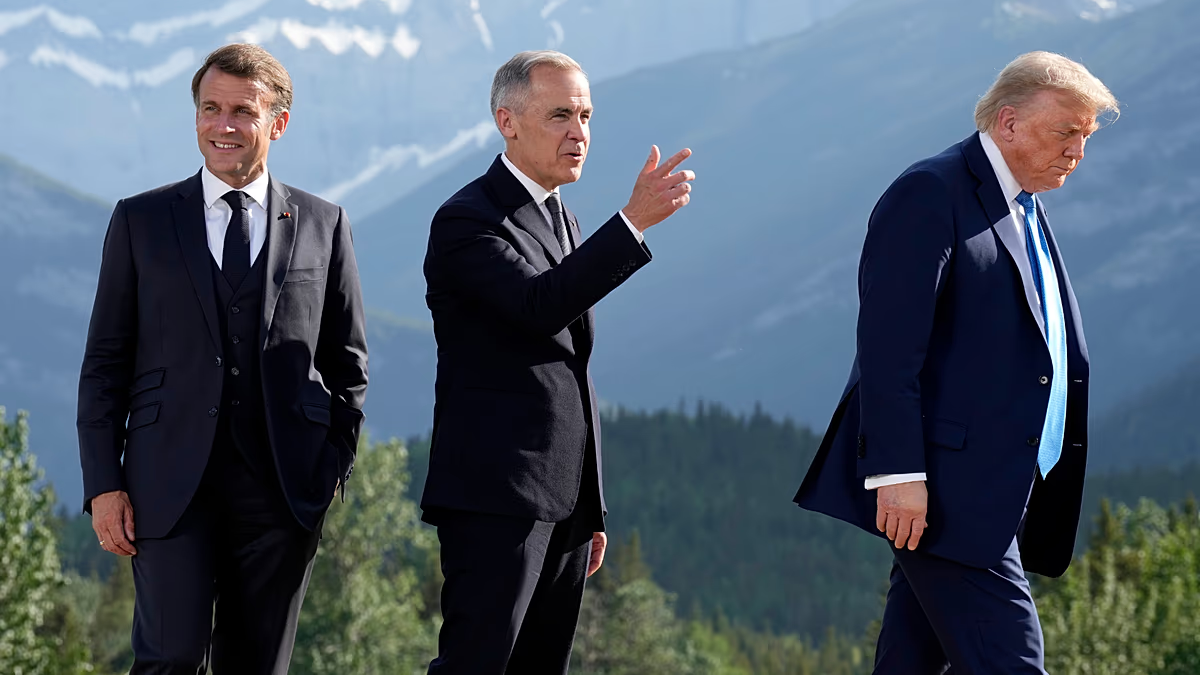


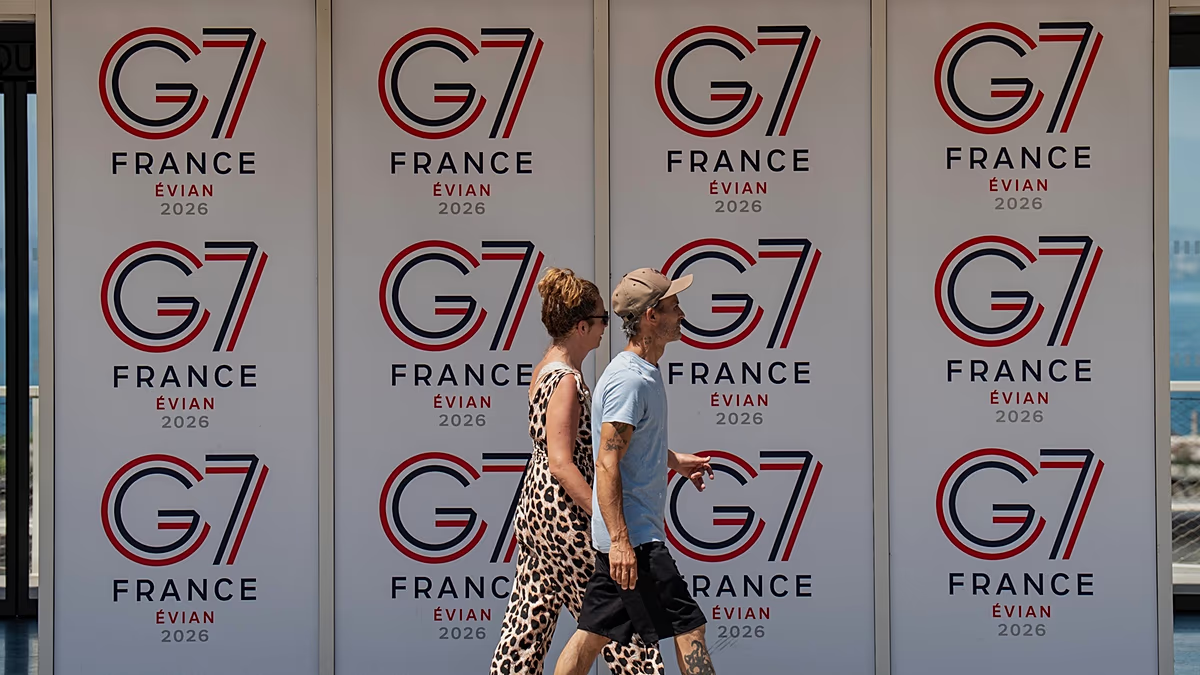
Paragraph 1: The G7 Summit in Évian, France, commenced under a cloud of transatlantic tension, with trade disputes threatening to overshadow the agenda of global cooperation. The gathering of the world’s leading advanced economies—Canada, France, Germany, Italy, Japan, the United Kingdom, and the United States, joined by the European Union—was poised to address pressing international challenges. However, the arrival schedules of leaders, including US President Donald Trump slated for a late afternoon appearance, were overshadowed by a stark economic threat. Just hours before the summit’s formal opening, President Trump directly targeted host nation France, threatening to impose 100% tariffs on iconic French wines and champagnes. This retaliatory warning was a response to France’s pioneering digital services tax, a 3% levy on revenues earned by large tech companies operating within its borders, a policy seen by the US as unfairly targeting American tech giants.
Paragraph 2: This threat exposed a deep and persistent rift between the US and its European allies on digital governance and trade fairness. The French tax, aimed at companies like Google, Amazon, Facebook, and Apple, is rooted in the widespread European belief that the current international tax system allows these digital behemoths to book profits in low-tax jurisdictions, despite deriving enormous value from users in countries like France. Trump framed his ultimatum as a defense of American companies, telling the French President, Emmanuel Macron, that removing the tax would eliminate the “pressure.” The timing was particularly sensitive, coinciding with a crucial European vote on a recent US-EU trade deal. Furthermore, it threatened a sector—wines and spirits—that France had been specifically seeking to protect within that very agreement, highlighting the complex and often contentious nature of modern trade relations.
Paragraph 3: Beyond bilateral spats, the summit’s agenda was heavily focused on critical geopolitical flashpoints, with Iran and Middle Eastern security taking center stage. A significant development preceding the meeting was a ceasefire announcement concerning the strategic Strait of Hormuz, a vital maritime chokepoint for global oil and gas shipments. This deal, brokered with international involvement, was welcomed by the International Maritime Organization (IMO) as a “crucial return to peace, dialogue, multilateralism and diplomacy.” The IMO’s Secretary-General emphasized its importance for the safety of seafarers and the fundamental principle of freedom of navigation, while also cautioning that careful implementation would be necessary to ensure lasting security guarantees in the volatile region.
Paragraph 4: European powers, coordinated as the “E4” (France, Germany, Italy, and the United Kingdom), expressed cautious optimism but linked regional stability to broader nuclear diplomacy. In a joint statement, these nations welcomed the ceasefire and stressed the urgent need for “unconditional and unrestricted” navigation through the Strait of Hormuz. They committed to participating in a defensive maritime mission to protect commercial shipping. However, they explicitly tied the prospect of lifting economic sanctions on Iran to “clear, verifiable steps” by Tehran to demonstrate that its nuclear program is solely for peaceful purposes. This stance illustrated the dual-track approach of European diplomacy: seeking immediate de-escalation while maintaining long-term pressure on the core issue of nuclear proliferation.
Paragraph 5: Against this backdrop of trade tension and geopolitical maneuvering, President Macron’s role as host was one of delicate diplomacy. His primary challenge was to navigate the profound differences between the Trump administration’s “America First” unilateralism and the European commitment to multilateral solutions. The summit’s working dinner, themed around “major international challenges,” was designed to foster dialogue on these very issues. Macron’s objective was to find common ground, particularly on digital taxation where Europe seeks a unified global framework, and on Iran, where the U.S. and European approaches have frequently diverged. The success of the gathering would be measured by its ability to produce cohesive, actionable statements from a group appearing increasingly fractured.
Paragraph 6: In essence, the opening of the G7 summit presented a microcosm of the world’s current political and economic crosscurrents. The stark confrontation over digital taxes revealed the growing pains of a global economy struggling to adapt to the digital age, where national regulations clash with borderless corporations. Simultaneously, the cautious diplomacy around the Strait of Hormuz ceasefire underscored the persistent threat of regional conflict to global economic stability. As leaders convened in Évian, the world watched to see if this forum of historic allies could forge a collaborative path forward on technology, trade, and security, or if national interests and bilateral threats would dominate, rendering the group a platform for discord rather than unity. The stakes were high for the credibility of international cooperation itself.