


The International Aerospace Exhibition (ILA) in Berlin recently transitioned from a trade-focused event to a public spectacle, drawing large crowds eager to witness the roar of fighter jets, the impressive silhouettes of transport aircraft, and the dynamic displays of helicopters. As the fair’s largest single exhibitor, the Bundeswehr dominated the scene, utilizing significant portions of the site not just for static displays but for active engagement. Beyond the adrenaline of flight demonstrations, a core mission for the military was visible: recruiting the next generation. Careers advisers and active-duty soldiers manned numerous stands, offering glimpses into military life, allowing hands-on exploration of cockpits, and facilitating conversations with pilots, all to illustrate the vast array of missions and career paths within the armed forces.
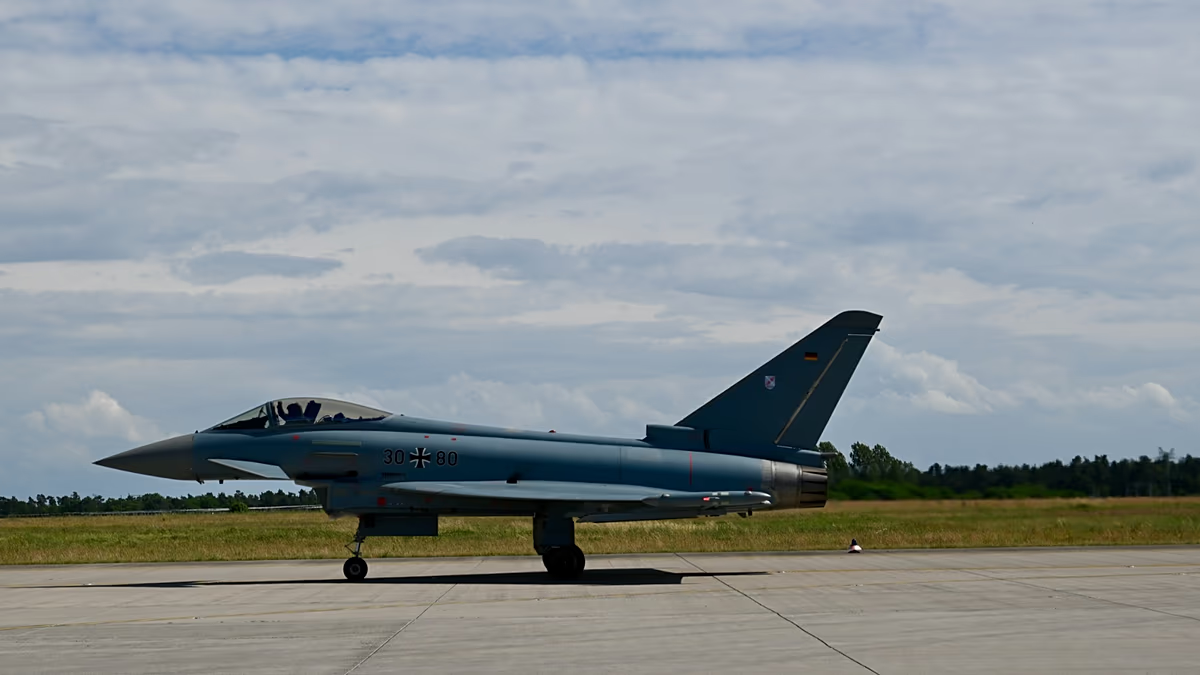
Leading this substantial Bundeswehr presence was Colonel Kristof Conrath of the Air Force. In an interview, he explained the strategic thinking behind the exhibition’s content. His role as project manager is intrinsically linked to his position at the Air Force Troops Command. For this edition, the guiding principle was to showcase cutting-edge, relevant capabilities. This meant presenting new assets like the Navy’s advanced P-8A Poseidon maritime patrol aircraft and highlighting systems that have gained urgent relevance, such as various drone platforms and air defense missile systems—direct reflections of modern conflict dynamics observed in Ukraine. Furthermore, to mark the Air Force’s 70th anniversary, four aircraft, including the A400M, CH-53, Tornado, and Eurofighter, were displayed in special commemorative liveries, connecting past legacy with present strength.
Reflecting on the profound shift since his first ILA organization in 2022—the year of Russia’s full-scale invasion of Ukraine—Colonel Conrath noted a fundamental transformation in both the exhibition’s tone and public perception. He described a move away from a past where Germany, “surrounded by friends,” could afford to scale back its military visibility and capabilities. Today, there is a newfound pride and openness in displaying advanced weaponry, underpinned by a public understanding of the necessity for a capable defense. This aligns with the national discourse around the “Zeitenwende,” or watershed moment, and the special defense fund, allowing citizens to see tangible results of increased investment in security.
A particular point of pride for Colonel Conrath and his team is the public response and the opportunity for direct outreach. On public days, the focus intensifies on presenting the Bundeswehr as an attractive, modern employer. By showcasing the wide variety of technical, operational, and support roles, they aim to spark interest and provide immediate, detailed career counseling through on-site youth officers and advisers. This holistic approach turns the ILA into a powerful platform for bridging the gap between the military and civilian society, demystifying service, and addressing recruitment needs in a competitive labor market.
The conversation naturally turned to technological evolution, specifically the rise of drones. When asked if fighter jets remain relevant, Colonel Conrath was unequivocal. While acknowledging the revolutionary impact of drones, he argued for the indispensable role of a human decision-maker physically present in the battlespace. He cited vulnerabilities like GPS jamming or disrupted communications, scenarios where a pilot in a cockpit provides critical resilience and judgment. He envisions a future where a “person in the loop” in a platform like a Eurofighter or F-35 may lead swarms of other systems, combining advanced technology with irreplaceable human oversight. He also noted innovative concepts, like optionally piloted aircraft, as exciting additions to a rapidly evolving ecosystem where militaries must constantly adapt to new threats.
Regarding the spectacular flight displays that captivated audiences, Colonel Conrath described an “all in” philosophy. The team aimed to fly every type of fighter jet and available helicopter model in the Bundeswehr inventory, operational commitments permitting. The result was a diverse aerial parade featuring everything from heavy transport planes to in-flight refueling demonstrations. This ambition, however, had to be carefully balanced with the practical constraints of hosting an airshow at Berlin’s active commercial airport, requiring precise coordination with scheduled civilian air traffic. The final balance, he believes, successfully provided visitors with a comprehensive and thrilling overview of German air power, concluding an event that celebrated history, showcased present capabilities, and engaged the public on the future of national defense and aerospace innovation.