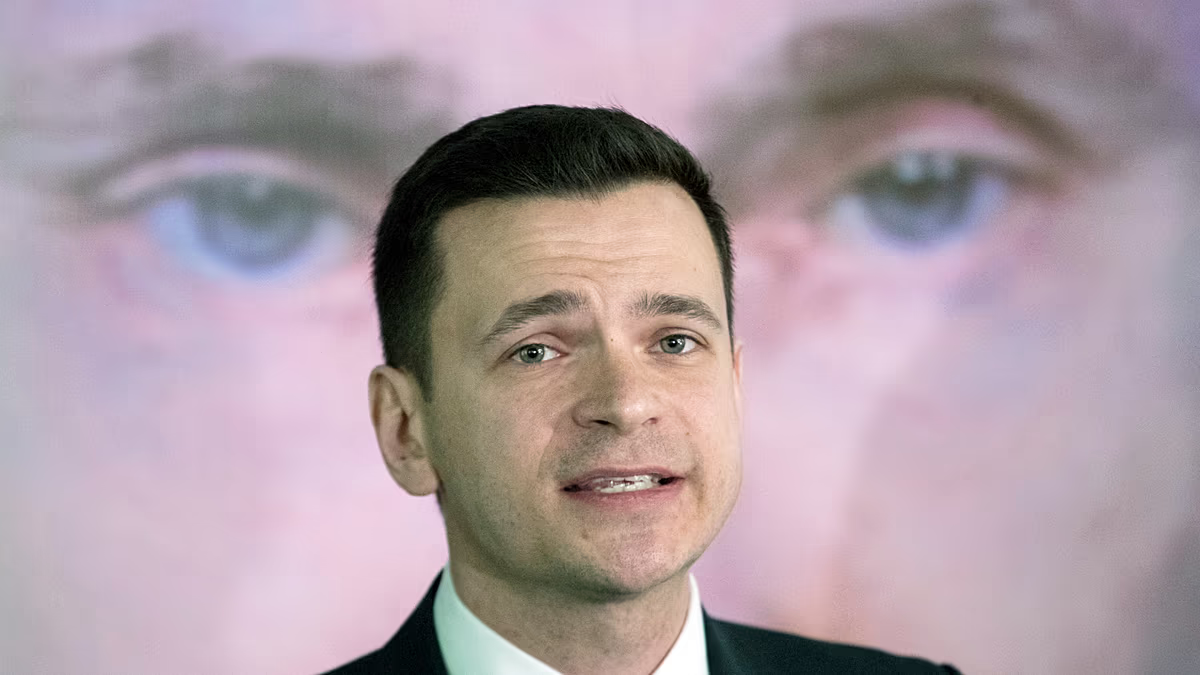



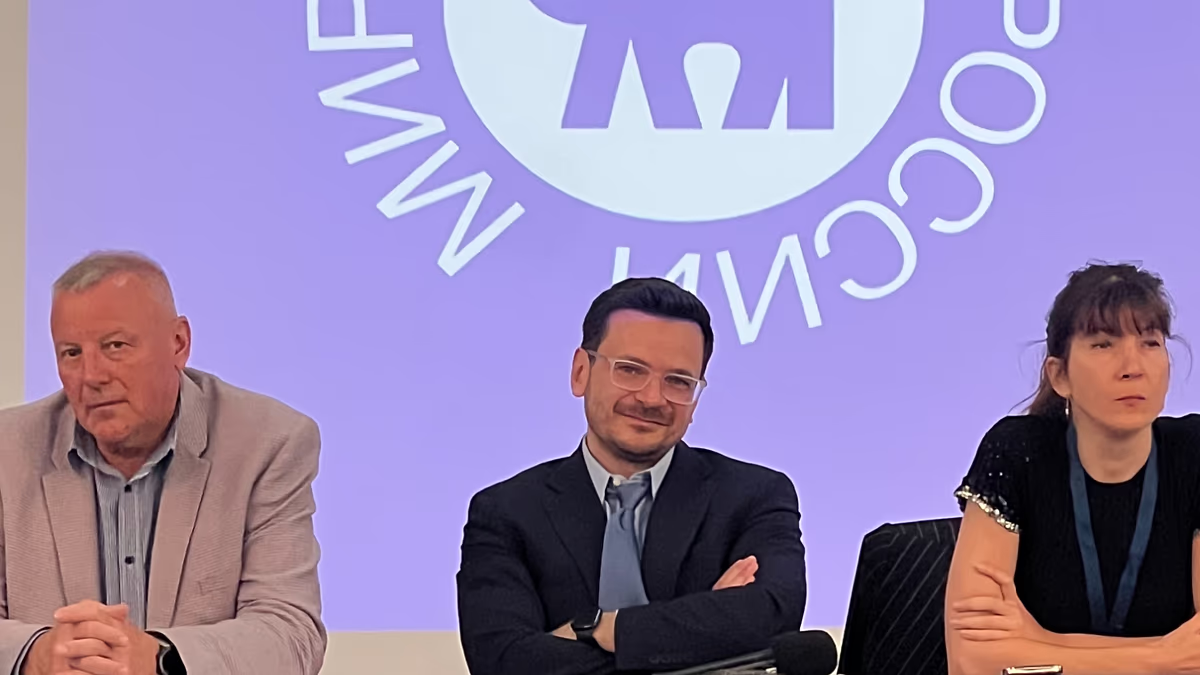
Over a tense twelve-hour period in Berlin on June 12th and 13th, a gathering of 126 delegates marked a significant, if fraught, attempt to reconstitute Russian opposition politics in exile. The congress, for a new group initially named the Peaceful Forces of Russia, culminated in the election of prominent opposition figure Ilya Yashin as chairman with roughly 60% of the vote. In a symbolic move, the party streamlined its name to “Peaceful Russia,” deliberately shedding the word “Forces” to distance itself from the militaristic repression now synonymous with the current Russian state. This event was not merely an organizational formality; it was a poignant effort to plant a flag for a democratic future for Russia from beyond its borders, acknowledging the profound risks and challenges inherent in such a mission from exile.
Central to this project is Ilya Yashin, a seasoned politician and former political prisoner whose personal courage is unquestioned. Delegates like Alexander Archagov expressed high hopes in Yashin’s proven resilience and his eloquence, seeing these as vital tools for uniting a scattered opposition. “The ability to inspire people is the most important thing,” Archagov emphasized, highlighting a desperate need for a figure who can reignite hope both within a besieged Russian society and among the diaspora. Yashin himself is starkly realistic about the monumental task ahead. He openly acknowledged that operating legally inside Russia is impossible under the current regime, and that any engagement with supporters there carries severe danger. Yet, he firmly stated, “Our main target audience is in Russia,” committing the party to serve as a voice for the millions silenced inside the country.
In framing this struggle, Yashin invoked a potent, albeit double-edged, historical parallel: Vladimir Lenin’s Bolsheviks, who orchestrated a revolution from exile. He suggested that history shows how movements abroad can ultimately precipitate change at home. However, this analogy is deeply problematic, as the Bolshevik path led not to democracy but to a brutal one-party dictatorship. This historical reference underscores a core tension within the opposition: the lack of a successful model for a democratic force returning from exile to govern. It is a history littered with failure on that count, a fact that hangs heavily over this new initiative and invites scrutiny of its strategic vision.
This scrutiny came sharply into focus through the critical voice of Maxim Reznik, a respected liberal politician and longtime ally of Yashin. In a startlingly frank assessment, Reznik expressed a fear that the new party might be replicating the very authoritarian structures it seeks to replace. “I do not want Yashin to turn into a mini-Putin,” he stated, warning against the emergence of yet another self-centered “Moscow political boss” within opposition ranks. He criticized Yashin’s approach as attempting to “recreate a party modeled on the Communist Party of the Soviet Union,” a top-down, centralized entity that contradicts the democratic, pluralistic values the opposition claims to champion. Reznik’s critique points to a desire for a leader who can genuinely unite diverse regions and voices as equals, a quality he currently finds lacking.
Reznik’s concerns echo a broader, long-standing diagnosis of the Russian democratic opposition’s ailments: chronic fragmentation and debilitating internal competition. As Russia expert Andreas Heinemann-Grüder notes, personal ambitions and ideological squabbles have persistently hampered unity. For the Peaceful Russia project to avoid these pitfalls, he argues, it must learn from the experiences of older liberal parties like Yabloko and actively embrace a decentralized structure. It must strive to reflect Russia’s vast ethnic and regional diversity and meaningfully incorporate the perspectives of the diaspora spread across the EU. This is a necessary evolution, as the old models of Moscow-centric opposition politics have repeatedly failed to gain broad national traction.
Thus, the Berlin congress was more than a founding meeting; it was a microcosm of the immense challenges facing Russia’s democratic aspirations. It showcased a brave but precarious attempt to build a credible alternative, embodied in the elected leader Ilya Yashin, while simultaneously exposing the deep-seated fears of reproducing autocratic habits. The party’s success hinges on its ability to navigate a narrow path: inspiring a persecuted domestic audience from afar, forging genuine unity among a scattered and diverse opposition, and constructing a democratic organizational culture from the ground up. Whether Peaceful Russia can become a true vehicle for change or merely another chapter in the opposition’s troubled history depends on its capacity to internalize the tough lessons of the past while innovating for an uncertain future. The debate in Berlin revealed that the journey has begun, but the road ahead is perilous and uncharted.