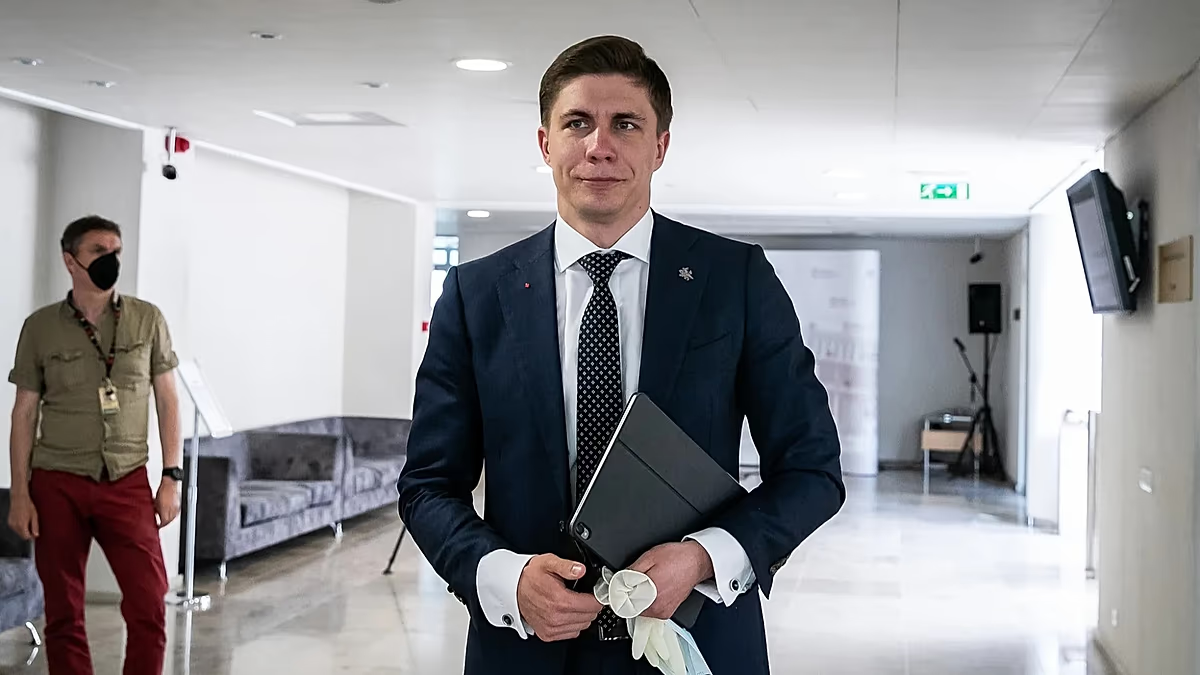



In mid-June 2026, the Czech government, a coalition led by billionaire populist Andrej Babiš’s ANO party and including the far-right SPD, approved a seismic shift in how the nation’s public media is funded. The cabinet signed off on legislation that would abolish the long-standing television and radio licence fee system, replacing it with direct financing from the state budget. For Czech Television (Česká televize) and Czech Radio (Český rozhlas), this means moving from a hypothecated fee paid by households—a financial model designed to create a buffer from political influence—to receiving a fixed annual sum determined by the government of the day. Culture Minister Oto Klempir presented the change as a necessary modernisation, stating it brings the Czech Republic in line with most European Union countries that have abandoned what he called an “outdated” method. However, this administrative rationale has been met with profound alarm, sparking what many see as a fundamental battle for the soul of Czech democracy.
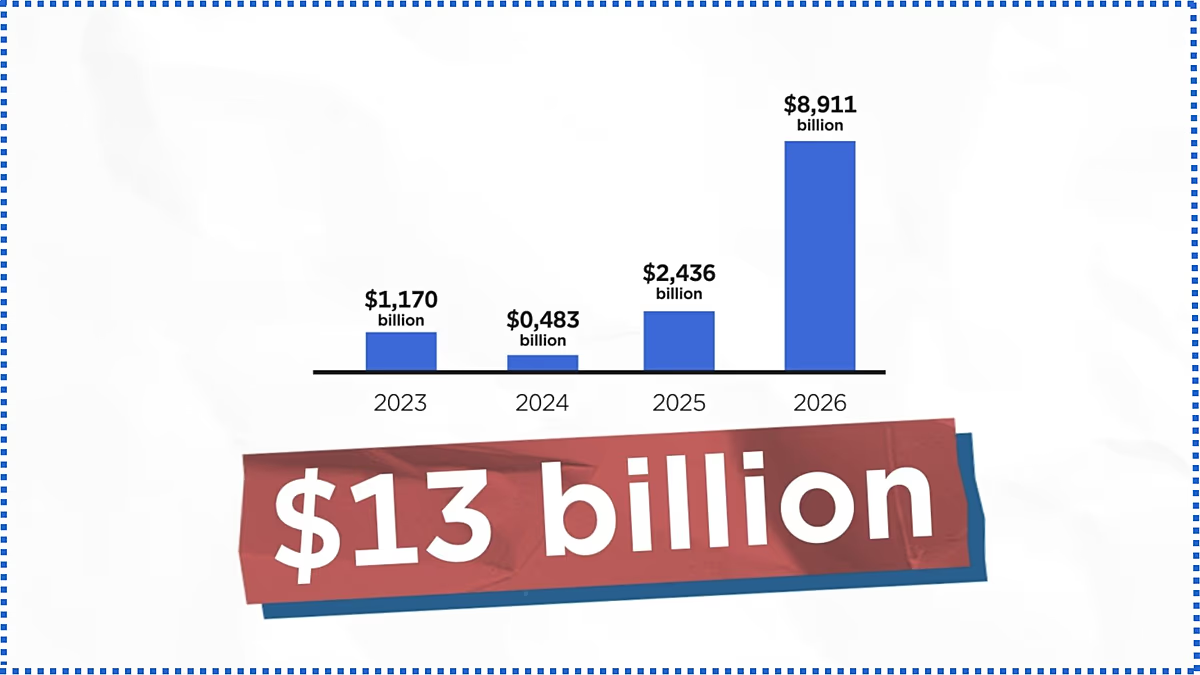
The immediate outcry has been fierce and widespread. Journalists and staff at both public broadcasters, recognising an existential threat to their editorial independence, have announced a 24-hour strike. Their fear is simple and well-founded: when your annual budget is a line item in the state finances, approved by the very politicians you are tasked with scrutinising, your ability to report freely and critically is inherently compromised. The government, particularly Prime Minister Babiš, has framed the move as a matter of oversight and fiscal responsibility, complaining of a lack of cost control at the broadcasters. Yet, to media professionals and a concerned public, this sounds like a pretext. The proposed fixed funding is pegged to pre-2024 licence fee revenues, effectively instituting a cut, as a previous administration had increased the fees. This financial squeeze, critics argue, is the first tool of control—creating a scenario where broadcasters may feel compelled to soften criticism to avoid further budgetary retaliation.
This is not an abstract concern confined to newsrooms; it has spilled onto the streets of Prague in a powerful display of public dissent. The legislation was a central grievance at a massive anti-government demonstration in March 2026, which saw over 200,000 citizens rally to defend press freedom. This public anger underscores that for many Czechs, their public broadcasters are not mere state institutions but vital pillars of a healthy society—trusted sources of news in an era of disinformation and political polarisation. The proposed reform is perceived not as bureaucratic tidying, but as a brazen attempt by a government with populist and far-right allies to tame critical journalism. The public’s reaction signals a deep understanding that when you change the funding, you ultimately aim to change the message, moving from independent public service to state-aligned media.
International press freedom organisations have echoed these alarms in the starkest terms. Reporters Without Borders (RSF) has condemned the legislation as “absurd,” warning that the “drastic” funding reduction and the new model “create a political precedent for further disproportionate interference.” Their analysis cuts to the core of the issue: this is not just about Czech crowns and euros, but about democratic precedent. RSF warns that the path leads to a “weakened independence of public broadcasting,” which it bluntly calls “a dead-end street for democracy.” The group has called upon the European Commission to intervene, highlighting that the erosion of media freedom in one member state is a concern for the entire European project. This international condemnation places the Czech government’s domestic policy under a glaring global spotlight, framing it as part of a wider, worrying trend of democratic backsliding.
Despite the cabinet’s approval, the legislative journey is far from over. The bill must now navigate both chambers of the Czech Parliament—the Chamber of Deputies and the Senate—before potentially reaching the desk of President Petr Pavel. This process provides critical opportunities for scrutiny, amendment, and, ultimately, for citizens and civil society to continue applying pressure. The planned implementation date of 1 January 2027 is not a foregone conclusion. Every parliamentary debate and vote becomes a new arena for this public debate, a test of whether political representatives will heed the concerns of journalists, civil society, and the tens of thousands who protested. The coming months will reveal the strength of Czech democratic institutions in checking a move many see as an executive power grab.
In essence, the controversy transcends a technical change in accounting. It represents a pivotal struggle over who controls the public narrative. The licence fee, while sometimes unpopular as a household expense, was designed as a covenant between the public and its broadcasters: citizens fund a service that is accountable to them, not to the government of the day. Replacing it with state budget financing fundamentally alters that relationship, making the media accountable to the political executive. The strikes, the protests, and the international warnings are a collective plea to preserve a cornerstone of democracy. As this bill moves forward, the Czech Republic is deciding not just how to pay for its public media, but what kind of democracy it wishes to be—one where power can critique itself through a free press, or one where the government holds the purse strings and, by extension, seeks to hold the pen.