


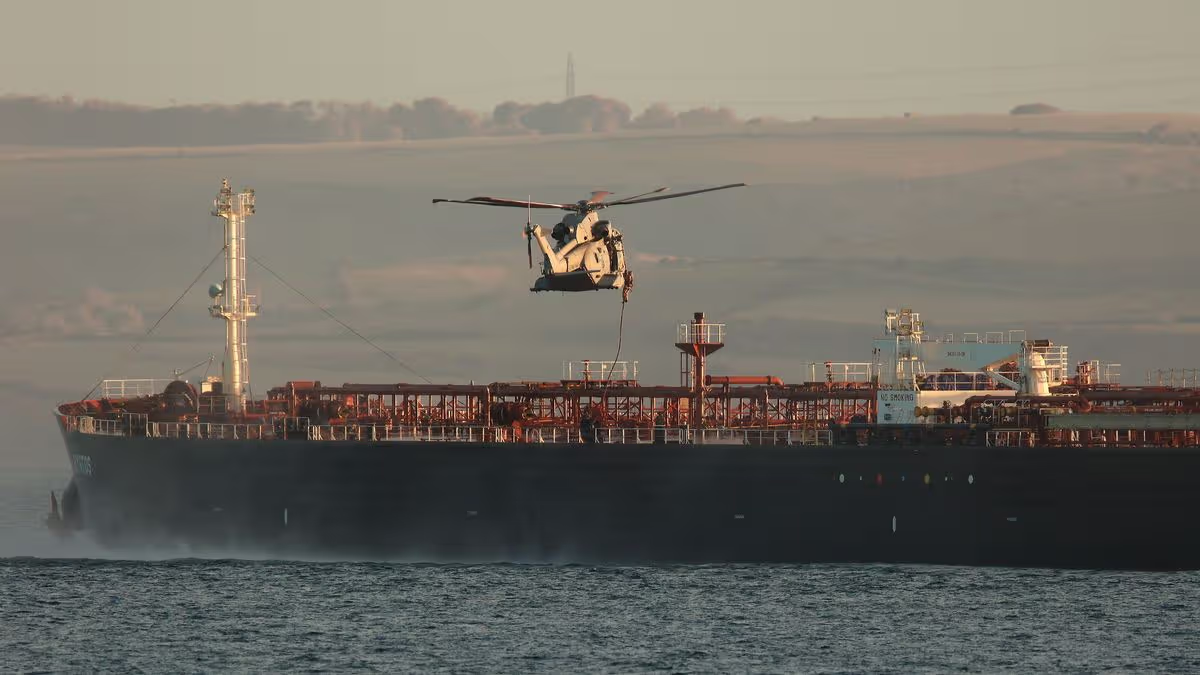
The disruption of a Russian shadow fleet tanker in the English Channel marks a significant and dramatic escalation in the United Kingdom’s enforcement of sanctions against Moscow, intertwining high-seas military action with complex legal and geopolitical ramifications. In the early hours of a Sunday in June 2026, the relative calm of the international waterway was shattered as Royal Marine commandos, supported by officers from the National Crime Agency (NCA), stormed and seized the vessel Smyrtos. This audacious operation, the first of its kind led by UK forces, represents a tangible transition from policy declaration to physical interdiction, directly targeting the clandestine network Russia uses to circumvent Western oil embargoes and fund its war effort.
At the heart of this unfolding legal drama is the ship’s captain, 38-year-old Indian national Ajay Pant. In a move that underscores the personal accountability now being pursued, Pant has been formally charged with contravening UK sanctions law, specifically for allegedly supplying prohibited Russian oil products to a third country. He now faces the prospect of a severe penalty, including a potential ten-year prison sentence, as he awaits his appearance before Southampton Magistrates’ Court. Meanwhile, his 24 crew members, hailing from Georgia and India, remain aboard the detained Smyrtos, which is currently anchored off the Dorset coast near Weymouth under a formal government order preventing its departure. This situation highlights the human dimensions of the shadow fleet—often staffed by seafarers from non-belligerent nations caught in the crossfire of global sanctions enforcement.
The political and strategic messaging from the UK government has been unequivocal and starkly delivered. In his first statement as Defence Secretary, Dan Jarvis framed the operation not as an act of aggression but as a necessary and calibrated blow against Vladimir Putin’s regime, explicitly linking the tanker’s capture to the degradation of Russia’s military capabilities. Flanked by Chancellor Rachel Reeves in a symbolic display of economic and security policy unity, Jarvis detailed the broader impact of UK sanctions, which have targeted over 550 such shadow vessels and forced nearly 200 to idle at anchor. The seizure of the Smyrtos is thus portrayed as both a practical achievement and a potent signal: the UK and its allies possess not just the legal authority but the operational will to physically intercept elements of the Russian war machine at sea.
This incident, however, extends beyond a simple narrative of enforcement and delves into the shadowy, high-risk world of maritime sanctions evasion. The so-called “shadow fleet” comprises older tankers, often obscurely owned and insured, which operate outside established Western systems to transport Russian commodities. Their activities allow Moscow to sustain critical oil revenues despite international price caps and embargoes. The decision to board such a vessel militarily is inherently perilous, undertaken only after meticulous intelligence gathering and legal preparation. It demonstrates a calculated acceptance of risk by British authorities, balancing the danger of escalation against the imperative to uphold the credibility and effectiveness of the sanctions regime.
The charging of Captain Pant establishes a crucial legal precedent, shifting focus onto individual culpability within the shadow fleet’s operational chain. While the complex corporate structures behind these vessels can be elusive, the person on the bridge is a tangible figure who can be held accountable. This approach aims to create a powerful deterrent effect, making the command of a sanctioned vessel a personally hazardous undertaking. It sends a clear warning to mariners and shipping companies alike that participating in this clandestine trade could lead not just to the loss of a ship, but to personal prosecution and imprisonment under the laws of nations actively policing these sanctions.
Ultimately, the seizure of the Smyrtos is a multifaceted event—a tactical military success, a legal test case, and a strategic geopolitical statement. It illustrates the evolving, frontline role of national agencies and armed forces in economic warfare, where commandos and crime investigators work in tandem to execute government policy on the open seas. As the Smyrtos sits at anchor and its captain faces the courts, the episode resonates as a definitive demonstration that UK sanctions are more than just words on paper. They are backed by a willingness to take direct, physical action, complicating Russia’s evasion efforts and affirming a commitment to upholding international law through concrete, and sometimes dramatic, measures.