



In an era where the very concept of travel is being reshaped by constant connectivity, a quiet revolution is taking root. The traditional image of a holiday—a time to truly unplug, immerse oneself in new surroundings, and reconnect with companions or one’s own thoughts—has been steadily eroded. Between airlines boasting ultra-fast in-flight Wi-Fi and the unspoken pressure to document every sunset and meal for social media, our precious downtime has become saturated with screen time. The escape from the digital world is now often just a change of scenery for the same online habits. It is against this backdrop that one hotel chain is proposing a gentle, yet structured, intervention to help guests reclaim the art of being present.
YOTEL, a global hotel chain, has introduced a novel concept called the “anti-appy hour.” Launched in conjunction with Global Wellness Day, this initiative offers guests a tangible method to combat digital distraction. At participating properties in European cities such as Amsterdam, Edinburgh, Glasgow, London, and Manchester, visitors can engage in a one-hour digital detox designed to “create space for more meaningful travel experiences.” This is not merely a suggestion to put your phone away, but a facilitated experience that blends technology with a physical object to create a meaningful barrier between the user and their digital compulsions.
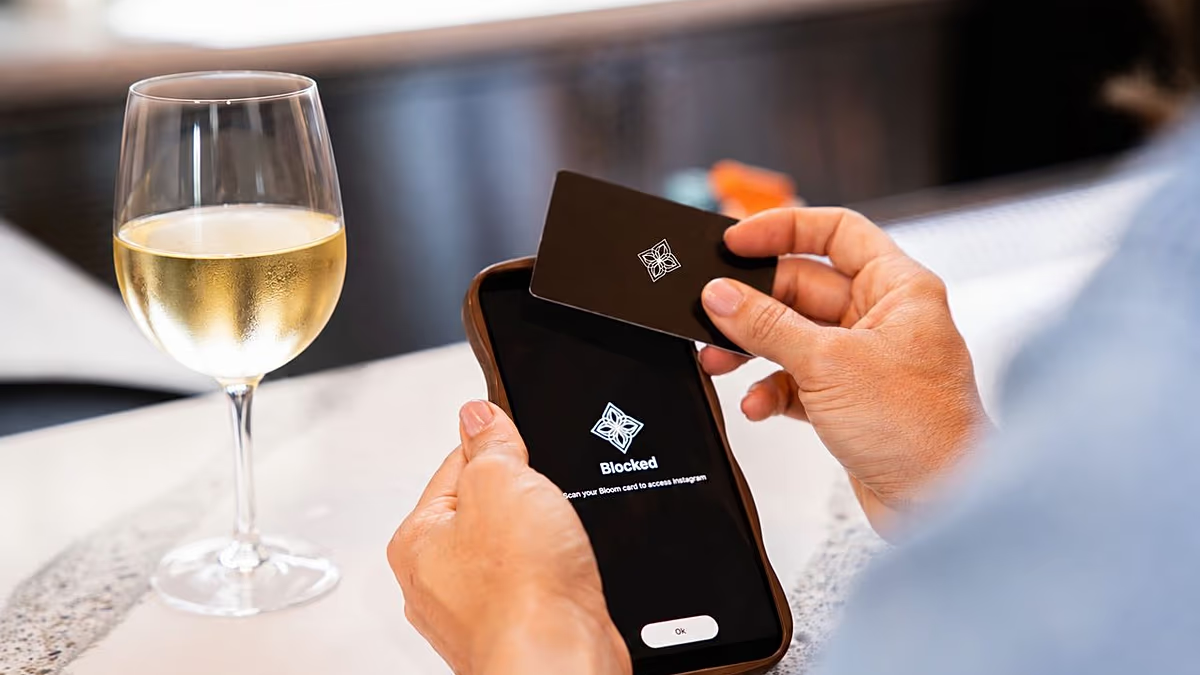
The mechanism is intriguingly simple. Guests first download the Bloom app. Upon arriving at the hotel bar, they are given a physical Bloom card. By tapping this card against their phone, they can selectively block their chosen social media and distraction apps—think Instagram, X (formerly Twitter), or TikTok—for a full sixty minutes. The genius lies in the physicality of the card; it is the key to both locking and unlocking the digital blockade. After the hour elapses, hotel staff will notify the guest, who must then physically tap the card again to restore access. This deliberate, tactile step creates a “circuit breaker” in the mindless scroll-and-tap cycle, introducing a moment of conscious choice that is often absent from our digital interactions.
But what does one do during this liberated hour? YOTEL and Bloom have thoughtfully curated alternatives to fill the void. Guests are encouraged to engage in analog pleasures that travel uniquely fosters: writing a postcard to a loved one, savoring a specially crafted “Bloom” cocktail, or simply engaging in uninterrupted conversation with travel companions or fellow guests. The hour becomes less about deprivation and more about substitution—replacing the fleeting dopamine hits of likes and notifications with the richer, sensory experiences of taste, heartfelt communication, and genuine human connection. It transforms a potential moment of lack into an opportunity for presence.
The technology powering this experience, the Bloom system, was launched in 2024 and represents a fascinating evolution in digital wellness tools. Unlike standard app blockers that can be overridden with a few taps and a moment of weak will, Bloom’s model incorporates a physical object. The core philosophy is behavioral: if you must physically get up, locate your card, and perform a specific action to regain access, you are far more likely to pause and question whether you truly need to. This friction is the point. It transforms digital consumption from an automatic reflex into a deliberate decision. As part of the partnership, YOTEL guests are also offered a discount on personal Bloom cards, extending the potential for mindful digital habits beyond their stay.
Ultimately, YOTEL’s “anti-appy hour” is a microcosm of a larger cultural yearning to balance our incredible connectedness with our fundamental need for disconnection. It acknowledges that willpower alone is often insufficient against the engineered pull of modern apps. By providing a gentle, supportive framework, it helps travelers actively construct the offline moments they ostensibly journeyed to find. In a world where the line between vacation and virtual office is blurry, such initiatives are not gimmicks, but thoughtful invitations. They remind us that the most memorable travel experiences are often those that are lived fully through our own senses, not filtered and framed through a screen, waiting for validation from afar.