



Paragraph 1: A Stalemate of David vs. Goliath
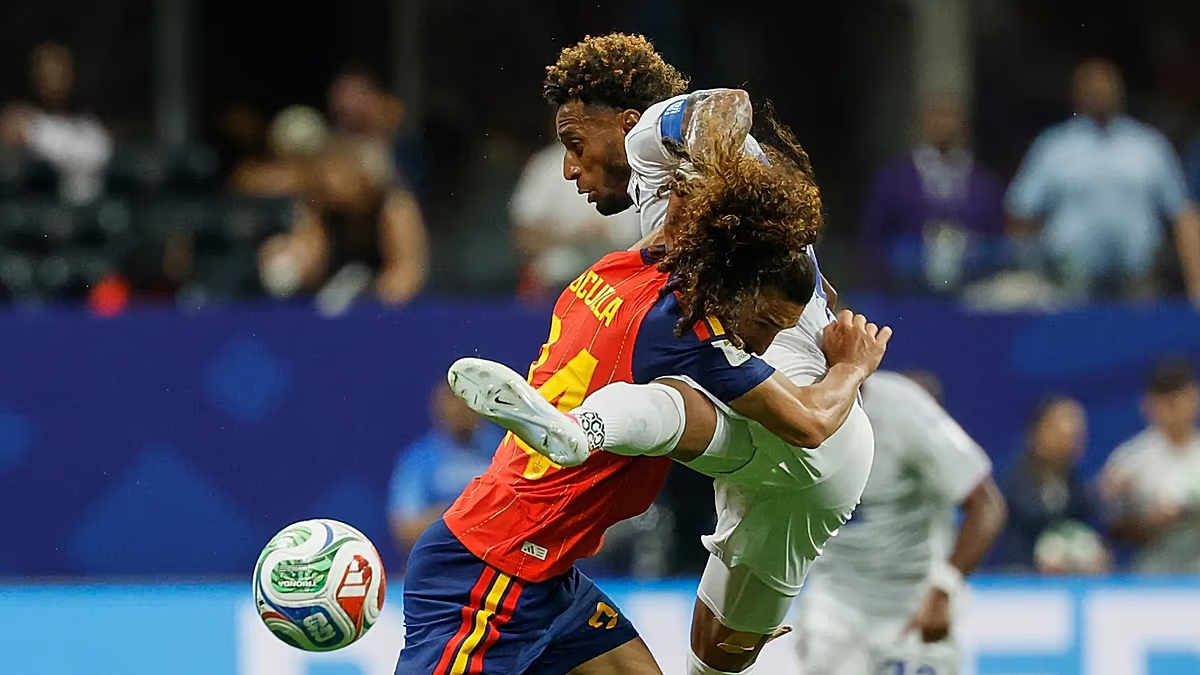
The 2026 FIFA World Cup witnessed its first goalless draw in a match that defied pre-game expectations. In the cool, air-conditioned confines of an Atlanta stadium, a footballing giant, Spain—affectionately known as La Roja—was held to a frustrating 0-0 draw by World Cup debutants Cape Verde. On paper, it was a classic mismatch: Spain’s constellation of global stars against a team representing a nation of just over half a million people. For ninety minutes, Spain dominated possession and dictated the tempo, embodying their famous tiki-taka style. Yet, against a resolute and brilliantly organized Cape Verdean side, all that possession translated into precious little reward. The story of the match was not one of Spanish flair, but of incredible defensive discipline and a heroic individual performance that allowed the underdog to make history.
Paragraph25: The Blue Sharks’ Historic Stand
Cape Verde’s approach was one of clear-eyed pragmatism. Understanding the gulf in individual talent, they set up in a deep, compact defensive block, surrendering the ball but fiercely protecting their penalty area. Their game plan relied on patience, discipline, and waiting for the rare opportunity to counter-attack. For the vast majority of the match, these forays forward posed minimal threat to the Spanish goal. However, their objective was never to win a shootout; it was to survive. And survive they did, securing a precious point in their very first World Cup finals match. This result, a clean sheet against one of the world’s most potent footballing nations, is an achievement that will echo through the islands for generations, a landmark moment for Cape Verdean sport.
Paragraph 3: Spanish Frustration and a Goalkeeping Masterclass
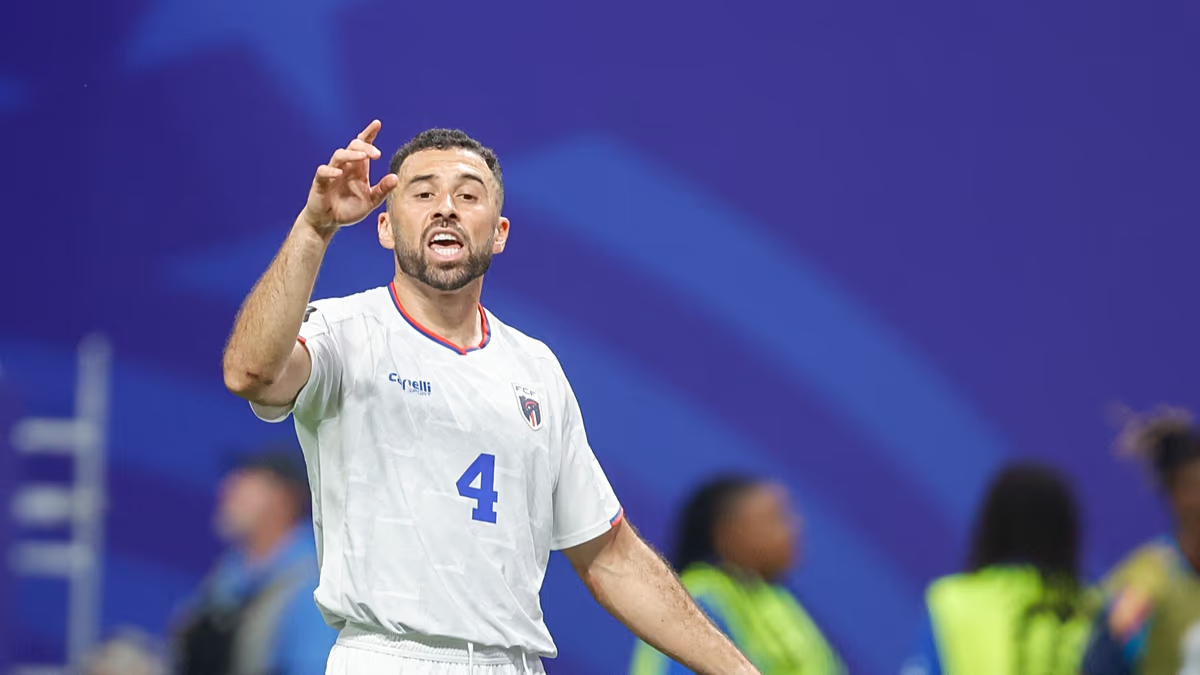
The architect of Spanish frustration was Cape Verde’s 40-year-old goalkeeper, Vozinha. In what would become the defining performance of the match, he produced a masterclass in shot-stopping and commanding his area. Denied repeatedly by Vozinha’s agility and anticipation, Spain’s attacks grew increasingly desperate. Coach Luis de la Fuente threw on electrifying wingers Lamine Yamal and Nico Williams in search of a spark, but even their fresh legs struggled to break down the blue wall. With Cape Verde’s defense compressing the space in the middle of the pitch, Spain was often reduced to taking speculative shots from distance, which were meat and drink for the inspired Vozinha. His performance was so monumental that it earned him the well-deserved Man of the Match award, personally crowning his nation’s collective feat.
Paragraph 4: A Late Scare and Tactical Substitutions
As the clock ticked toward full time, the unthinkable nearly happened. Not content with a point, Cape Verde launched a rare attack in the 90th minute. A dangerous cross found the head of defender Diney Borges, whose effort sailed perilously close to the Spanish goal, forcing goalkeeper Unai Simon into a crucial, if ultimately straightforward, save. It was a moment that sent a jolt through the stadium, a stark reminder that Cape Verde was not merely clinging on, but could have snatched a historic victory. Earlier, Spain’s final roll of the dice saw Dani Olmo replace Ferran Torres, but even this creative midfielder could not unpick the lock. The final whistle confirmed a tale of two strategies: one of relentless, fruitless pressure, and the other of immovable, triumphant resistance.
Paragraph 5: The Broader World Cup Context
This intriguing stalemate took place within the unique framework of the expanded 2026 World Cup. For the first time, the tournament is being hosted across three nations—the United States, Mexico, and Canada—and has grown to include 48 teams. These teams are divided into 12 groups of four, meaning the path to the knockout stage remains intensely competitive. Spain finds itself in Group H alongside not just Cape Verde, but also Saudi Arabia and the formidable Uruguay. To advance, they must finish in the top two of this quartet. While the draw with Cape Verde is not a disaster, it complicates their path, applying immediate pressure for positive results in their remaining fixtures.
Paragraph 6: The Human Story of the Beautiful Game
Ultimately, this match transcended tactics and tournament logistics. It was a celebration of the human spirit inherent in football. For Spain, it was a lesson in the perils of profligacy and a reminder that glory is never guaranteed. For Cape Verde, it was the realization of a dream far bigger than a single point. It was about representing their islands on the grandest stage and proving that heart, organization, and a touch of individual brilliance can level any playing field. The image of Vozinha, a veteran at 40, being honored as the match’s best player, symbolizes the beauty of the World Cup: a stage where new heroes are born, where small nations can stand tall, and where sometimes, the most memorable stories are written not in goals, but in defiant, collective resolve. The tournament has only just begun, but for Cape Verde, their journey is already a historic success.