



A New Vision of the Catwalk: Humanity and Technology Converge at Seoul’s AI Fashion Show
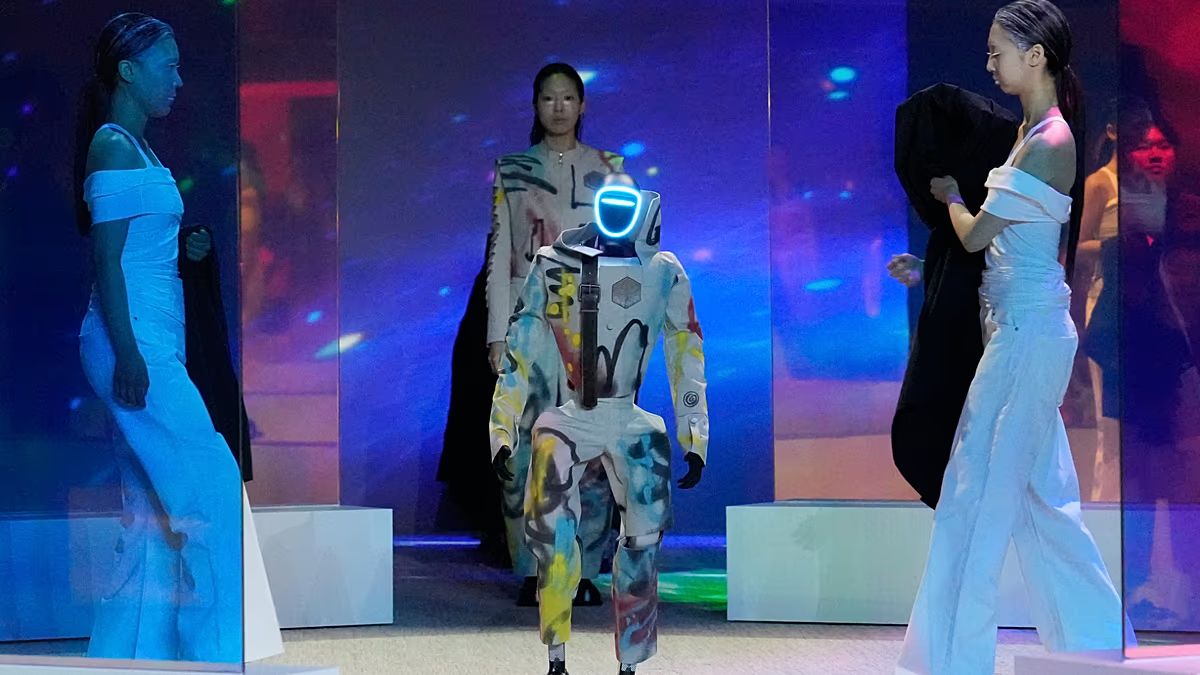
In a striking display of how the boundaries between technology and human expression are dissolving, a recent fashion show in Seoul, South Korea, presented a vision of the future where models are not just wearing cutting-edge designs, but are themselves products of cutting-edge innovation. The unique event, hosted by the entertainment company Galaxy Corporation, featured humanoid robots striding down the catwalk alongside human models. This was not a sterile tech demonstration but a full-fledged performance, complete with an audience of spectators who watched, mesmerized, as these mechanical beings—dressed in designer outfits—executed dance routines and even participated in a dramatic robot boxing match. The shared stage between carbon and silicon, flesh and metal, created a powerful, tangible symbol of an emerging coexistence.
The spectacle extended far beyond mere novelty, serving as a deliberate exploration of a future that organizers believe is rapidly approaching. Galaxy Corporation framed the event as a proactive investigation into a world where robots and humans interact seamlessly in daily life, moving from factory floors and sterile labs into the culturally rich realms of art, entertainment, and personal style. CEO Choi Yong-ho articulated a fascinating, bidirectional vision for this future. He suggested that fashion, that most human of arts, could become a fluid dialogue between species. Robots might not only wear clothing designed for humans but could also develop their own aesthetic trends, from which human designers might draw inspiration. This proposes a future where creativity itself becomes a collaborative loop between biological and artificial intelligence.
This event stands as a potent testament to the dramatic evolution of artificial intelligence and robotics. These fields have decisively expanded from their traditional bastions in industrial automation and technical problem-solving. The robots on the Seoul catwalk represent a new generation of machines whose purpose is not just functional but expressive, engaging with culture and society on an emotional and artistic level. Their ability to perform choreography, interact with a live audience, and model fashion signifies a leap toward sophistication in movement, perception, and social presence. This shift marks technology’s deepening integration into the very fabric of human experience, not as a tool, but as a participant.
The implications for the fashion industry and creative sectors are profound. Designers are prompted to consider not just the human form, but forms that are engineered—how does fabric drape on a composite shell? What constitutes “wearability” for a machine? Conversely, the aesthetics of robotics—sleek lines, luminous interfaces, and articulated joints—could inspire new human fashion trends, blurring the lines between cyborg and classic style. Furthermore, these intelligent systems could become active collaborators in the design process, generating novel patterns, predicting trends through data analysis, and personalizing apparel in ways previously unimaginable, fundamentally altering the creative workflow.
Beyond the dazzle of the runway, this convergence prompts deeper philosophical and social questions. As robots assume roles in entertainment and art, how do we redefine concepts like performance, creativity, and artistry? What new forms of storytelling and spectacle become possible when the performers are unbound by human physical limitations? The event also surfaces practical considerations about the future of work in creative industries and the nature of social interaction. It invites us to envision a world where attending a concert, visiting a museum, or shopping for clothes might involve meaningful interaction with non-human intelligence, challenging our understanding of community and shared experience.
Ultimately, the Seoul AI fashion show was more than a fascinating glimpse of tomorrow; it was a conscious step toward its realization. By placing humanoid robots in the culturally resonant context of a fashion show, Galaxy Corporation made the future of human-robot coexistence feel immediate, tangible, and surprisingly intimate. It moved the conversation from abstract speculation into the realm of sensory experience, allowing audiences to see and feel a potential shared future. In doing so, it beautifully illustrated that the journey ahead is not about technology replacing humanity, but about both evolving together, weaving a new social and cultural tapestry where the threads of human creativity and artificial intelligence are inextricably intertwined.