



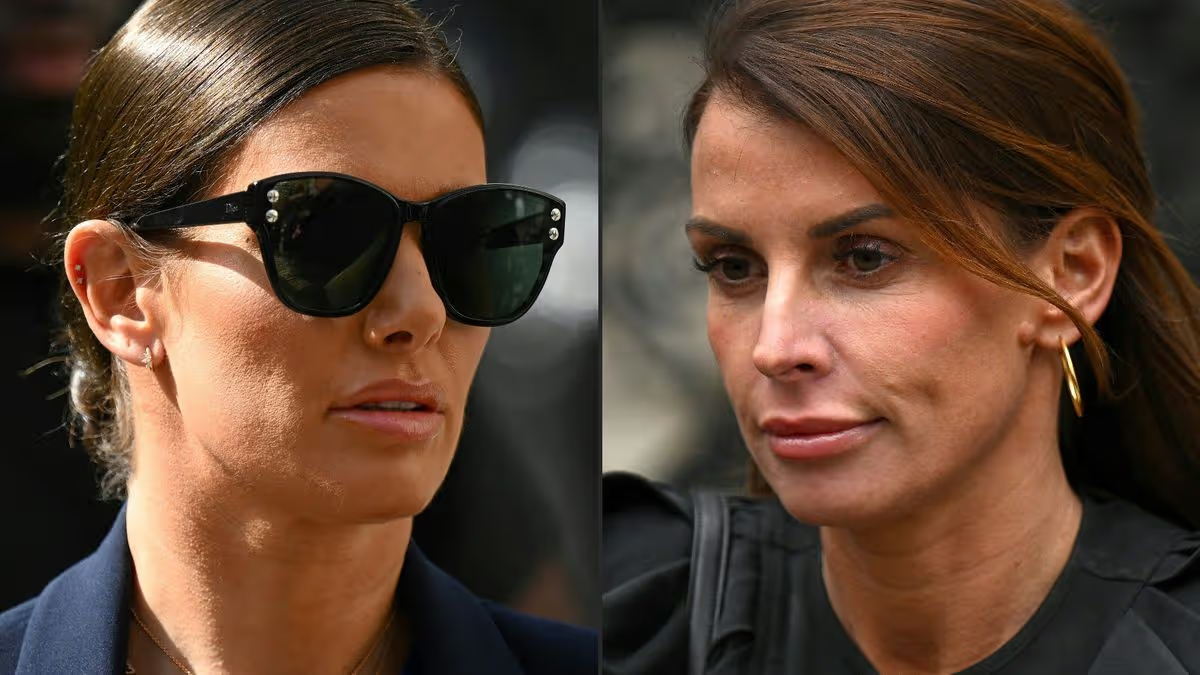
The “Wagatha Christie” scandal, a modern-day saga of betrayal, private investigation, and high-stakes legal drama, did not begin with a tweet. Its origins are found a full decade ago, in the charged atmosphere of the 2016 European Championships. What unfolded over those weeks was a slow-burning fuse, lit not by leaked stories but by a perceived breach of social etiquette in the stands. On June 16, 2016, during England’s match against Wales, a seemingly minor seating dispute planted the seeds of a deep and lasting feud between Coleen Rooney and Rebekah Vardy. According to testimony that would emerge years later, Rebekah and her group allegedly refused to vacate seats allocated to the Football Association’s family liaison officer, positioning themselves directly behind Coleen. The officer, Harpreet Robertson, felt the move was strategic, placing Rebekah “right in the eyeline” of any cameras focused on the then-captain’s wife. This incident, dismissed by Rebekah as a misunderstanding over seat assignments, created an initial frost that would never truly thaw, establishing a narrative of rivalry and calculated image-crafting that would define their relationship.
While the football unfolded on the pitch, a parallel drama of publicity was brewing in the stands. Rebekah Vardy, then in the process of reshaping her public persona with the help of her agent, Caroline Watt, was embracing her platform with notable zeal. She penned a daily ‘Euro diary’ for The Sun, a commitment that would later become a central point of contention. This media presence reportedly became a distracting issue within the England camp itself, so much so that manager Roy Hodgson was said to have asked captain Wayne Rooney to speak to Jamie Vardy about his wife’s activities. This period marked Rebekah’s assertive entry into the WAG spotlight, a move she defended as simply supporting her husband, but one that others perceived as a deliberate campaign for fame. The stage was being set for a clash of cultures: Coleen, a long-established figure who valued privacy and tradition, versus Rebekah, the newer, more media-assertive arrival navigating the intense scrutiny that came with her husband’s meteoric rise.
The simmering tensions erupted into a full-blown public war three years later, in October 2019, through a masterstroke of domestic detective work. After growing suspicious that private details from her personal Instagram account were being leaked to the press, Coleen Rooney engineered an elaborate sting operation. She planted a series of entirely fabricated stories—including tales of a flooded basement and a trip to a Mexican gender selection clinic—visible only to one account: Rebekah Vardy’s. When these falsehoods appeared in The Sun, Coleen had her proof. Her ensuing social media post, calmly and famously declaring, “It’s……… Rebekah Vardy’s account,” was a cultural detonation. The post, instantly dubbed “Wagatha Christie” for its sleuth-like ingenuity, was not just an accusation; it was a public humiliation that invited the world to witness the confrontation.
Rebekah Vardy’s response was one of vehement denial and legal retaliation. Insisting she was not the source, she sued Coleen for libel, arguing the accusation had caused significant damage to her reputation. This move escalated the private feud into a costly and very public High Court trial in the summer of 2022. The proceedings peeled back the carefully managed façades of both women’s lives, exposing the inner workings of PR strategies, private messages, and the intense pressures of life in the tabloid glare. While Rebekah’s legal team fought to clear her name, Coleen’s defense centered on the meticulous evidence of her social media trap. The trial became a spectacle, dissecting everything from the original Euros seating plan to the role of agents, transforming a personal disagreement into a forensic examination of modern fame.
In July 2022, Mrs Justice Steyn delivered a definitive verdict, dismissing Rebekah Vardy’s libel claim and ruling that Coleen’s accusations were “substantially true.” The judgment was a resounding victory for Coleen and a devastating, expensive loss for Rebekah, who was ordered to pay 90% of her rival’s legal costs, amounting to an estimated total bill of £3 million. The judge found that while Rebekah may not have personally leaked the stories, her agent, Caroline Watt, had done so, and Rebekah had likely been aware of it. The ruling not only validated Coleen’s detective work but also cemented the saga’s place in popular history. The “Wagatha Christie” case had transcended gossip, becoming a parable about privacy, trust, and the high price of fame.
A decade on from the initial spark in the Euros stands, the saga continues to resonate far beyond the individuals involved. It has inspired documentaries, a West End play, and a television drama, evolving from a tabloid story into a cultural touchstone. The feud laid bare the complex dynamics and unspoken rules within the world of football partners, highlighting the clash between private life and public commodity. While the definitive legal conclusion provided closure on the question of liability, the human story of a broken relationship and a very public war of reputations remains its enduring legacy. It stands as a cautionary tale about the power of social media, the fragility of privacy, and how a single moment of perceived disrespect can ignite a conflict that captures the imagination of the world.