

The recent ceasefire agreement, while a vital first step toward de-escalation, offers no quick fix for the global energy market. Experts uniformly warn that it will likely take many months, not weeks, before energy companies can resume full operations and begin to meaningfully alleviate the strain on worldwide supply. The crisis, triggered by the effective closure of the critical Strait of Hormuz, created a profound logistical and psychological bottleneck. With approximately one-fifth of the world’s seaborne oil and gasoline supplies historically flowing through this narrow waterway, its closure didn’t just delay shipments—it froze them. Dozens of massive tankers loaded with crude have been stranded idle in the Persian Gulf for over three months, becoming floating symbols of the standstill. The immediate drop in oil prices following the ceasefire announcement reflects market relief at the prospect of a reopened strait, but this reaction overlooks the immense and slow-moving machinery that must now restart.
The journey from ceasefire to consistent fuel delivery is fraught with operational hurdles. First, the sheer physics of the global oil supply chain work against rapid change. As Daniel Evans of S&P Global explains, the tankers themselves are slow-moving behemoths; a voyage from the Gulf to distant refining hubs in Asia, Europe, or the Americas can take months. The stranded ships must now safely exit the strait, and only then can new vessels enter to load. This process requires more than just open water; it demands confidence. Shipping companies and insurers must be assured that the passage is reliably safe for the entire duration of a loading operation—entering, waiting, filling, and departing. This “window of safety” assessment will proceed cautiously, as a single incident could trigger another round of prohibitive insurance premiums and renewed fears.
Furthermore, the disruption extended far beyond blocked ships. With export routes choked, producers in the region faced a catastrophic lack of storage. When onshore and floating storage filled to capacity, they were forced into a “shut-in”—the difficult process of halting extraction by capping wells in the ground. As Alan Gelder of Wood Mackenzie notes, restarting these operations is not like flipping a switch. It is a technically complex and gradual procedure, especially for older or more challenging fields. Countries like Iraq, which experienced significant shut-ins, could face a timeline of up to a year to return to pre-war production levels. In contrast, nations like Saudi Arabia and the UAE, which possess alternate pipeline networks bypassing the Strait, may rebound somewhat faster, but they are still part of a global system grappling with synchronized delays.
The human and financial dimensions of restarting are equally significant. Daniel Sternoff of Columbia University highlights a critical point: companies and nations will be hesitant to commit the substantial capital and personnel required to revive operations until they are convinced the ceasefire represents a stable, durable peace, not merely a 30-day pause. Sending engineers and specialists back into facilities, re-mobilizing drilling crews, and reigniting complex refining processes all require a belief in long-term security. This period of assessment and negotiation will itself add weeks or months to the timeline. Moreover, as Gelder points out, long-term investment in the energy infrastructure of the region ground to a halt during the crisis. Regaining investor confidence and restarting these multi-year projects will be a separate, slower challenge beyond the immediate restart of existing fields.
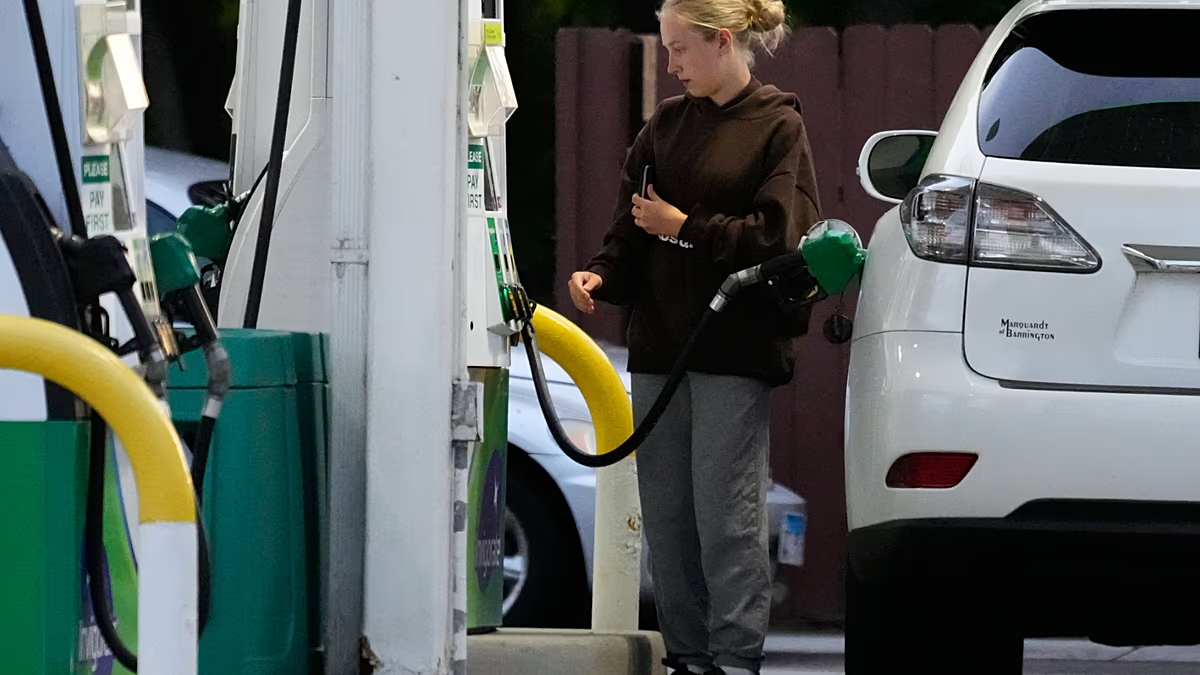
Consequently, consumers should not expect a sudden, dramatic plunge in prices at the pump. The current dip in crude benchmarks, while welcome, still leaves prices well above pre-conflict levels of around $70 per barrel. The refined products—the gasoline, diesel, and jet fuel that power daily life—are even further downstream. The crude oil must first be shipped, then processed at often already-capacity-constrained refineries, and finally distributed. Each of these stages will act as a throttle on the flow of relief. The market is dealing with a severe inventory drain that must be refilled across the entire supply chain, a process that will keep upward pressure on prices for the foreseeable future.
In essence, the ceasefire is the crucial turning of a key in a long-locked door. However, the door itself—weighed down by months of inertia, logistical paralysis, and caution—will swing open only slowly. The global energy system is a colossal and interconnected machine, and after a sudden, traumatic stop, its restart will be a deliberate, staged process. The coming months will be a test of patience, as the world waits for the tangible results of peace to travel the slow route from shuttered oil wells, through a newly vulnerable strait, across oceans, and finally to refineries and fuel stations worldwide.