


A Journey Through Loss and Unwavering Hope: Kelly and Pete’s Dream of Parenthood
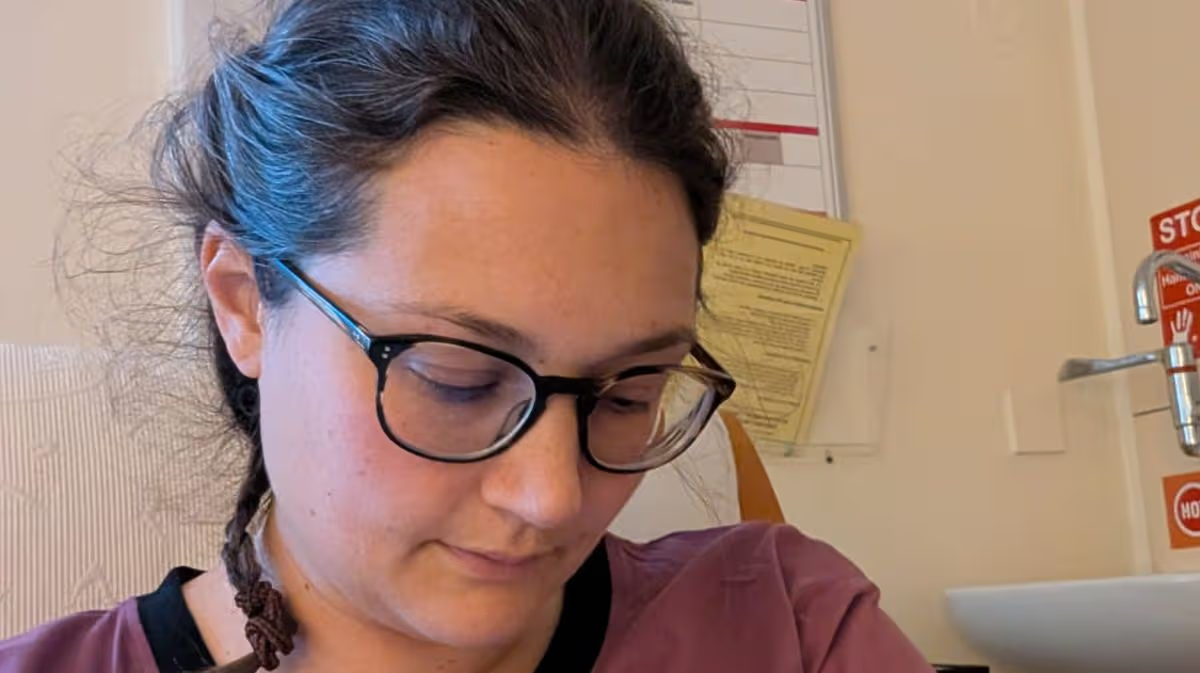
Kelly Morshead and Pete Chaplin’s story is a profound testament to the resilience of the human spirit in the face of repeated heartbreak. Since beginning their journey to become parents in 2022, the Guildford couple has endured a series of devastating losses that would test the limits of any hope. They have faced three missed miscarriages—a term describing when a baby dies in the womb without outward physical signs—a tragedy Kelly also experienced with a former partner. Each loss carved a deeper wound, a cycle of cautious joy followed by silent, shocking grief, as scans revealed a world of promise suddenly gone still. Yet, their most poignant heartbreak came in September 2025, when Kelly gave birth to their daughter, Ava, at just 22 weeks. Weighing a mere 500 grams, Ava was a “perfectly-formed” tiny human, with eyelashes and fingernails. Her parents held her for over an hour, a bittersweet lifetime of love, creating imprints of her hands and feet and capturing professional photographs—precious, tangible proof of her brief existence. These moments, facilitated by the compassionate care of the Royal Surrey County Hospital’s specialist bereavement team, offered a fragile solace amidst the shattering pain.
The couple’s path has been marked by a relentless search for answers. After their third consecutive miscarriage, Kelly became eligible for advanced genetic testing. The results delivered a life-altering diagnosis: Kelly has an exceptionally rare chromosomal condition. She is “genetically mosaic,” meaning her cells contain two different chromosomal translocations. Medical experts estimate hers might be a one-in-100,000 case, so rare she is described as “case report rare.” This diagnosis, while providing a long-sought explanation, also framed their struggle within dauntingly narrow odds. For Kelly, the news created a cruel paradox of understanding and despair. When she experienced another missed miscarriage shortly after receiving the results, she described feeling “almost numb,” her default becoming a protective shell against the anticipated blow. The dream of a simple, healthy pregnancy seemed to retreat behind a complex genetic barrier.
Despite the staggering odds, Kelly and Pete’s hope is a stubborn, resilient flame. Following Ava’s loss, and armed with the knowledge of Kelly’s genetic condition, they qualified for three NHS-funded IVF cycles with preimplantation genetic testing. This process allows embryos to be screened for chromosomal normality before transfer. However, the reality has been brutally discouraging; two rounds yielded zero genetically normal embryos, and a third is not expected to be successful. With their NHS options dwindling, the financial reality of private treatment in the UK is insurmountable for the couple. Undeterred, they have turned their energy outward, launching a fundraising campaign to pursue further IVF with genetic testing abroad. Through a GoFundMe page and the sale of personally designed pin badges and other items, they are appealing to the wider community, declaring, “We’re not ready to give up on our dream of becoming parents.”
For Kelly, the emotional landscape of this journey is marked by a profound sense of isolation, compounded by a perceived societal lack of understanding. Well-meaning comments like “at least you know you can get pregnant” or “your time will come” ring hollow, as she clarifies, “the goal is never to get pregnant, the goal is to bring a baby home.” Watching friends and family celebrate their own pregnancies and newborns can be particularly isolating, a reminder of the ordinary milestone that remains agonizingly out of reach. Yet, within their partnership, Kelly and Pete find a fortified strength. They speak of “brutally honest conversations” and a shared, desperate love to give. Kelly’s voice softens with conviction when she speaks of Pete: “Every kid would deserve a dad like him.”
The care provided by the Royal Surrey County Hospital has been a crucial pillar of support throughout their ordeal. The hospital’s dedicated bereavement midwives, known as The Alice Team, and the Forget-Me-Not suite—a private space for families to spend time with their babies—offered dignity and compassion in their darkest hours. Karen Plews, the Trust’s Professional Director of Midwifery, emphasizes their commitment to “compassionate and personalised care,” acknowledging the heartbreak of losing a baby at any stage. This institutional empathy stands in contrast to the cold, clinical statistics of their genetic reality, offering a reminder that their grief is seen and their lost daughter, Ava, is acknowledged.
Kelly and Pete’s story is ultimately one of defiant love. They have stared into the abyss of repeated loss and a rare genetic lottery, yet they continue to reach for a future they are determined to build. They are not naive to the challenges; they are intimately acquainted with pain. But their desire to be parents, to stay up all night with a crying child, to be a safe harbor, remains undimmed. As Kelly herself puts it, “We haven’t run out of hope yet, we haven’t run out of faith yet that it could still happen for us.” Their fundraiser is more than a quest for medical funding; it is an invitation to share in a dream that has survived against unimaginable odds, a plea for a chance to finally bring a baby home.