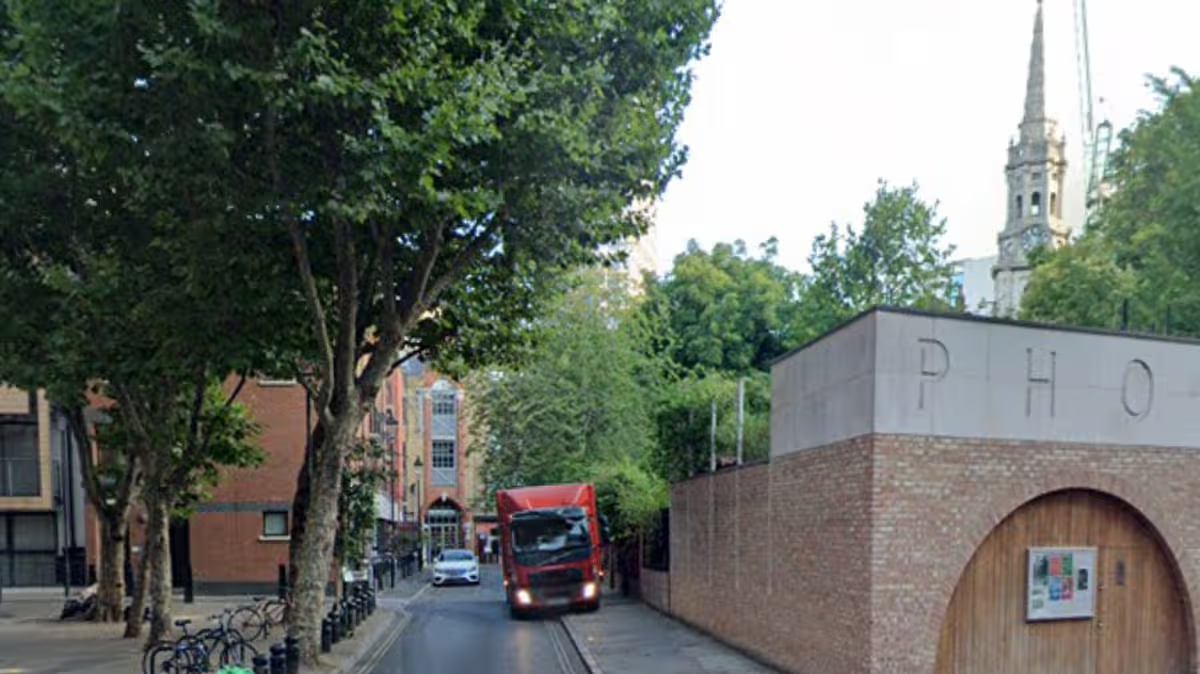



A significant gas leak in London’s West End has forced the evacuation of approximately forty residents and led to substantial disruption, with road closures expected to remain in place through the night and into the following morning. The incident, which began on the afternoon of Sunday, June 14th, saw the London Fire Brigade dispatch a considerable response team to Stacey Street, near its junction with the busy Shaftesbury Avenue. Upon arrival, firefighters established a substantial fifty-metre safety cordon around the site of a ruptured gas main, a necessary precaution that has transformed this normally bustling theatre district into a quiet, controlled zone of emergency operations.
The human impact of the incident is being actively managed, with authorities establishing a dedicated rest centre to support the displaced residents. For these individuals, the sudden evacuation represents a significant disruption—being asked to leave their homes with little notice, uncertain of when they might return. The provision of the rest centre is a crucial element of the response, offering not just shelter but also a point of information and reassurance as the complex technical work to secure the area continues. This aspect of the operation highlights the emergency services’ focus on community welfare alongside public safety.
Leading the fire brigade’s efforts at the scene, Station Commander Daniel Perrett outlined the challenges faced by crews, noting that the incident is “expected to be protracted.” This assessment sets public expectations, indicating that the painstaking work to fully isolate the compromised gas main and ensure the area is completely safe will extend for many hours. The presence of three fire engines and two specialist command units, drawn from fire stations across London including Soho, Euston, Bethnal Green, and Dowgate, underscores the scale and seriousness with which the brigade is treating the situation.
Consequently, the practical effects on the city are widespread. Road closures around the leak site are causing notable disruption to traffic and pedestrian movement in a central part of London. The London Fire Brigade has issued a clear advisory, urging the public to “avoid the area where possible.” This guidance is intended not only to ensure public safety by keeping people away from any potential danger but also to allow emergency vehicles and utility crews unimpeded access as they work to resolve the hazardous situation. The advice is a reminder that such incidents, while localized, ripple out to affect the daily routines of many.
The coordinated response exemplifies the multi-agency approach essential to modern emergency management. Firefighters are working in tandem with utility company engineers, police, and local council officials to address both the immediate hazard and its cascading effects. This collaboration is vital to isolate the gas supply, manage traffic and crowds, support evacuated residents, and begin the process of planning for the eventual safe return of the community to their homes. It is a complex logistical operation unfolding in the heart of the city.
As night falls and work continues under artificial lights, the scene stands as a quiet anomaly amidst London’s enduring energy. While the iconic theatres and restaurants nearby may typically draw evening crowds, this particular corner of the West End remains focused on resolution and safety. The commitment of the crews on site promises a thorough and careful conclusion to the incident, with the ultimate goal being the restoration of security and normalcy for the affected residents and the reopening of this vital part of London’s infrastructure once the all-clear is definitively given.