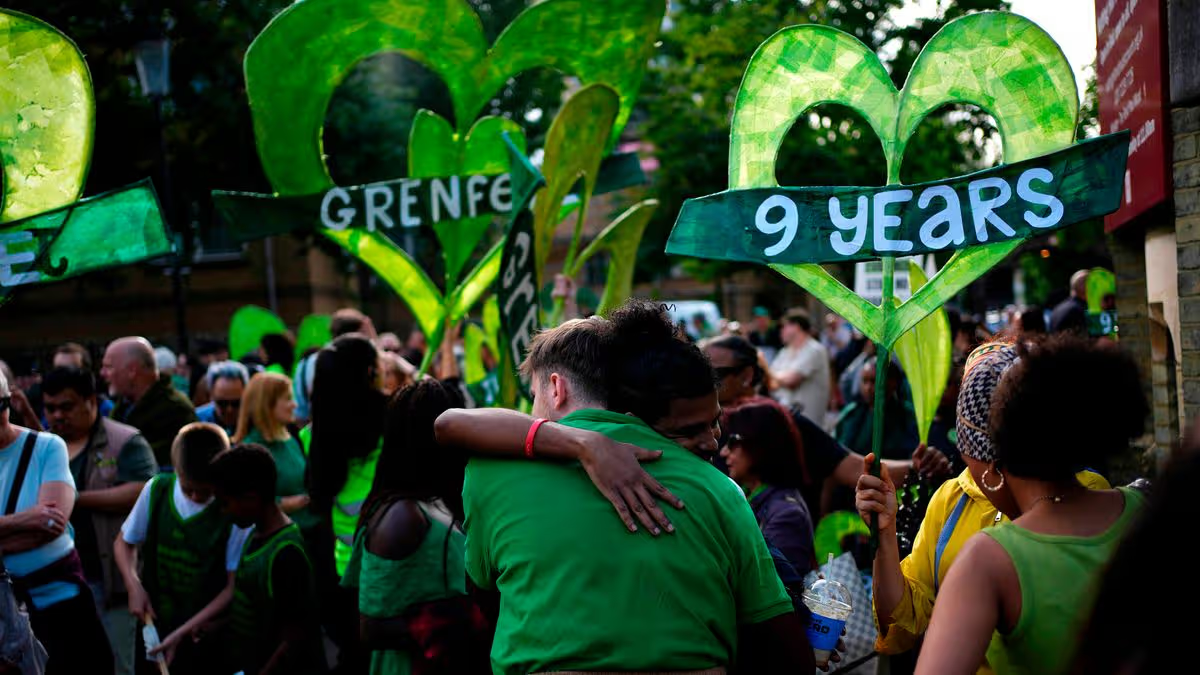


Nine years have passed since the Grenfell Tower fire tore through a west London night, claiming 72 lives and shattering a community. On the anniversary of that harrowing night, survivors, bereaved families, and local residents gathered once more, bound by shared grief and an unyielding demand for justice. The occasion was marked by a profound silence, broken only by the quiet footsteps of around 1,500 people walking in solidarity. Many wore green, the colour that has become a symbol of remembrance for Grenfell, carrying signs that spoke of a weary but persistent fury: “this much evidence, still no charges” and “enough is enough.” This march held a particular, painful significance, as it is the last such gathering before the haunting shell of the tower is finally demolished, a physical erasure that does nothing to heal the emotional and moral scars left behind.
The march was a powerful display of a community’s enduring heart. As the procession reached Ladbroke Grove, personnel from the London Fire Brigade lined the road, a poignant reminder of the heroic and traumatizing efforts of that night. The formal silence gave way to raw, human moments as marchers, some with tears in their eyes, embraced and shook hands with the firefighters. This gesture spoke volumes, acknowledging shared trauma and a mutual understanding of the catastrophic events they witnessed. The presence of the fire service underscored that the failure was not theirs, but one of a system that allowed a building to become a death trap. These quiet interactions amidst the sea of green were a testament to the deep human connections forged in the aftermath of tragedy, a community holding onto one another when official promises have repeatedly slipped away.
For the bereaved, the passage of nine years is an unbearable weight of waiting. Grenfell United, representing survivors and families, articulated the collective anguish, stating that while governments and ministers have come and gone, the urgent action and accountability promised have “too often failed to materialise.” The most agonizing delay is in criminal justice. As one statement poignantly noted, “Justice delayed is justice denied,” and the slow pace only deepens the community’s pain. While police recently announced that decisions on charging up to 20 companies and 57 individuals may come before the tenth anniversary, this timeline offers cold comfort. For families, each anniversary is a milestone marked not by healing, but by the glaring absence of legal reckoning for the “incompetence, dishonesty and greed” officially cited by the public inquiry as causes of the disaster.
The human cost of this delay was given voice during a memorial service at Noting Hill Methodist Church. Messages from grieving parents in Italy, whose children were among the victims, laid bare the global wound of Grenfell. Emanuela Disaro, mother of 26-year-old architect Gloria Trevisan, wrote of an inability “to forgive those who through greed, dishonesty and personal interest allowed themselves to be corrupted” at the expense of her daughter’s life and that of her boyfriend, Marco Gottardi. “It hurts us to know that those people continue to live their lives undisturbed and unpunished,” she stated. Marco’s father echoed this, lamenting that their dreams were “denied you by human greed,” and called directly for prosecutors to speed up their work. These words from across continents underline that Grenfell was not a local accident, but a catastrophic failure of global supply chains and regulatory neglect, where the pursuit of profit was valued over human life.
The official findings of the Grenfell Tower Inquiry confirm what the community has long known: the fire was wholly avoidable. The final report detailed “decades of failure” and a “systematic dishonesty” among firms that manufactured and sold the deadly cladding and insulation. Inquiry chairman Sir Martin Moore-Bick condemned the “deliberate and sustained” manipulation of safety testing and the misleading of the market. This was not a simple error, but a calculated compromise of safety. Yet, knowing this truth has not brought closure. As Pat, a local resident and volunteer, reflected outside the service, people lost everything in the blaze—not just possessions, but the irreplaceable tokens of a life: photographs, keepsakes, identities. “It will always be with them,” she said, “it will never go away.” The demolition of the tower may remove a stark visual reminder, but it cannot dismantle the memory or the ongoing struggle for a full accounting.
As the sun set on this ninth anniversary, the Grenfell community demonstrated once again its remarkable resilience and unity, forged in the worst of circumstances. The silent march, the embraces, and the unwavering green symbols are acts of collective memory in the face of a justice system that moves with glacial speed. The fight is no longer just about one tower, but about a national promise—that such a preventable tragedy would never happen again and that those responsible would be held to account. With the tower’s impending demolition, a physical chapter is closing, but the moral and legal battle rages on. The community’s message remains clear: they will continue to walk, to remember the 72, and to demand that the long-overdue justice, which they have been forced to pursue for nearly a decade, finally arrives.