



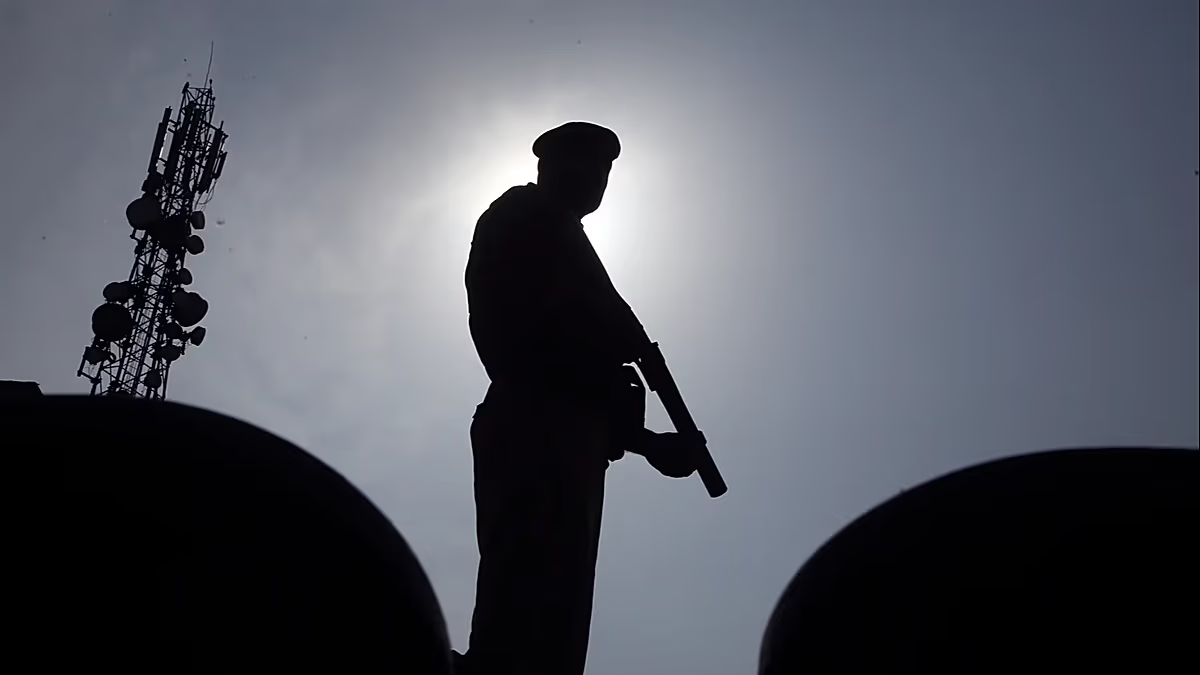
In a devastating incident that underscores the perils of police operations in high-pressure scenarios, authorities in eastern Pakistan have confirmed that a young Australian girl was mistakenly shot and killed by police gunfire. The tragedy, which also left two of her family members wounded, occurred in Punjab province and has prompted urgent calls for a full investigation from both Pakistani officials and the Australian government. According to statements released on Monday, the event unfolded when police responded to a reported robbery. The officers engaged in an exchange of fire with the suspects, who were alleged to have been holding a family at gunpoint inside their vehicle. In the confusion of the confrontation, a catastrophic error occurred, leading to an innocent child paying the ultimate price and casting a stark light on the split-second decisions made in life-or-death situations.
The Punjab Police’s Crime Control Department provided a detailed, though heartbreaking, account of the sequence of events. They explained that during the chaotic scene, an officer mistakenly believed the armed suspects were attempting to flee using the victims’ car. Acting on this fatal misjudgment, the officer discharged his weapon toward the vehicle. The bullet struck and killed 10-year-old Hania, a child whose life was extinguished in a moment of profound error. Her father and brother were also injured in the shooting, transforming a family visit into an unimaginable nightmare. This official narrative, while establishing the basic facts, does little to assuage the grief and raises immediate, pressing questions about operational protocols and the use of lethal force.
In the aftermath, Pakistani authorities have taken formal steps, registering a criminal complaint from the bereaved father and moving swiftly to detain the officer involved. The officer has appeared before a court and has been remanded into custody, signaling the seriousness with which the local system is treating the case. The Punjab Police have publicly stated they are conducting a “thorough, impartial investigation to ensure that justice is served,” while simultaneously expressing deep sadness over the tragedy. Their statement included a critical admission, noting that while police personnel operate in “high-risk environments, there is no justification for a departure from our protocols.” This acknowledgment points directly to a potential procedural failure that will be central to the ongoing inquiry.
The family at the heart of this tragedy are Australian citizens from Perth, who were visiting relatives in Pakistan when their lives were irrevocably altered. The international dimension of the case has brought it to the highest levels of government. Australian Prime Minister Anthony Albanese addressed the media, expressing his nation’s shock and sorrow. While noting a slight discrepancy in the child’s age—citing her as nine years old—his core message was one of urgent demand for accountability. He emphasized that the Australian government “expects there to be transparency and a proper investigation of these circumstances,” and highlighted the dire nature of an incident where not only was a young life lost, but other family members were seriously injured. Australia’s Department of Foreign Affairs and Trade is now actively providing consular assistance to the devastated family.
This incident sits at a painful intersection of human error, policing challenges, and international diplomacy. It serves as a grim reminder of how quickly routine police responses can escalate into irreversible tragedies, especially in volatile, armed confrontations where distinguishing between perpetrators and victims can blur in an instant. For the local Punjab police, the event is a severe test of their internal accountability mechanisms and their commitment to reforming practices to prevent such catastrophes. For the global community, it is a sobering case study in the deadly consequences of mistaken perception, demanding a careful balance between understanding the pressures faced by law enforcement and upholding the non-negotiable right of innocent civilians to safety.
As investigations proceed in Pakistan, the world watches, waiting for answers that can provide some measure of closure to a grieving family spread across two continents. The outcomes will be scrutinized not only for their judicial fairness but also for the lessons they might impart to police forces everywhere. While no legal action can restore what was lost, a transparent and rigorous process is the bare minimum required to honor Hania’s memory and to affirm that such a profound failure of protection will be met with the full weight of accountability. The hope, however faint, is that from this profound tragedy might come renewed efforts and stricter safeguards to ensure that no other family endures a similar loss in the future.