



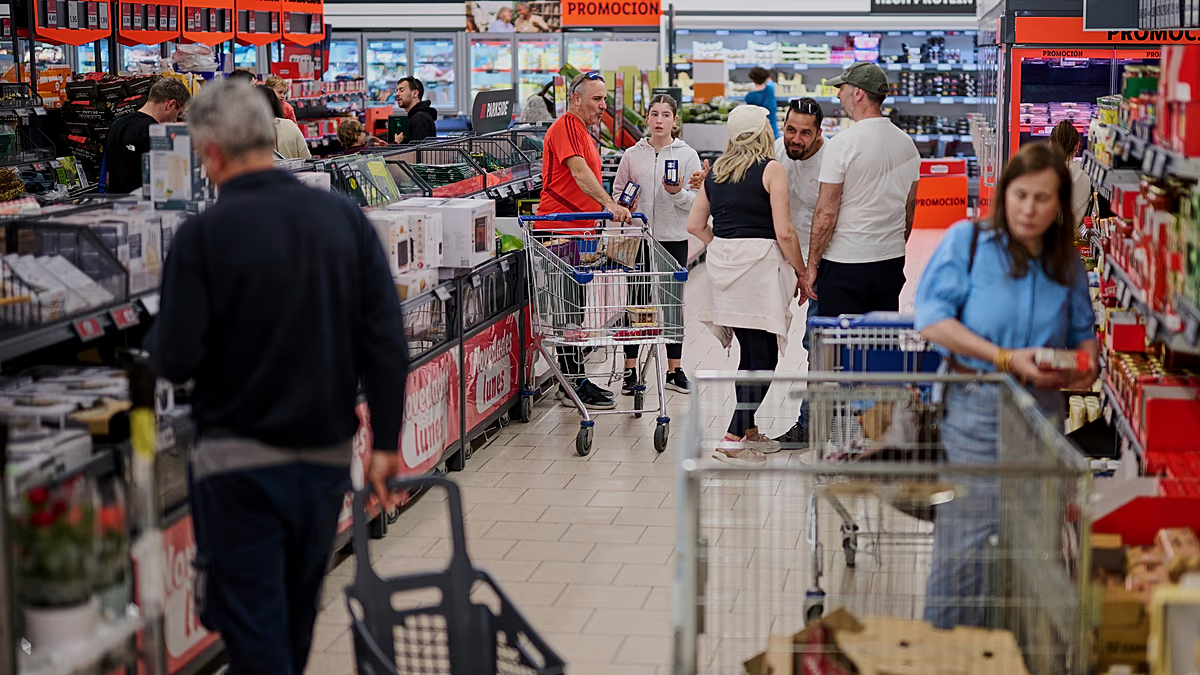
The latest inflation figures have painted a picture of frustrating economic stasis. For the third consecutive month, the Consumer Price Index (CPI) has remained frozen at a year-on-year rate of 3.2%, according to the final data for May released by the National Statistics Institute (INE). This plateau follows a period of significant fluctuation and confirms the preliminary estimate provided at the end of last month. The persistence of inflation above the 3% mark underscores a persistent pressure on household budgets, occurring against a complex backdrop of ongoing international conflict. The month-on-month change further illustrates a cooling pace, with prices rising a modest 0.1% in May, a slower creep than the 0.4% increase seen in April. This overall stability, however, masks significant churn within the economy, as different sectors pull the cost of living in opposing directions.
A closer look at the components reveals a tug-of-war within the inflation data. On one side, the costs of transport, leisure, sports, and cultural activities exerted upward pressure. A notable driver was the price of package holidays, which, while still falling, did not decline as sharply as they did in May of the previous year, resulting in a relative increase that nudged the overall index higher. This suggests that while certain discretionary spending areas are normalizing, they are not returning to pre-inflation norms quickly enough to provide relief. On the other side of the scale, significant relief came from the clothing and footwear sector, and most crucially, from food and non-alcoholic beverages. The annual rate for food inflation eased to 2.2%, a welcome four-tenths of a point drop from April, driven largely by more favorable prices for fruits, vegetables, legumes, and potatoes. This cooling of food prices is a critical development for everyday consumers who have borne the brunt of the cost-of-living crisis at the supermarket checkout.
However, a more concerning signal lies beneath the headline figure. The measure of underlying inflation, which strips out the volatile categories of energy and unprocessed food to gauge deeper, more entrenched price pressures, actually ticked upward. It rose to 3.0%, a tenth of a point above the initial estimate and two-tenths higher than in April. This subtle increase suggests that the inflationary impulse is becoming more embedded in the core services of the economy, potentially making it harder to dislodge. Furthermore, the harmonized index used for European comparisons stood at an even higher 3.6%, indicating that the country’s inflation experience, while stable, remains more intense than the EU average. These underlying figures muddy the otherwise steady picture, hinting at persistent challenges that the headline CPI’s plateau may be obscuring.
The government has been quick to frame this stability as a success of its policy interventions. Officials have pointed to a combination of general support measures and the specific “renewables shield” as key factors in preventing a new surge in prices. They have explicitly credited their Response Plan to the Middle East conflict with dampening headline inflation by more than a full percentage point, arguing that without these fiscal cushions, the figure would be significantly higher. This narrative of defensive action is central to the executive’s message of relative calm and control in a turbulent global environment. The acknowledgment of the international context is critical, as the ongoing war in Iran continues to inject volatility, particularly into global energy markets, creating a persistent headwind for domestic price stability.
In recognition of these ongoing external threats, the government is not standing still. Over the coming fortnight, it has announced plans to convene a series of critical meetings with representatives from the energy, agri-food, and industrial sectors. The goal of these summits is to conduct a fresh analysis of the war’s cascading impact on supply chains and production costs. This consultative approach signals a proactive, if cautious, stance; the administration is preparing to recalibrate its anti-crisis shield, ready to extend, adjust, or introduce new measures if the situation demands it. The focus appears to be on maintaining a flexible defense, ensuring that the existing tools are adequate to prevent the external shock from reigniting a more severe inflationary spiral within the domestic economy.
Ultimately, the May inflation report presents a moment of precarious equilibrium. While the headline freeze and the retreat in food prices offer tangible, if modest, relief to consumers, the rise in underlying inflation sounds a note of caution. The nation finds itself in a holding pattern, with government interventions acting as a buffer against international storms, but with core price pressures proving stubborn. The path forward hinges on two volatile factors: the duration and intensity of the distant conflict, and the government’s agility in adapting its economic safeguards. For now, households and policymakers alike are left navigating a landscape where stability feels less like a victory and more like a temporary, hard-fought respite.