



A major transportation artery has been severed, casting a pall of disruption over Southeast England. In the early hours, a lorry fire of significant intensity erupted on the M25, London’s orbital motorway and one of the busiest roads in Europe. The incident has forced the complete closure of the carriageway in both directions between Junctions 27 (Epping) and 26 (Waltham Abbey), effectively cutting a vital section of the ring. National Highways, the body responsible for England’s motorways, confirmed the blockage, stating simply that updates would follow—a signal of the seriousness and evolving nature of the situation. For countless drivers, from shift workers to freight hauliers, this news translates immediately into cancelled plans, frustrating delays, and a night of travel thrown into chaos.
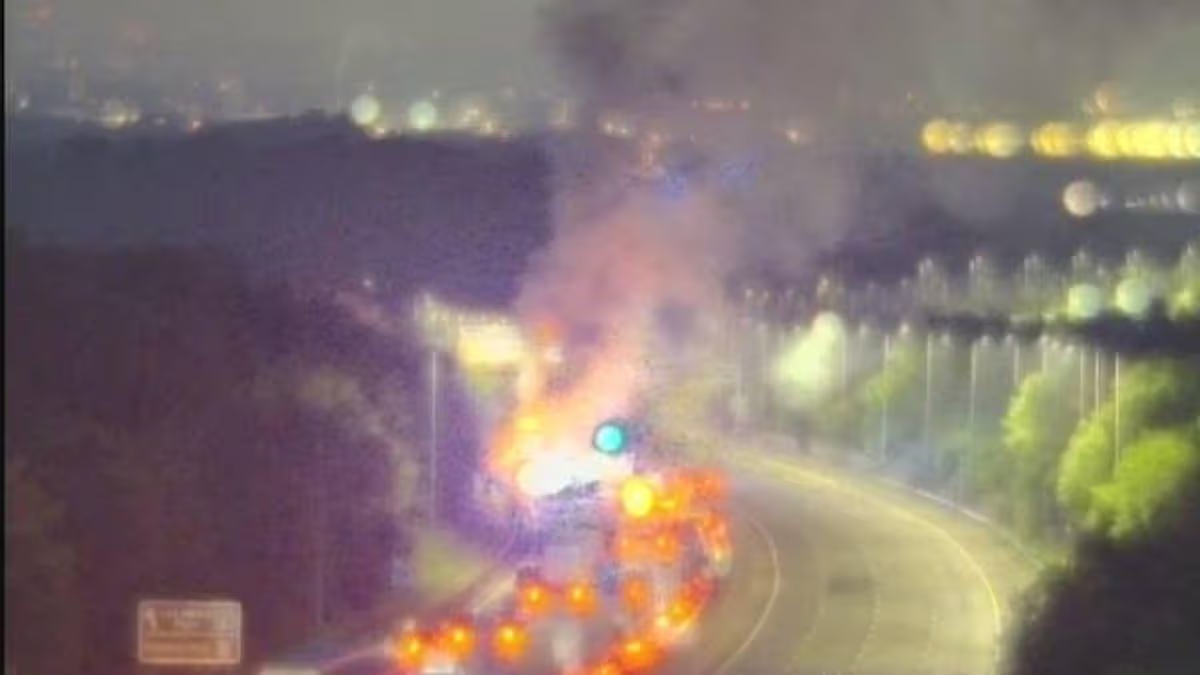
The visual evidence of the fire’s ferocity is stark and alarming. Traffic cameras overlooking the scene paint a picture of a profound emergency. Instead of the usual streams of headlights, the footage shows a towering, dark plume of smoke billowing into the night sky, illuminated from below by the fierce glow of the flames. The source is a commercial goods vehicle, now fully ablaze and occupying the carriageway like a monolithic, burning obstacle. Behind it, in both directions, traffic has ground to an absolute halt; rows of red brake lights stretch into the distance, marking the extent of the growing queue. This silent, digital testimony underscores not just an accident, but a major incident requiring a substantial emergency service response.
The human impact of this closure is immense and multifaceted. For those caught directly behind the fire, the experience is one of frightening proximity and forced patience, with drivers and passengers likely evacuated from their vehicles for safety. But the ripple effects extend far beyond the immediate scene. The M25 is a critical circulatory system for the London region, and its blockage causes congestion to back up rapidly onto connecting routes and local roads in Essex and Hertfordshire. Early morning commuters face the dispiriting prospect of gridlock, while the logistics and supply chain industry suffers a direct hit—perishable goods may be delayed, critical deliveries postponed, and the cost of operational disruption mounts by the hour.
At the scene, a coordinated ballet of emergency and recovery services is undoubtedly underway. Fire crews from multiple stations are likely engaged in a defensive battle, working not only to extinguish the fierce blaze but to prevent it from spreading or causing a catastrophic explosion, especially if the lorry was carrying hazardous materials. Police are managing the large-scale closure, establishing diversions, and ensuring public safety. Once the fire is subdued, the complex recovery phase begins: investigators will need to examine the charred wreckage to determine the cause, while heavy-duty recovery vehicles must clear the scorched remains from the carriageway. This process alone can take many hours, especially if the road surface itself has been damaged by the intense heat.
For the public, the advice from authorities remains consistent and clear: avoid the area entirely. Official diversion routes will be in place, typically guiding traffic off the motorway to navigate through signed alternative paths, but these local roads are not designed for such volume and will become severely congested. The most pragmatic advice for travellers is to check live traffic updates from National Highways or trusted travel news services before setting out, to allow for substantial additional journey time, or to consider postponing non-essential travel until the situation is fully resolved. The path to normalcy will be gradual, with one-direction openings possibly preceding a full reopening.
As dawn breaks over the scene, the incident serves as a stark reminder of the fragility of our interconnected transport networks. What begins as a single vehicle fault can, in moments, escalate into an event that disrupts the daily rhythm of an entire region. The lorry fire on the M25 is more than a traffic report; it is a story of emergency response, of logistical headache, and of thousands of individual plans reshaped by an unexpected column of smoke against the night sky. The road will eventually reopen, but the hours of delay, the economic cost, and the memories of those caught in the disruption will linger long after the last ember is cooled and the final lane is cleared.