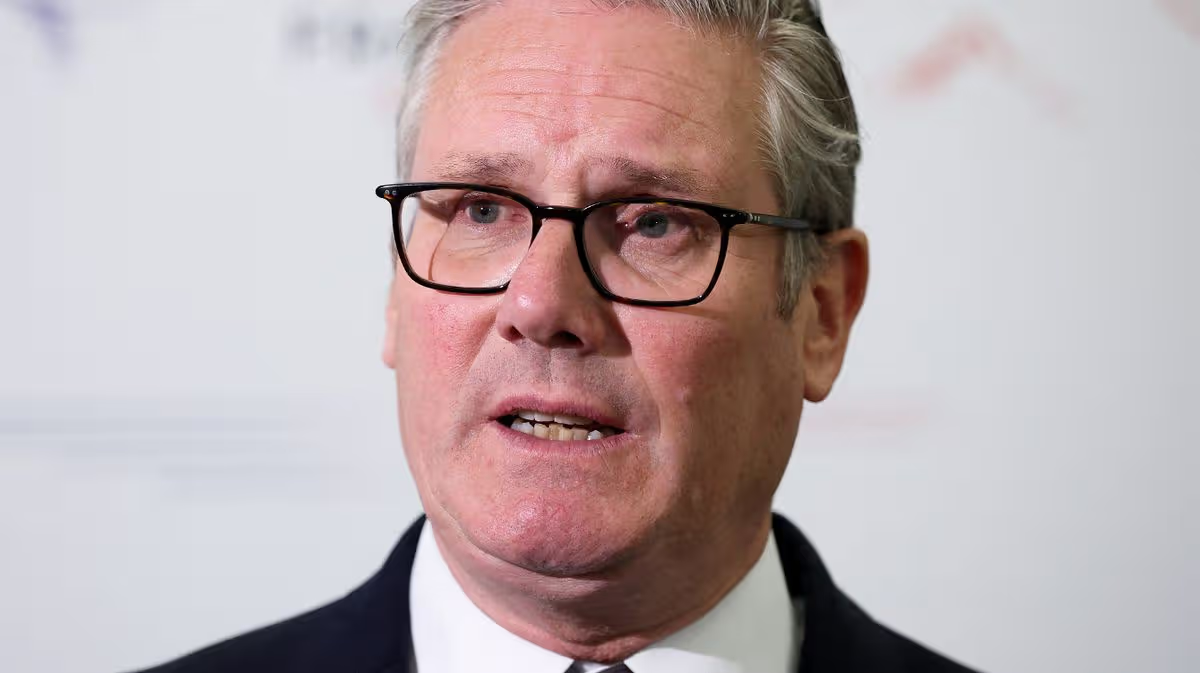



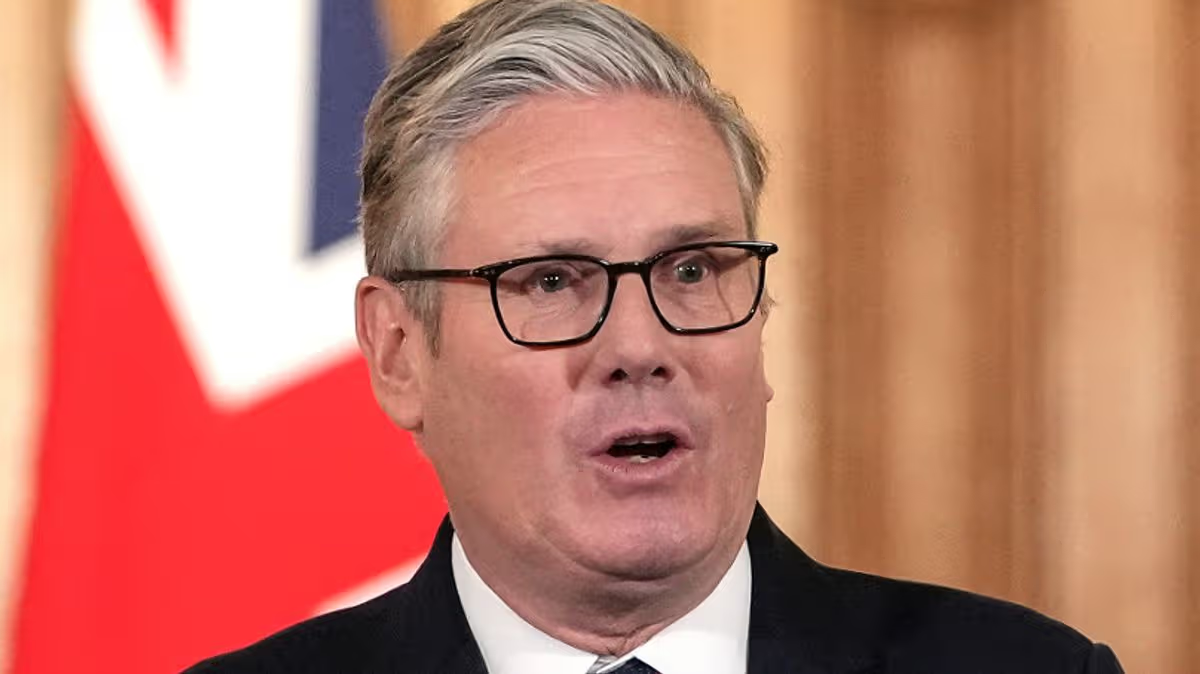
In a heartfelt and compelling address, Prime Minister Keir Starmer has announced what his government frames as decisive action to protect children online: a ban on social media access for those under the age of 16. Citing overwhelming support from parents, the Prime Minister’s speech was a masterful performance, weaving together a tender reflection on universal parental desires for children’s safety with a firm promise of change. Dubbed ‘Australia+’, the plan, set for rollout next spring, would block under-16s from major platforms like TikTok, Instagram, Snapchat, Facebook, YouTube, and X. For older teens, it proposes restrictions on tech functionalities to avoid a ‘cliff edge,’ alongside overnight curfews and measures against infinite scrolling. On the surface, it’s an emotionally persuasive package that responds to genuine societal anxiety. Yet, behind the warm, fuzzy messaging lies a policy that risks being both practically flawed and strategically misdirected, failing to address the root causes of online harm while potentially creating new problems for families and educators.
The core appeal of the ban is understandable. In an ideal scenario, it would provide a clear, simple boundary, shielding younger children from documented harms like cyberbullying, inappropriate content, and addictive design features. It could create a crucial window for families to focus on digital literacy, teaching respect, consent, and critical thinking before the social media floodgates open. However, this positive outcome hinges on a substantial, unwavering government commitment to fund and implement nationwide education and support programs—a commitment not yet detailed. Furthermore, the Australian model, which inspired this ‘+’ version, offers a cautionary tale. It has proven notoriously difficult to enforce, with children easily circumventing age checks through VPNs, borrowed accounts, or simply lying about their age. This raises a critical question: if the ban is so porous, is it truly a protection, or merely a symbolic gesture that outsources the real enforcement burden onto parents and schools?
A deeper concern is that this approach may inadvertently let the most powerful actors—the social media platforms themselves—off the hook. The announced measures focus overwhelmingly on keeping children off the platforms, with penalties for companies that fail to implement age verification. While this sounds stringent, it creates a perverse incentive. As long as a platform demonstrates it has an age block in place, its fundamental responsibility seems to end. If a determined 14-year-old bypasses the block and encounters abuse, exploitation, or harmful content, the platform could argue it has technically complied with the law. This framework does little to compel these companies to redesign their core environments to be safer, healthier, and less toxic for all users, including the 16- and 17-year-olds who will soon gain access. The policy, therefore, risks serving the interests of tech moguls more than children, allowing them to continue business-as-usual while the government handles the dilemma of exclusion.
This shortcoming is thrown into stark relief by the Prime Minister’s own promotional strategy. Minutes after his earnest speech, a video of the announcement was shared on his official X (formerly Twitter) account—the very platform included in the under-16 ban. X is a potent symbol of the unresolved online safety crisis. It has been implicated in stoking civil unrest, hosts rampant misogyny and abuse, and its owner, Elon Musk, has personally targeted UK politicians like former minister Jess Phillips with dangerous rhetoric that led to horrific rape and death threats. The platform’s AI chatbot, Grok, only had its ability to generate nude images of women removed under threat of a UK ban. The irony is glaring: the government is declaring a platform too harmful for a 15-year-old, while simultaneously using it as a primary channel for official communication to the public. This highlights the policy’s fundamental contradiction—it does not mandate that these spaces be made fit for anyone, it simply delays entry into them.
The selective scope of the ban creates further practical headaches. While major platforms are included, encrypted messaging services like WhatsApp and Signal are exempt. Ministers promise cross-platform enforcement to prevent live-streaming by children and contact from strangers, but the very architecture of these apps—with disappearing messages and large, private groups—makes such oversight incredibly difficult, if not impossible. This could simply push risky interactions into darker, less monitorable corners. Meanwhile, the inclusion of YouTube presents a distinct challenge for the education sector. Countless schools rely on it for educational videos and resources. Will students be blocked from these materials on school devices? If exemptions are made for educational use, how will that be managed without creating a chaotic patchwork of access? This adds yet another administrative burden to schools already stretched thin, demanding clear guidance and technological support that has not been forthcoming.
Ultimately, the proposed ban feels like treating a symptom while ignoring the disease. We have been here before with legislation like the Online Safety Act, which has failed to substantively protect women and girls from the torrent of online abuse, despite ministerial assurances. The expert consensus for months has warned of the unintended consequences of blunt age bans, including stifling youth communication, hindering access to supportive communities, and failing to address platform design. The right path forward is more complex but more effective: applying relentless pressure on tech giants to implement true ‘safety by design.’ This means overhauling algorithms that promote outrage and harm, instituting robust and timely moderation, creating effective pathways for reporting abuse, and designing interfaces that discourage addiction. Without this fundamental reform, we are merely postponing the problem. Come their 16th birthday, young people will still step into the same murky, predatory digital waters, just without the lifebelt of gradual, guided experience and with no guarantee the environment itself is any safer. The Prime Minister’s heart may be in the right place, but true leadership requires not just comforting promises, but policies that tackle the powerful at the source of the harm.