


The vibrant streets of Geneva, typically a symbol of international diplomacy, became the stage for a profound clash of ideals on a sweltering summer afternoon. The day had begun with a powerful, peaceful demonstration, one of the largest Switzerland has witnessed in recent years. An estimated 20,000 people, a diverse coalition united by shared concerns, marched near the iconic United Nations headquarters. Environmental campaigners, feminist groups, supporters of Palestinian rights, and anti-globalization activists walked side-by-side, their banners a tapestry of dissent against the policies of the world’s most powerful nations. Their gathering was a direct response to the impending G7 summit just across the lake in Évian, a vivid reminder that the decisions made behind closed doors by a handful of leaders resonate loudly in the lives of citizens globally. Under the intense heat, the march was a potent, visual petition for urgent social and environmental reforms, a collective cry for a different political and economic direction.
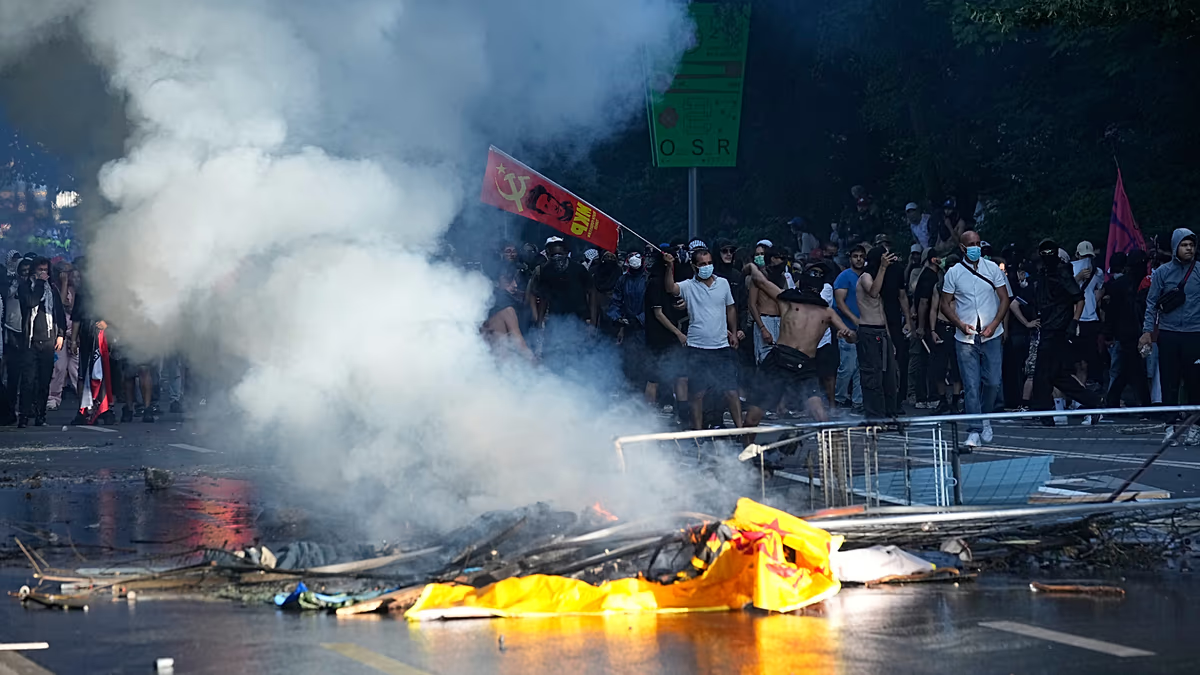
This monumental display of civil society, however, unraveled as the day progressed. A faction within the larger crowd, their identities obscured by masks, escalated the protest into a direct confrontation. The symbolic critique transformed into physical conflict as projectiles—bottles, stones, and fireworks—began to fly towards lines of police officers. The authorities, having deployed thousands of security personnel in a massive pre-summit operation across the region, responded with tear gas and water cannons. The acrid smell of smoke soon mingled with the summer air, and the dynamic shifted from one of demonstration to one of unrest. Tensions crackled as the clash of ideologies became a literal battle for control of the city’s streets, with orders to disperse echoing against the sounds of chaos.
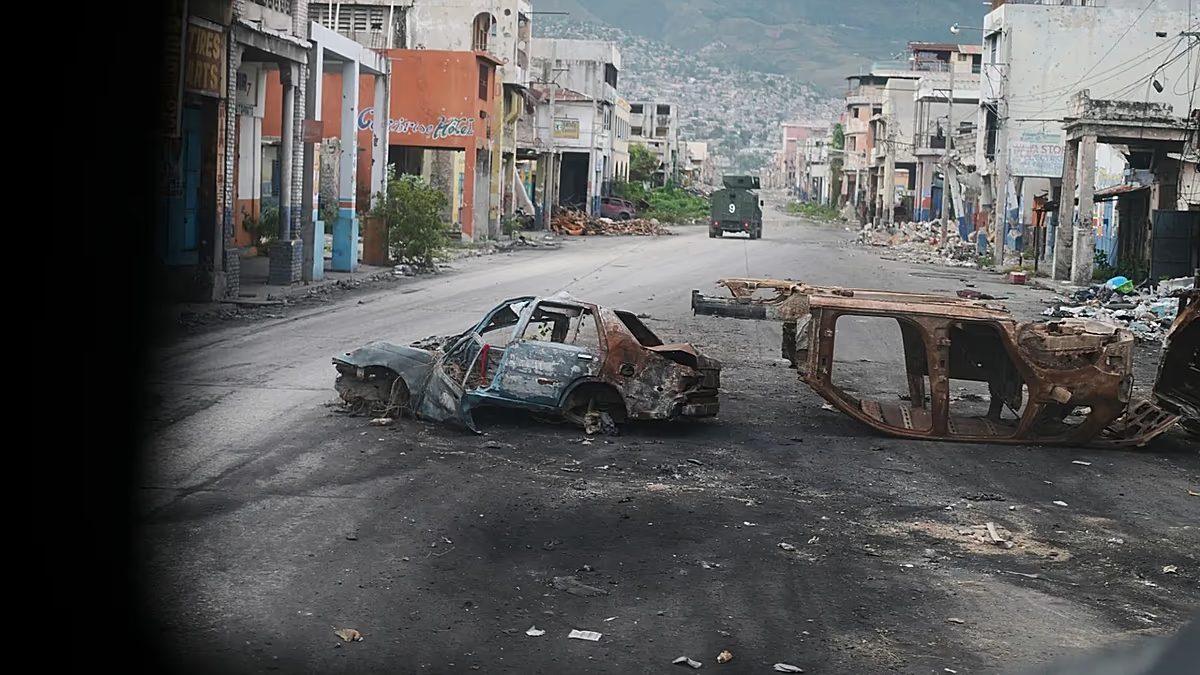
The aftermath of the escalation painted a scene of disruption far removed from the morning’s orderly march. A vehicle, caught in the wrong place, burned as a stark testament to the volatility. Reports emerged of several buildings being damaged, their windows and façades bearing the scars of the conflict. What had been a concentrated protest route became the epicenter of a disturbance that rippled out into surrounding parts of the city. This violence, though carried out by a minority, cast a long shadow over the broader message of the day, complicating the narrative and shifting the immediate focus from the protesters’ demands to the spectacle of disorder itself.
The profound irony of the day lies in the stark contrast between its beginning and its end. The initial march represented the very essence of democratic expression in the shadow of global governance institutions. Yet, the subsequent violence risked overshadowing the substantive issues that brought thousands into the heat: the climate crisis, global inequality, armed conflicts, and a deep-seated sense of political disenfranchisement. These participants believed the G7 forum, discussing the war in Ukraine, Middle East tensions, and economic challenges, perpetuates a system they see as fundamentally flawed. Their peaceful assembly was an attempt to project an alternative vision of justice and sustainability onto the global stage.
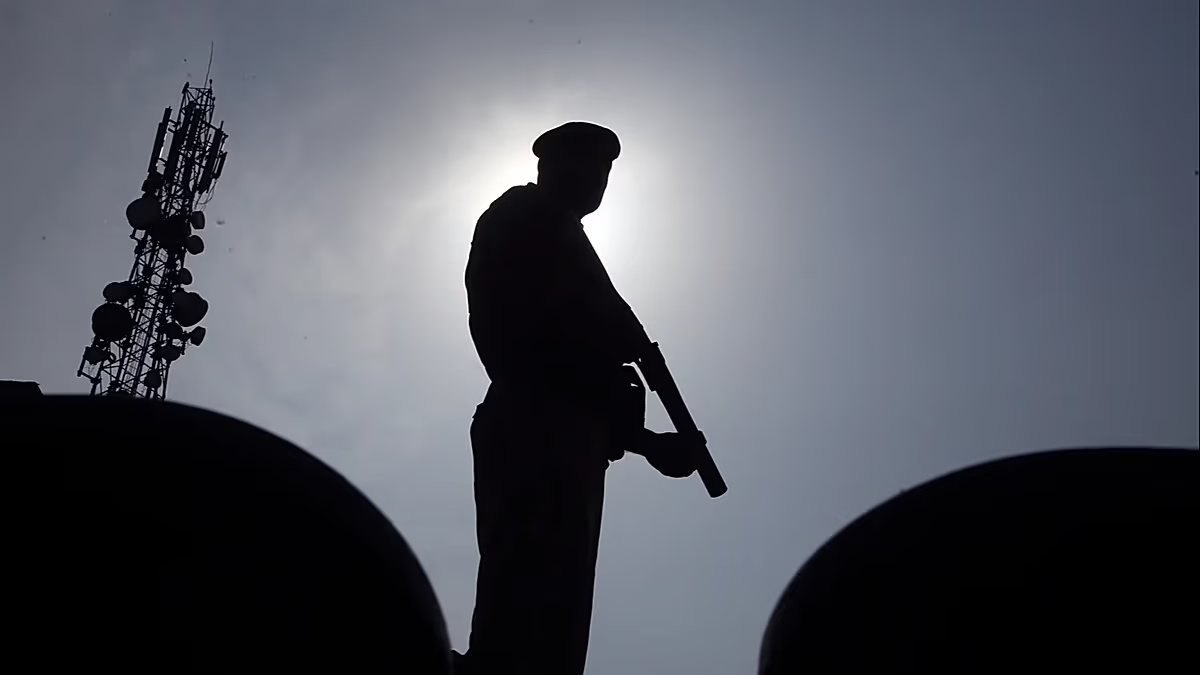
In response to the turmoil, the heavy security presence in Geneva and Évian stood as a fortress around the summit, a literal and figurative barrier between the leaders and the led. The deployment underscored a global reality: such high-stakes meetings now occur within a cordon sanitaire, insulated from the public they purport to serve. While the vast majority of demonstrators sought to engage in a dialogue of dissent, the actions of a few forced a language of force, allowing authorities to frame the event primarily through the lens of security and law enforcement, potentially sidelining the underlying critiques.
Ultimately, the day in Geneva served as a microcosm of a wider global friction. It encapsulated the passionate frustration of citizens who feel existing political structures are inadequate to address converging crises, and the inevitable, often tense, response of states to any threat to public order. The burned vehicle and the damaged buildings will be repaired, but the questions raised by the thousands who marched peacefully will persist long after the tear gas clears. The event was a reminder that behind the headlines of chaos, there lies a deeper, more enduring struggle over who sets the global agenda and for whose benefit—a debate that the sealed-off summit in Évian could hear, but perhaps not fully heed.