



A Glimmer of Hope Amidst Tragedy: Stephen Ogilvie’s Long Road to Recovery
In a development that offers a fragile but vital sense of hope, the family of Belfast stabbing victim Stephen Ogilvie has announced that he has awakened from an induced coma. The news, shared on Wednesday, provides the first positive update since a horrifying attack last week that shocked the community and ignited wider social tensions. While this moment marks a critical turning point, the family’s statement immediately tempers relief with the stark reality of the profound challenges that lie ahead for Stephen. His emergence from the coma is not an end, but the beginning of an arduous journey of physical and emotional healing, underscoring the lasting and brutal impact of a single act of violence.
The details of the attack, as described by his family and authorities, paint a picture of almost unimaginable brutality. Stephen Ogilvie was subjected to a stabbing so severe it has been characterized by some as an “attempted beheading.” The assault on Kinnaird Avenue in north Belfast left him with catastrophic injuries: he has already lost his left eye, suffered deep lacerations to his head, face, and back, and now faces the grim possibility of losing sight in his right eye as well. The human cost of the incident is immeasurable, extending far beyond the physical wounds to encompass the trauma inflicted upon his loved ones, who now must guide him through an uncertain future defined by significant medical and rehabilitative battles.
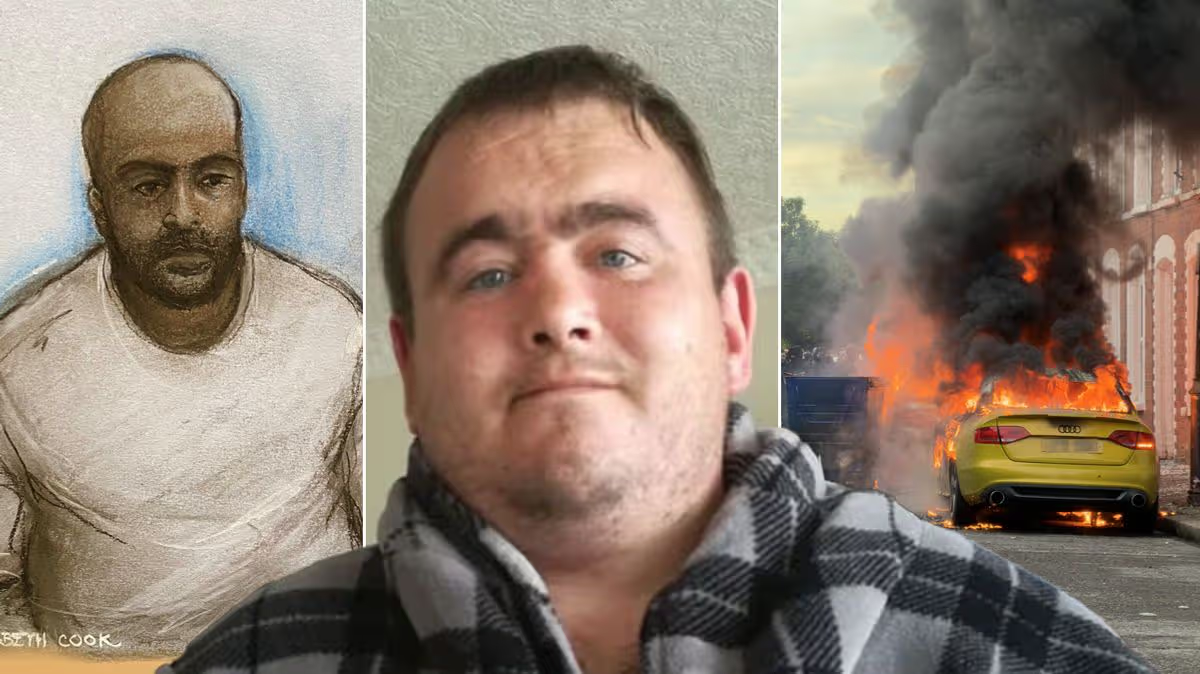
As Stephen fights for his future in a hospital bed, the legal process against the accused, 30-year-old Hadi Alodid, is underway. Alodid, a Sudanese national who reportedly entered Northern Ireland via the Republic of Ireland in 2023 and was granted leave to remain, has appeared in Belfast Magistrates’ Court charged with attempted murder. His case, set for a further videolink hearing on July 8, will proceed through the judicial system. Meanwhile, Stephen’s family, navigating their own nightmare, took a moment to express profound gratitude for the public support that has enveloped them. “We have been truly humbled by the kindness of so many people, many of whom have never met our family,” they said, acknowledging the compassion that has served as a crucial counterweight to their anguish.
This act of violence, however, tragically transcended a single crime, becoming a catalyst for social unrest. A graphic video of the stabbing circulated online, where it was amplified by high-profile figures, including billionaire Elon Musk and far-right activist Tommy Robinson. This digital wildfire helped fuel calls for protests, which swiftly degenerated into serious anti-immigration disorder. The subsequent nights saw homes, cars, and a bus set ablaze, with individuals targeted based on their race. The police response led to 35 arrests and 23 charges to date, illustrating how quickly a localized tragedy can be exploited to ignite wider community strife and violence, burdening an already grieving city.
The narrative surrounding this case sits at a volatile intersection of personal tragedy, criminal justice, immigration discourse, and social media’s power to inflame. Stephen Ogilvie’s story is, first and foremost, one of a man and a family shattered by violence. Yet, the circumstances of the accused and the inflammatory online rhetoric surrounding the attack have pushed it into the center of a heated national conversation about asylum, integration, and public safety. These complex, policy-laden debates now backdrop the very human, simple need of a victim to heal and a community to find peace.
Ultimately, the path forward is bifurcated. For Stephen Ogilvie and his family, the road is one of medical appointments, rehabilitation, and the slow, painful process of adapting to life-altering injuries. Their courage is met by the continued support of a community that has shown its capacity for empathy. For Belfast and beyond, the journey involves upholding the rule of law, allowing justice to proceed without prejudice, and thoughtfully addressing the deep-seated societal issues exposed by the subsequent riots—all while protecting the dignity of a victim who deserves to be remembered not as a political symbol, but as a man reclaiming his life from the brink. His awakening is a first, tentative step on both of these long roads.