
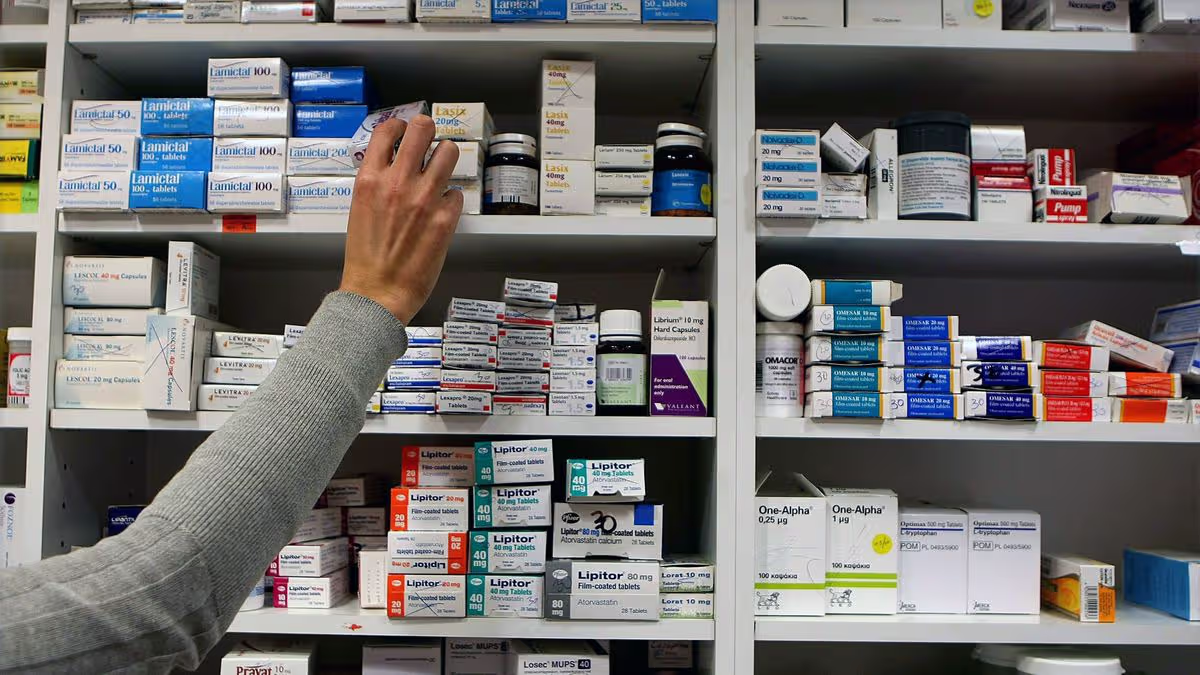


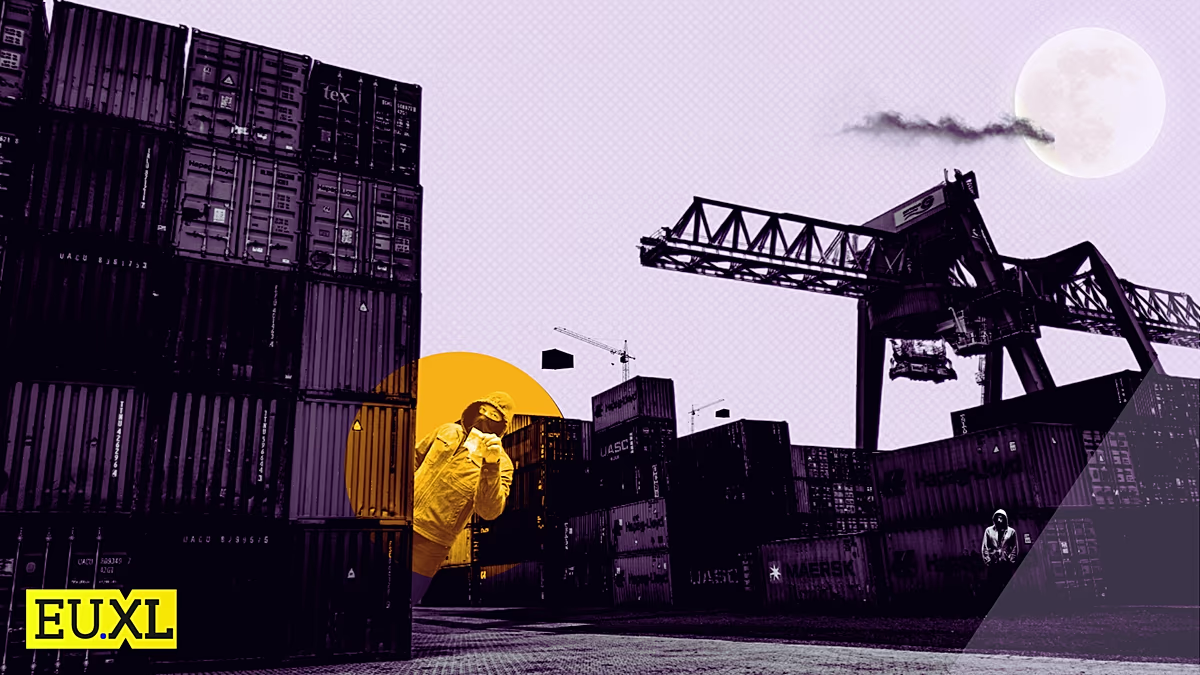
The landscape of drug use and trafficking in Europe is evolving into an increasingly complex and dangerous crisis, as detailed in the European Union Drugs Agency’s (EUDA) 2024 report. The findings, which cover 27 EU nations alongside Norway and Türkiye, paint a concerning picture of a market where drugs are more accessible, more potent, and more difficult for authorities to intercept than ever before. This is not merely a continuation of old trends but an escalation, driven by innovation on the part of producers and traffickers. Synthetic drugs, in particular, are being manufactured with ever-greater strength and purity, while global supply chains have become remarkably sophisticated, leveraging technology and globalization to flood European markets. This rising tide of narcotics carries with it a surge in violence, especially in and around the continent’s major logistical hubs like the ports of Antwerp, Rotterdam, and Hamburg, where criminal organizations clash over control of these crucial gateways. The human cost is tragically measurable; the EUDA estimates that at least 7,600 individuals in the EU lost their lives to overdoses in 2024, with opioids being the primary driver, often in deadly combination with other substances.
In response to this mounting threat, the European Union has unveiled a new strategic framework, the EU Drugs Strategy 2024-2030, formally approved by the Council in early June. This comprehensive plan is structured around five pillars: enhancing preparedness and resilience, strengthening public health approaches, bolstering security, prioritizing harm prevention, and deepening international cooperation. A key operational focus is the implementation of a dedicated strategy for securing the vulnerable port ecosystems that criminals have exploited. Furthermore, the strategy aims to empower key EU agencies—Europol, Frontex, and the EUDA itself—with greater authority and resources to disrupt trafficking networks and intercept shipments. On paper, this represents a holistic attempt to address both the supply of drugs through enforcement and the demand through health-oriented measures.
However, this new strategy has been met with significant scepticism from public health advocates and drug policy reformers. Organizations like the Global Commission on Drug Policy argue that despite the mention of public health and harm prevention, the plan’s practical emphasis and funding disproportionately favour law enforcement and security measures. They warn that a singular focus on hardening major ports, while necessary, may simply displace trafficking to other, less fortified entry points or encourage smugglers to innovate new methods, a phenomenon often described as the “balloon effect.” The concern is that an over-reliance on punitive measures could come at the expense of proven, life-saving harm reduction services, such as supervised consumption sites, naloxone distribution, and drug checking programs, which are vital for addressing the overdose crisis detailed in the very same EUDA report.
The core tension lies in balancing the immediate need for security with the long-term imperative of public health. While intercepting shipments and dismantling criminal networks is undeniably crucial for community safety and reducing availability, critics stress that it does little to address the existing population of people who use drugs, particularly those with substance use disorders. The report’s stark overdose figures—7,600 lives lost—highlight a population in urgent need of support, not just interdiction. A strategy perceived as prioritizing punishment over care risks further marginalizing vulnerable individuals, driving drug use deeper underground and making it harder for health services to reach those most at risk of fatal overdose, especially from the potent synthetic opioids now proliferating.
Ultimately, the EUDA’s report serves as a sobering dashboard, illustrating the velocity and direction of a crisis that shows no signs of abating. The EU’s new strategy recognizes the multifaceted nature of the challenge, yet its success will be judged not by its ambitions but by its implementation. Will increased powers for enforcement agencies be matched with equitable investment in healthcare systems, addiction treatment, and holistic harm reduction? Can the ports be secured without neglecting the neighborhoods? The coming years will test whether Europe can effectively synthesize its security and health responses, moving beyond a cycle of enforcement and displacement toward policies that genuinely reduce both the power of criminal enterprises and the tragic loss of life to overdose. The 7,600 deaths are not just a statistic; they represent a profound call for a balanced, compassionate, and evidence-based approach that protects communities from violence while safeguarding the health and dignity of all citizens.