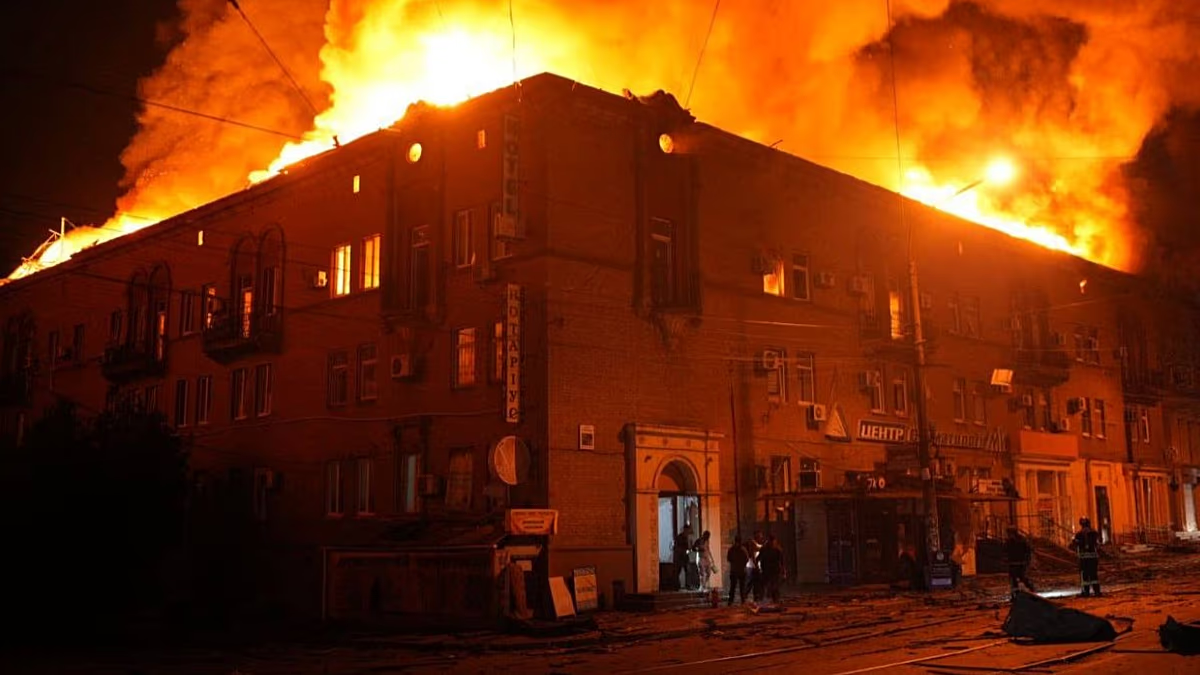

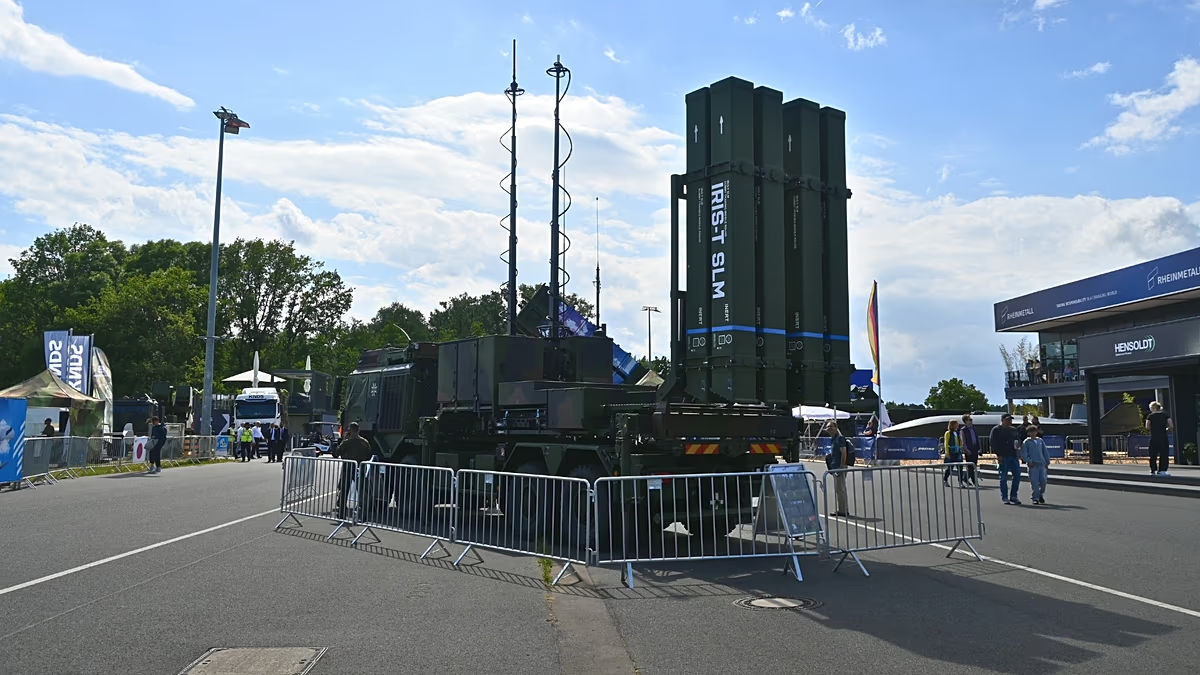


The relentless air war over Ukraine has placed the critical importance of modern air defense systems into sharp, global focus. Since the brutal invasion began, President Volodymyr Zelenskyy’s most consistent plea to his Western allies has been for more layers of aerial protection. In response, nations have scrambled to supply advanced systems, with Germany emerging as a key contributor. Beyond the well-known U.S.-made Patriot systems, Germany has provided its own sophisticated technology: the IRIS-T SLM. A recent demonstration at the International Aerospace Exhibition offered a human glimpse into this vital machinery, through the experience of Bundeswehr Staff Sergeant Thomas. He explained the system’s distinct advantage—a rotating, 360-degree radar mounted on a truck, paired with vertical launch canisters. This design allows a single unit to detect and engage threats from any direction, a crucial flexibility in the dynamic battlefield of Ukraine. In contrast, the longer-range Patriot system must be oriented toward an anticipated threat sector. For the operators, this advanced kit is designed for practical use. “In practice, there are only a few buttons to press,” Thomas noted, describing an interface that guides users through largely automated processes, a vital feature under the immense stress of combat.
The spotlight on systems like the IRIS-T SLM has intensified due to a growing global crisis in air defense inventory. The war in Ukraine, coupled with recent conflicts in the Middle East, has created a surge in demand for Patriot interceptors, leading to documented shortages and stretched supply chains. Manufacturers like Lockheed Martin are under pressure to ramp up production, but the pipeline is strained. This scarcity has prompted a pressing question: Could the German-made IRIS-T serve as a European-built alternative to alleviate the pressure on Patriot systems? Staff Sergeant Thomas, with hands-on knowledge of both, offers a nuanced perspective. He is clear that it is not a direct replacement, stating simply, “It’s not better – it serves a different purpose.” The Patriot’s paramount advantage is its vastly greater range and proven capability against ballistic missiles, the most challenging aerial targets. Furthermore, engaging threats at longer distances means less dangerous debris falling on populated areas below. The IRIS-T SLM, with a range of up to 40 kilometers, excels in medium-range defense, creating a complementary layer. This distinction underscores a fundamental principle of modern air defense: it is not about finding a single silver bullet, but about weaving a resilient, multi-layered net where different systems cover different altitudes and ranges.
While Germany invests significantly in bolstering its armed forces in the wake of Russia’s aggression, a glaring capability gap remains in its arsenal: the lack of long-range, deep-strike weapons. These systems are designed to hold an adversary’s critical military infrastructure, command nodes, and logistics hubs at risk hundreds of kilometers behind the front line, a powerful deterrent. To address this, the German government had negotiated with the United States to host American Tomahawk cruise missiles starting in 2026. However, this plan appears to have been quietly shelved, reportedly due to concerns within the U.S. political establishment about potential escalation with Russia. For Berlin, this represents a significant setback in its efforts to build a credible deterrent posture, leaving a void in its strategic toolkit just as European security demands more robust, independent capabilities.
Intriguingly, a potential solution is emerging from an unexpected partnership born of the war in Ukraine. At the same air show where the IRIS-T was demonstrated, German defense giant Diehl Defence announced a deepening collaboration with a Ukrainian company, Fire Point. This firm produces the Flamingo cruise missile, a long-range weapon with a reported reach of up to 3,000 kilometers that has already been used to strike targets deep inside Russia. One such strike hit a military facility in Izhevsk, roughly 1,300 kilometers from Ukraine, demonstrating the weapon’s potent capability. Now, Diehl and Fire Point are exploring the possibility of co-producing the Flamingo missile in Germany. This initiative represents a dramatic shift: a leading NATO member, long circumspect about offensive long-range weapons, is now considering jointly manufacturing a system developed by a nation actively at war. It is a fusion of Ukrainian battlefield innovation with German industrial precision and capacity.
This potential collaboration points to a broader, transformative trend in European defense. The war has acted as a brutal but effective proving ground, accelerating the development and refinement of weapons systems under real combat conditions. Ukrainian ingenuity, born of necessity, is creating advanced technology that is now attracting the interest of established Western arms manufacturers. For Germany, partnering to produce a system like the Flamingo could simultaneously help fill its own deep-strike gap, provide sustained support to Ukraine, and strengthen the European defense industrial base. It is a move that would signal a more pragmatic and proactive German security policy, one willing to embrace new partners and leverage proven designs to meet urgent strategic needs.
In conclusion, the landscape of European defense is being reshaped in real-time by the war in Ukraine. The discussion has evolved from simply donating existing stocks to fostering new industrial partnerships and addressing systemic weaknesses. The story is no longer just about the Patriot or the IRIS-T in isolation, but about building a comprehensive, resilient defense architecture. This includes layered air defense to protect cities and troops, and credible long-strike capabilities to deter aggression. Germany finds itself at a crossroads, moving from a post-Cold War era of military restraint to a new role as a major security provider. Its provision of IRIS-T systems and its exploratory talks on co-producing long-range missiles with Ukraine are two facets of this complex transition. The ultimate goal is a Europe that is more secure, self-reliant, and capable of defending the principles of sovereignty and stability, with lessons hard-learned from the front lines in Ukraine directly informing its future arsenal.