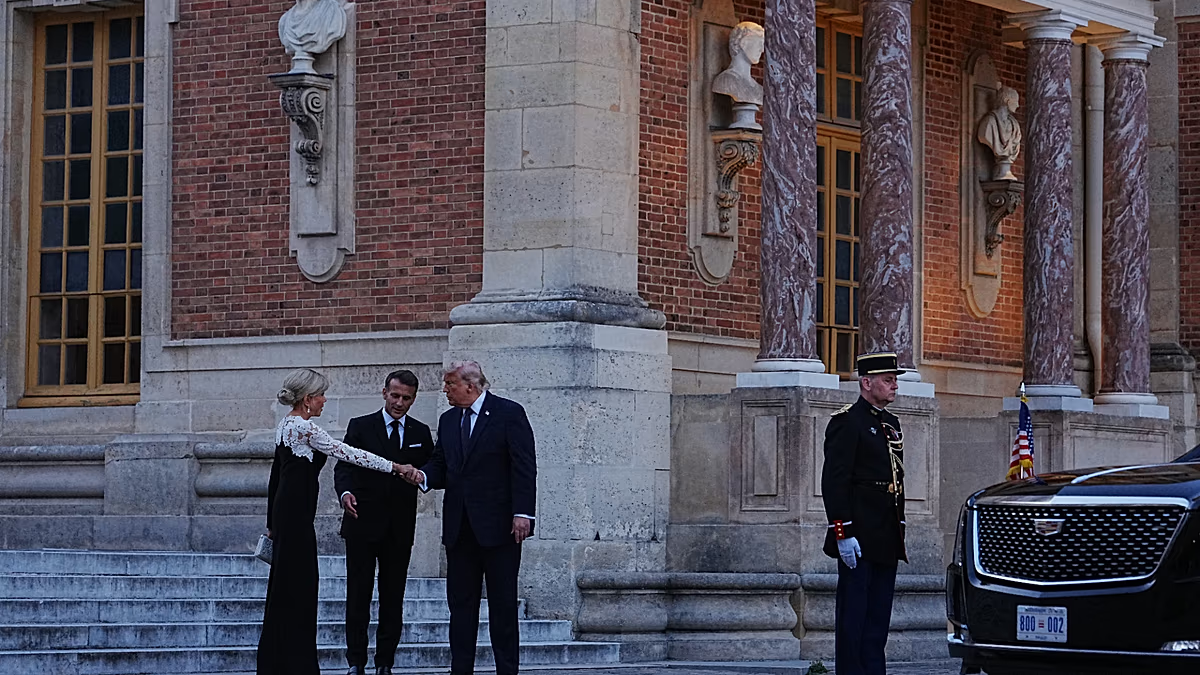


On a historic Wednesday, amidst the opulent halls of the Versailles Palace, a document was signed that aims to halt a war and reshape the geopolitics of the Middle East. US President Donald Trump and Iranian President Masoud Pezeshkian, through a process shrouded in days of secrecy and confusion, put their names to an interim agreement designed to bring immediate hostilities to an end. The signing, facilitated by Pakistani mediation, occurred not in a planned formal ceremony but almost casually, as Trump concluded a dinner with French President Emmanuel Macron. This symbolic setting, a venue for centuries of treaty-making, now hosted a fragile understanding between two nations that have viewed each other with profound distrust for decades. The core of the deal is a cessation of fighting and the start of a 60-day clock to negotiate a final, comprehensive settlement on the most contentious issue of all: Iran’s nuclear programme.
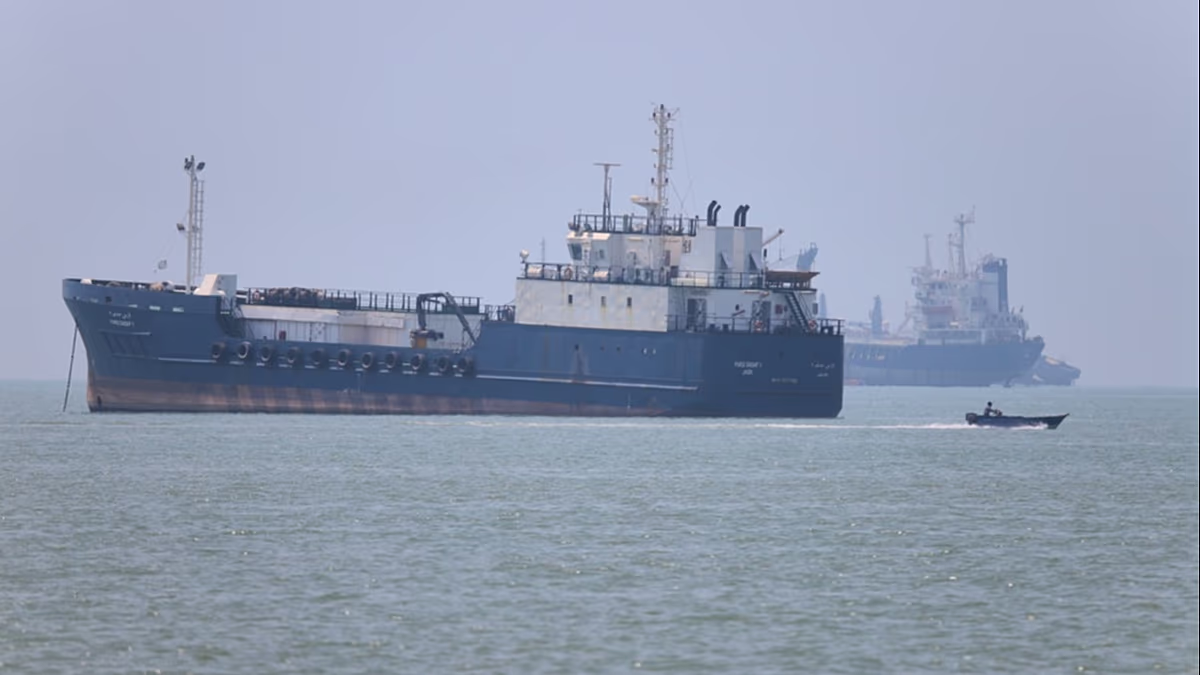
The immediate concessions within the agreement appear heavily tilted toward providing Iran with rapid economic relief, a significant shift from the previous US maximum-pressure campaign. In return for diluting its stockpile of highly enriched uranium, Iran receives a major upfront benefit: the waiver of key US-backed sanctions, allowing it to sell its oil freely on the global market once more. Furthermore, the deal mandates the reopening of the Strait of Hormuz, the vital waterway whose closure during the conflict triggered a global energy crisis. This reopening, without tolls for an initial two months, will allow roughly a fifth of the world’s oil and gas supplies to resume flow. For a nation whose economy has been crippled by sanctions, these measures represent a tangible lifeline, while the United States, for now, secures primarily a promise to return to the negotiating table.
However, the agreement reaches far beyond nuclear issues and oil, venturing into the explosive terrain of regional proxy conflicts. One of its most delicate clauses affirms a commitment to Lebanon’s territorial integrity in the face of Israel’s ongoing military operations and occupation. This point strikes directly at the heart of the US-Iran rivalry, as Iran is the principal backer of Hezbollah, the Lebanese group Israel is targeting. The deal implicitly, and controversially, links the US-Iran truce to the Lebanon-Israel conflict, with Iran having demanded an Israeli withdrawal—a condition Israel has already flatly rejected. This creates an immediate and potentially deal-breaking tension, as the United States attempts to balance its alliance with Israel against its desire to secure a broader regional ceasefire with Iran.
President Trump’s own statements reveal the profound fragility and the transactional nature he ascribes to this diplomatic breakthrough. Having gone to war in part to prevent Iran from acquiring a nuclear weapon and vowing to end its support for groups like Hezbollah, this interim deal achieves none of those maximalist goals. Yet, Trump hailed it as “very strong,” marketing it as a goodwill gesture to enable future talks. In the same breath, however, he displayed a characteristically defiant stance, underscoring its provisional nature. He explicitly noted that the document is a non-binding “memorandum of understanding,” warning, “if I don’t like it, we’ll go back to shooting at them, dropping bombs.” This rhetoric leaves the door wide open for a rapid return to conflict, suggesting the pen at Versailles might simply have been exchanged for a sword held in reserve.
The path forward is fraught with uncertainty, obscured by the very secrecy that surrounded the deal’s creation. The full text has not been released to the public, with details emerging only through leaks and contradictory reports from various capitals. The fate of a planned formal signing ceremony in Switzerland remains unclear, mirroring the overall lack of clarity about the next steps. Within the 60-day negotiation window, the fundamental disagreements that led to war—the scope of Iran’s nuclear programme, the future of its ballistic missile development, and its role as a regional power—must be resolved. Meanwhile, on the ground, the situation in Lebanon threatens to unravel the ceasefire before final talks even begin, testing the commitment of all parties to this new, uneasy peace.
In essence, this agreement is less a resolution and more a dramatic, high-risk pause. It trades immediate sanctions relief and economic opening for Iran against a promise of future diplomatic engagement, all while attempting to freeze multiple interconnected conflicts. The signing at Versailles may mark the end of one chapter of open warfare, but it inaugurates a new and complex chapter of diplomatic brinksmanship. The world now watches to see whether this temporary understanding can evolve into a lasting and stable peace, or whether the profound distrust between Washington and Tehran, compounded by regional rivalries, will prove too deep a chasm to bridge, making the applause in that historic palace nothing more than a brief interlude between acts of conflict.