




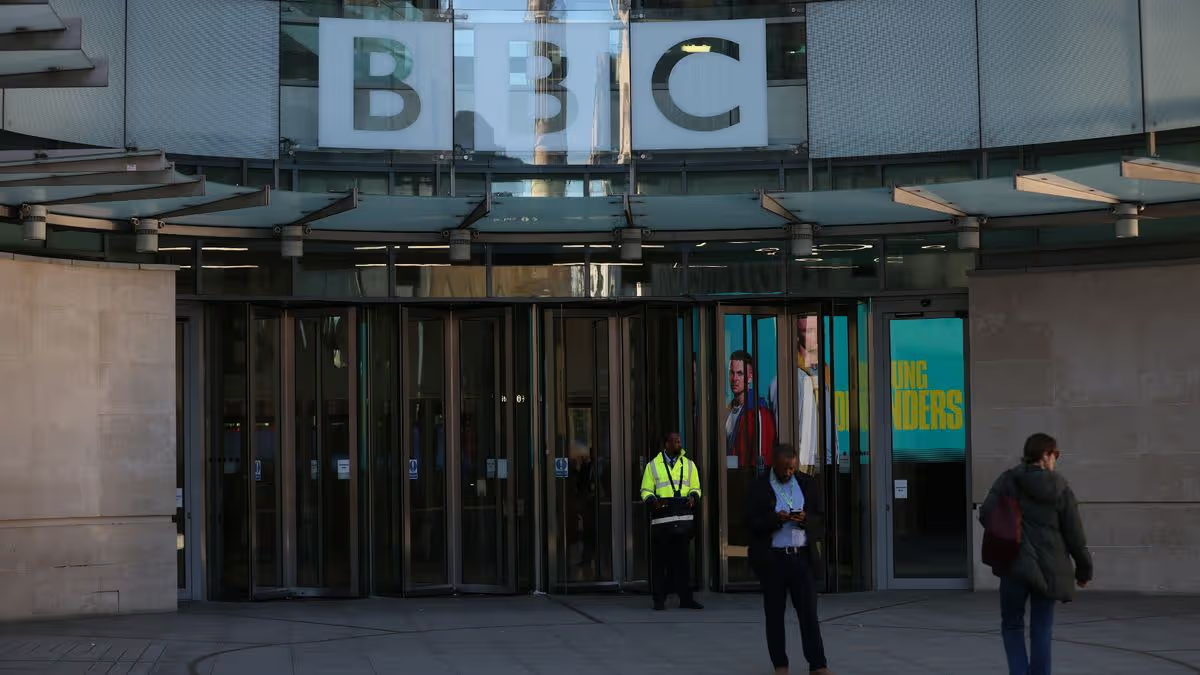
The BBC is embarking on a profound and painful transformation, announcing a sweeping set of cuts that will reshape the broadcaster from within. In a sobering email to staff, the new Director General, Matt Brittin, confirmed plans to eliminate 550 jobs from its core editorial, television, and radio operations. This move is not merely a staffing reduction but a fundamental retrenchment, accompanied by an £80 million cut to content spending. The affected roles span the very heart of the BBC’s public service mission: its News, Nations, and Content divisions. These initial cuts represent the first concrete phase of a larger, more daunting strategy to save £500 million over the next three years, signaling a period of deep uncertainty for the corporation and its employees.
This difficult announcement is part of a broader restructuring programme that will see the BBC’s total workforce shrink by between 1,800 and 2,000 people. Notably, more than a quarter of these planned redundancies will come directly from the teams responsible for creating the programmes and reporting the news that defines the BBC for millions. Furthermore, around 700 corporate support roles are also expected to disappear, aiming to create a leaner organisation. Brittin emphasised this internal flattening, pledging to reduce the number of senior leaders by at least ten percent in a bid to make the institution “simpler and faster.” The scale of the challenge is immense, with these first measures aimed at delivering approximately £160 million of the half-billion-pound savings target.
The cuts extend beyond personnel to the very architecture of the BBC’s services. In a significant admission of changing audience habits, the corporation announced it would review its entire portfolio of television channels and radio networks. As viewers and listeners increasingly migrate to digital and on-demand platforms like BBC iPlayer and Sounds, the traditional linear channel structure is under scrutiny. While specific programmes or services facing the axe have not yet been confirmed, this review threatens the future of some beloved outlets, potentially altering the British media landscape. It is a stark acknowledgment that the BBC must evolve from a traditional broadcaster into a modern digital media entity, even if that means sacrificing parts of its historic identity.
In his message, Director General Matt Brittin did not shy away from the gravity of the situation, warning staff that “difficult decisions lay ahead.” He acknowledged the dual pressure of making severe savings while upholding the BBC’s mission to inform, entertain, and educate a public living in “very uncertain times.” This tension lies at the core of the crisis: how to preserve the quality and breadth of a world-renowned public service while operating with significantly diminished resources. Brittin urged employees to seek support from their managers, a small gesture of solace in a communiqué otherwise filled with foreboding about the “doubly difficult time for everyone.”
The context for this drastic austerity drive is multifaceted. It follows the tumultuous exit of Brittin’s predecessor, Tim Davie, who resigned in November 2025 amid the fallout from a high-profile editorial controversy. The departure was linked to a massive £7.5 billion lawsuit filed by former US President Donald Trump over the editing of a Panorama documentary, an event that underscored the intense legal and political pressures facing the corporation. Brittin, who took the helm in May 2026, has inherited an organisation grappling with a frozen licence fee, rampant inflation in production costs, and fierce competition from deep-pocketed global streaming giants. These cuts are his first, formidable step in navigating these compounded challenges.
Looking forward, the BBC stands at a crossroads. The announced cuts to news, television, and radio operations are just the beginning, with further savings across all divisions to be detailed in the coming months. The path ahead promises more tough choices about what the BBC can and cannot do. The corporation must balance its inevitable digital future with its commitment to universal, freely available broadcast services. Every cancelled programme, every closed role, and every reduced commissioning budget will be felt by audiences. The ultimate test will be whether, after this period of contraction, a leaner BBC can still fulfill its founding purpose to a level that justifies the public’s trust and investment. The journey through this “very uncertain” time has only just begun.