



The Human Cost of a Broken Supply Chain: Britain’s Medicine Crisis Reaches a Breaking Point
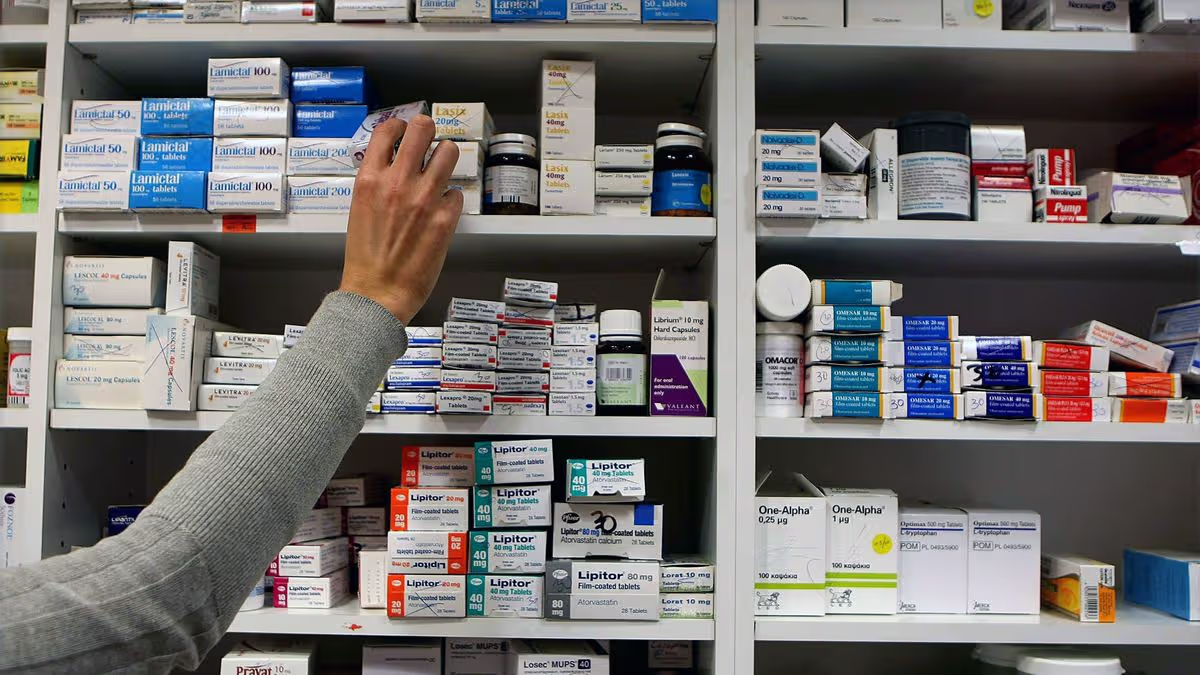
Across the United Kingdom, a quiet but profound crisis is unfolding within the walls of local pharmacies and GP surgeries. Pharmacists and doctors are raising the alarm over what they describe as the most severe and sustained medicine shortages they have ever witnessed. This isn’t a temporary glitch but a systemic failure, stretching from common painkillers to life-sustaining medications, placing patient safety in jeopardy and fraying the trust at the heart of healthcare. The National Pharmacy Association (NPA) reports that essential drugs for managing conditions like high blood pressure, chronic pain, and epilepsy are vanishing from shelves, creating a dangerous game of chance for those who depend on them. At the forefront of this crisis are medications like Ramipril, a cornerstone for cardiovascular health, and Creon, a vital enzyme supplement for individuals with cystic fibrosis or pancreatic cancer, without which they cannot properly digest food. The situation has deteriorated to a point where 96% of community pharmacies believe it poses a serious risk to their patients, signaling a nationwide emergency that can no longer be ignored.
The Stark Reality for Patients: Rationing and Desperation
For patients, the abstract concept of a “supply chain issue” translates into daily anguish and risky compromises. The shortage of Creon, driven by a Europe-wide production capacity problem expected to last into 2027, has forced individuals into impossible choices. Some have reported rationing their pills or consciously eating less to stretch their dwindling supplies—a desperate measure with severe consequences for nutrition and quality of life. Meanwhile, the frustration of being unable to obtain a prescribed medication is spilling over at pharmacy counters, with 83% of pharmacy teams reporting facing abuse or anger from distressed patients. This hostility, while unacceptable, underscores the deep anxiety and vulnerability felt by those whose health and well-being are held hostage by factors entirely beyond their control. One veteran pharmacist’s statement cuts to the core: they are experiencing the worst shortages in their thirty-year career, a testament to the unprecedented scale of the problem.
A System Under Strain: Pharmacists as Hunters, Not Healers
The strain on the healthcare system itself is immense and unsustainable. Pharmacists are being forced to spend hours each day not on patient care, but on logistical detective work—”hunting stock” by calling wholesalers and liaising with GP practices to track down alternatives. This inefficient scramble consumes time and resources that should be dedicated to clinical services, medication reviews, and supporting public health. The current protocol for managing shortages, known as Serious Shortage Protocols (SSPs), has become a permanent stopgap rather than a temporary solution. The SSP for Creon has been in place for over two years, a record length, as has one for Estradot, a key hormone replacement therapy. These extended protocols reveal a failure to resolve underlying manufacturing and distribution issues, instead normalizing a state of chronic scarcity.
A Call for Common-Sense Solutions and Swift Action
In response to this escalating crisis, healthcare leaders are uniting behind pragmatic calls for change. Both the Royal College of GPs (RCGP) and the NPA are urging the government to amend restrictive legislation that currently ties pharmacists’ hands. They advocate allowing pharmacists to make simple, safe substitutions to a prescription when the intended medicine is unavailable, provided it falls within clear clinical guidelines. This would prevent the wasteful and time-consuming “back and forth” where patients must return to their GP for a new prescription for an equivalent drug that the pharmacist already knows is in stock. Such a change, supported by robust communication systems between pharmacies and surgeries, would streamline care, reduce administrative burdens on overwhelmed GPs, and, most importantly, get patients the medicine they need without dangerous delays.
Demanding Accountability: The Need for an Emergency Taskforce
Beyond immediate regulatory fixes, there is a pressing demand for accountability and strategic action. Olivier Picard, chair of the NPA, has bluntly stated that the UK’s medicines market has “never been so volatile,” with primary care staff and patients bearing the brunt. The association is calling on the government to convene an urgent emergency taskforce that brings together all key players: drug manufacturers, wholesalers, distributors, and clinicians. The goal of this taskforce must be to move beyond crisis management and tackle the root causes of the disruptions—whether they lie in production bottlenecks, raw material shortages, or flawed pricing and procurement models. As Professor Victoria Tzortziou Brown, President of the RCGP, emphasizes, it is essential that when shortages occur, “the underlying causes are quickly identified and resolved.” A taskforce is the necessary first step toward restoring stability and transparency to a broken system.
Conclusion: A Test of Resilience and Political Will
The medicine shortage crisis is more than a supply chain story; it is a litmus test for the resilience of the NHS and the health of the nation. It exposes vulnerabilities in a system that millions rely upon for their daily survival and well-being. The distress of patients rationing life-saving pills, the burnout of pharmacists acting as supply hunters, and the frustration of GPs navigating endless administrative hurdles paint a picture of a healthcare landscape under severe duress. Addressing this requires both immediate legislative compassion—empowering pharmacists to act in their patients’ best interests—and sustained political will to fortify the UK’s medicine supply chain for the long term. The health of the public cannot wait for the market to self-correct; it demands decisive, coordinated, and patient-centered action now.