


The Global Race to the Sky: A Human Look at the World’s Most Iconic Skylines
My phone’s camera roll is a digital mosaic of the world’s greatest cities, each frame trying to capture the unique essence of a metropolis against the horizon. From the historic grandeur of London to the neon-drenched canyons of New York, and the futuristic silhouettes of Doha to the soaring towers of Shanghai, I’ve stood in awe on countless observation decks and sidewalks. Yet, if pressed to crown one as the definitive “best,” I’d be tongue-tied. How does one compare such different expressions of human ambition and architectural artistry? Fortunately, I no longer have to make that impossible choice alone. A recent study by Radical Storage has undertaken the monumental task of ranking the world’s top skylines, applying a data-driven lens to a subject often ruled by personal passion.
The methodology behind the ranking sought to quantify the elusive qualities that make a skyline breathtaking. It wasn’t just about counting buildings. Analysts scored cities across specific categories: the average height of their ten tallest towers, how visible and vibrant the skyline is after dark, the density of skyscrapers per square kilometre, and the number of structures that have earned prestigious architectural awards. Starting with the top 100 cities from the Skyscraper Center’s database—which tracks buildings over 150 metres—the list was refined to a definitive top ten. This approach moves beyond mere postcard appeal, considering the engineering marvels, urban planning, and nocturnal personality that define a city’s profile.
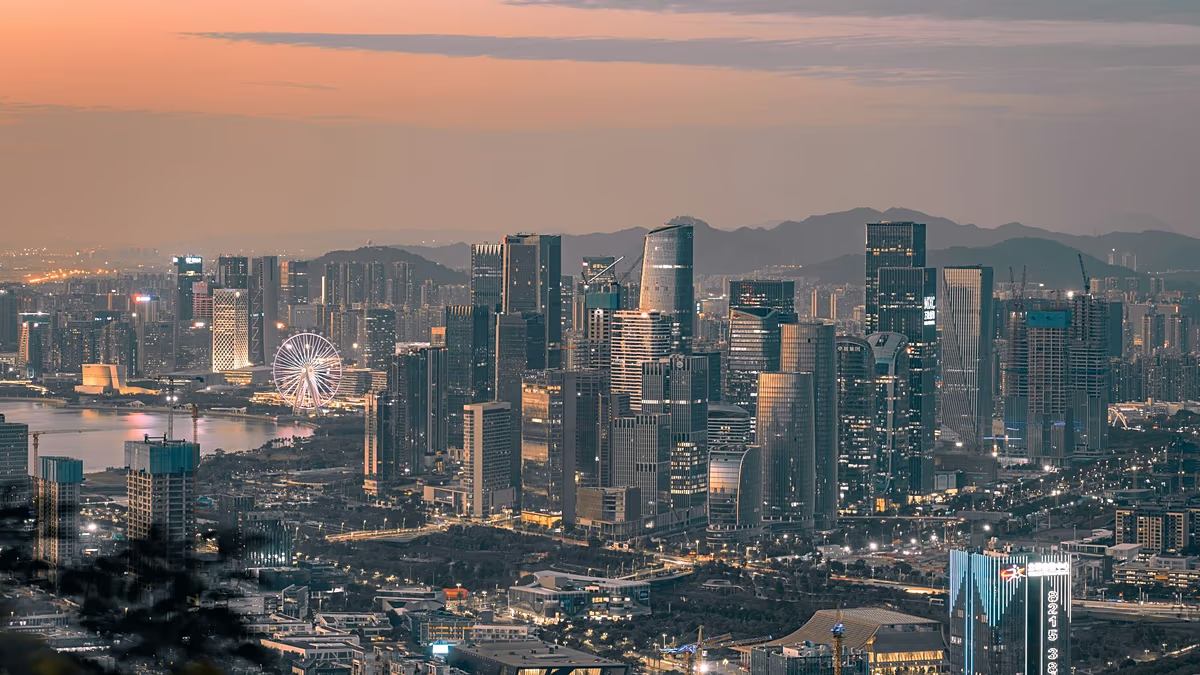
Topping this global ranking is Shenzhen, China. Its ascent from a modest fishing village to a megacity is mirrored in its vertical explosion, boasting a staggering 679 skyscrapers taller than 150 metres. Bordering Hong Kong, Shenzhen scored highly for its nighttime visibility, where its towers become a dazzling grid of light, and possesses a skyscraper density of 0.39 per square kilometre. It is a skyline that speaks of relentless, hyper-modern growth. China’s urban dominance in this ranking is profound, with five other cities joining Shenzhen in the top ten. Hong Kong, with its iconic forest of towers pressed against dramatic mountains, claims third place, while Wuhan, Guangzhou, Shanghai, and Chongqing (tying for ninth) round out a powerful showing, illustrating the scale and speed of 21st-century Asian urbanization.
The list, however, showcases a thrilling diversity of global urban models. In second place stands Dubai, a phoenix risen from the desert sands. Its ranking is powered by an unparalleled collection of “supertall” structures, with 32 buildings exceeding 300 metres, including the planet’s tallest, the awe-inspiring Burj Khalifa. Dubai’s skyline is a deliberate and dazzling statement of luxury and futuristic ambition. Meanwhile, New York City, securing fourth place, represents the classic archetype of the skyscraper city. It earned the highest marks for architectural recognition, with 20 award-winning towers. From the Art Deco grace of the Chrysler Building to the sleek modernity of One World Trade Center, New York’s skyline is a living museum of architectural evolution and enduring symbolic power.
Beyond these giants, the top ten reveals other fascinating urban narratives. Kuala Lumpur, in eighth place, anchors its skyline with the beloved Petronas Towers, a symbol of Malaysian modernity and cultural identity. Tokyo, tying for ninth with Chongqing, presents a uniquely dense and orderly panorama, where cutting-edge towers coexist with a human-scale cityscape, demonstrating that vertical growth can be intricately woven into the urban fabric. Each city on this list tells a story—of economic might, like Shenzhen; of visionary transformation, like Dubai; of historical legacy meeting the future, like New York; or of regional pride, like Kuala Lumpur.
Ultimately, while data can crown a champion, the true magic of a skyline remains deeply personal. A ranking can point us to the most statistically impressive, but it cannot measure the feeling of seeing the Hong Kong skyline reflected in Victoria Harbour for the first time, or the quiet awe inspired by Manhattan’s silhouette at sunset. These urban mountain ranges are more than just assemblies of steel and glass; they are the physical manifestations of human dreams, cultural values, and historical moments frozen in architecture. So, while Shenzhen may hold the current title, the world’s skylines are not in competition for our affection. They are a collective wonder, inviting us all to look up and be inspired by what humanity can build when it reaches for the sky.