



Here is a humanized and expanded summary of the content, structured into six paragraphs.
The European Union’s leaders are gathering for a summit that feels less like a routine meeting and more like a family confronting a series of urgent, interconnected crises over a tense dinner. The polished official conclusions that will be released on Friday will paint a picture of unity, but the real, messy business of Europe’s future is being hammered out in the conversations happening right now. This isn’t about minor policy tweaks; it’s about the bloc’s fundamental direction in a world that feels increasingly unstable. The agenda is a daunting trifecta: a historic geopolitical decision, a fight for economic survival, and a bitter internal feud over money. Each course of this high-stakes meal carries the weight of millions of jobs, the security of nations, and the very credibility of the European project.
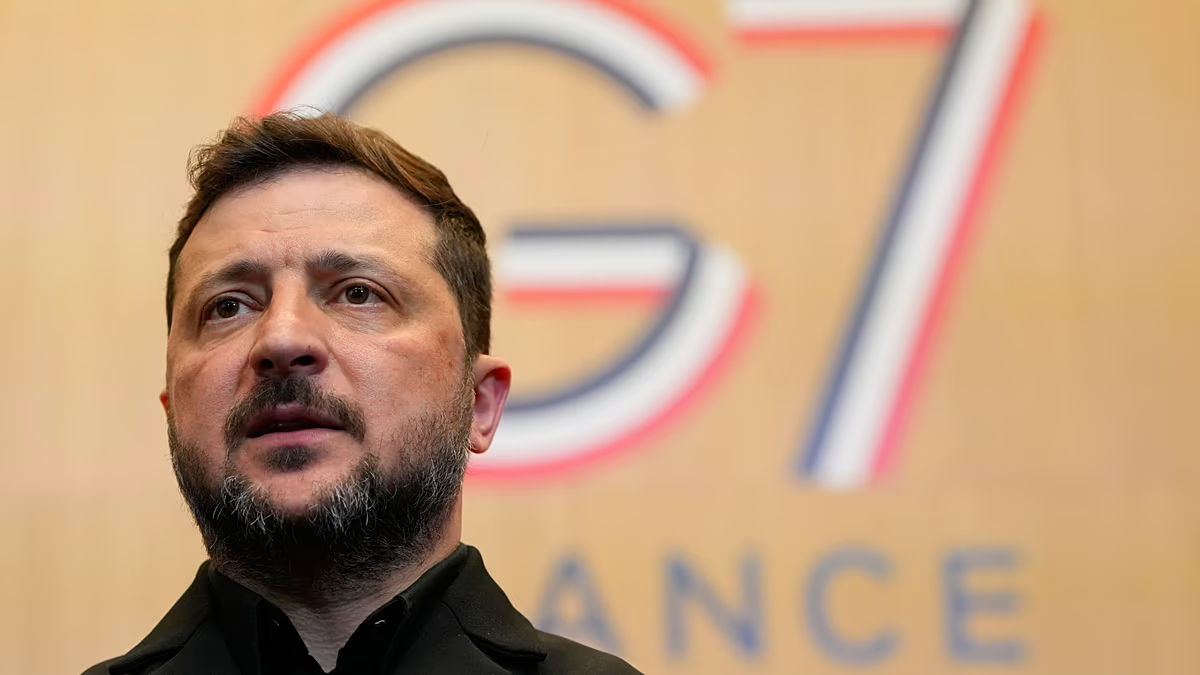
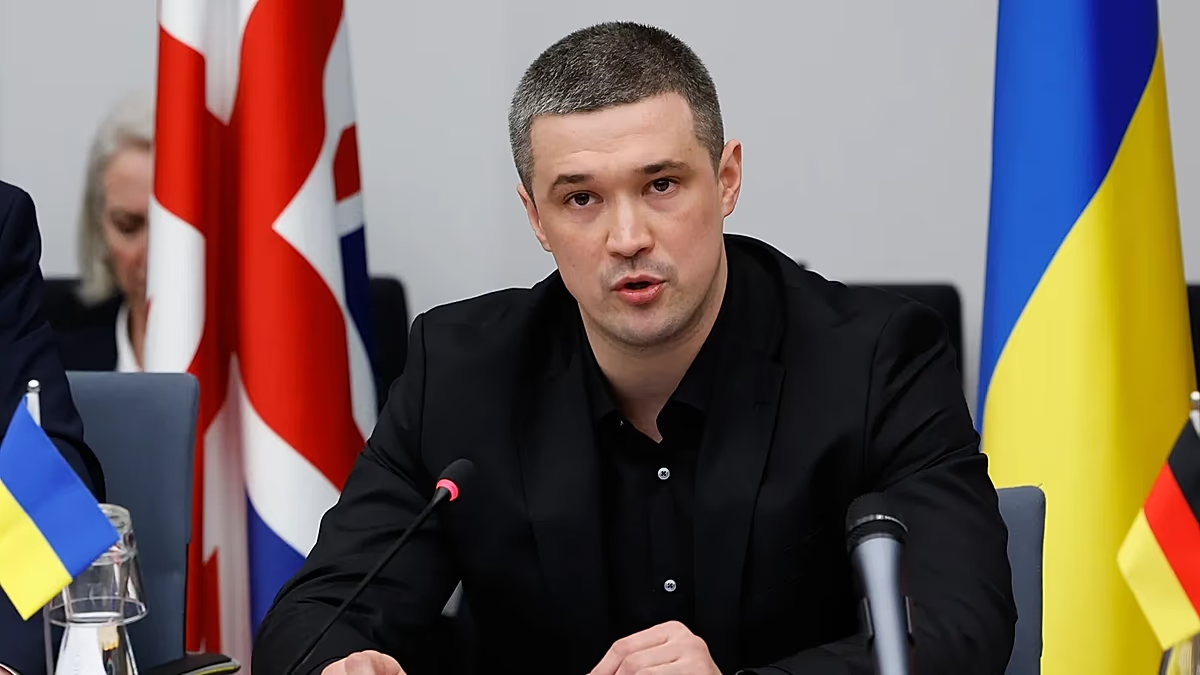
The first and most poignant item is Ukraine. President Volodymyr Zelenskyy’s address to the leaders is a powerful reminder of the human cost behind the diplomatic jargon. The summit is poised to make history by officially opening the first formal block of EU membership negotiations for Ukraine, and its neighbor Moldova. This move is far more than symbolic; it is a profound commitment to anchor these nations firmly within the European family, sending a decisive message of solidarity in the face of ongoing aggression. It represents a long-term vision of a Europe whole, free, and at peace, transforming the EU from a passive observer into a strategic geopolitical actor with skin in the game.
However, this vision of an expanded union exists alongside a stark struggle for the bloc’s present-day economic health. The second major topic is a direct battle against what Europe perceives as unfair competition, particularly from China. EU leaders are urgently trying to forge a unified stance against Beijing’s state subsidies, which they argue flood the global market with artificially cheap products, from electric vehicles to solar panels. The fear is palpable: without a robust, collective response, entire sectors of European industry could be undercut, leading to shuttered factories and lost livelihoods. This discussion is about building economic defenses to ensure that the European single market, and the industries within it, can not only survive but thrive in a fiercely contested global arena.
Funding that survival, however, is where the conversation turns from difficult to downright acrimonious. The third explosive item on the menu is the battle over the EU’s next seven-year budget. Portuguese Prime Minister António Costa has delivered a blunt ultimatum: there will be no deal this year without the creation of new EU-wide taxes. The European Commission is pushing to raise billions through innovative levies—a green duty on imports, and new charges targeting the profits of big tech giants, cryptocurrency transactions, and the online gambling industry. This represents a fundamental clash of philosophies between those who believe the EU needs its own robust financial resources to meet common challenges and those, like fiscally frugal Germany and Sweden, who insist on national fiscal sovereignty and restraint.
Complicating this already fraught budget debate is the Cypriot presidency’s proposed compromise figure of 1.73 trillion euros. To some, this is a necessary investment in security, the green transition, and competitiveness. To the “frugals,” it is an astronomically high sum that ignores the severe economic headwinds still buffeting European citizens and governments. Those headwinds include the crushing energy bills and market volatility stemming from ongoing conflicts, such as the war in Iran, which continue to strain household and national budgets. Leaders are thus being asked to commit vast future resources while their constituents are grappling with present-day pain, a political pressure cooker that makes consensus extraordinarily difficult to achieve.
As the discussions stretch late into the night, the atmosphere around the table is likely a mix of exhaustion, determination, and frayed tempers. The official statements will eventually speak of “fruitful discussions” and “a way forward,” but the real outcomes will have been carved out in the tough, behind-the-scenes negotiations over dinner plates and coffee cups. If history is any guide, the coffee will be strong, the knives—metaphorical but no less sharp—will be out, and the talks will continue long after the tables are cleared. The fate of Europe’s economy, its global standing, and its unity is being decided in this very room, not in the polished press releases that will follow.