


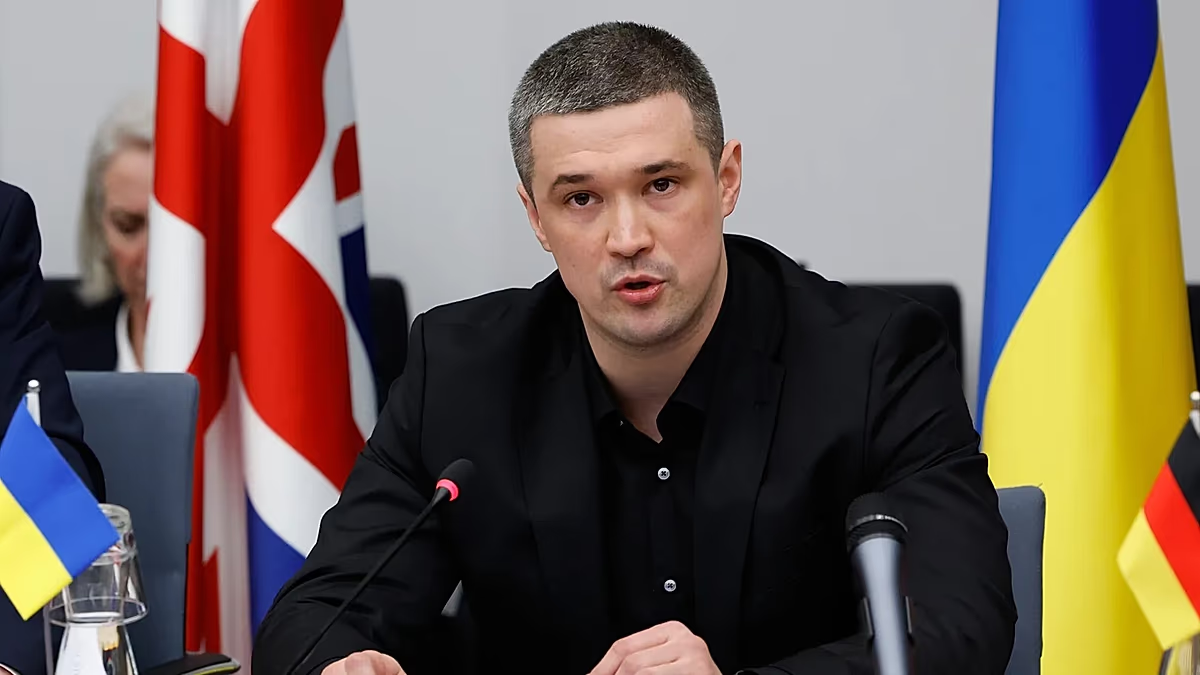
In the shifting landscape of the ongoing conflict, Ukraine’s strategy for reclaiming its occupied territories is entering a new, more precise phase. Defence Minister Mykhailo Fedorov has articulated a clear and deliberate campaign: the systematic isolation of the Crimean peninsula from Russian control. By framing Crimea’s future not as a fortress but as an impending “island,” Fedorov signals a strategic pivot aimed at severing the logistical lifelines that sustain the Russian military presence there. This approach moves beyond symbolic strikes to a sustained operational doctrine designed to make the Russian occupation physically and logistically untenable, promising “very unexpected consequences” for Moscow as its grip weakens.
The backbone of this strategy is a dramatic escalation in Ukraine’s drone capabilities. Fedorov revealed that in just the first four months of 2026, Kyiv secured a staggering 300% more “middle-strike” drones than in all of the previous year. These unmanned systems, with ranges between 20 and 200 kilometers, have become the scalpel for this surgical campaign. They allow Ukrainian forces to persistently target the intricate network of roads, railways, and bridges that form the overland supply corridor through occupied southern Ukraine into Crimea. Recent strikes, including attacks on a railway bridge in Crimea and key bridges over the North Crimean Canal, are not isolated incidents but coordinated actions in what Fedorov terms a “logistics lockdown” program. This initiative funnels direct funding to frontline units, enabling them to rapidly acquire and deploy these drones, thereby turning Russian supply lines into what the minister describes as an inescapable “hell.”
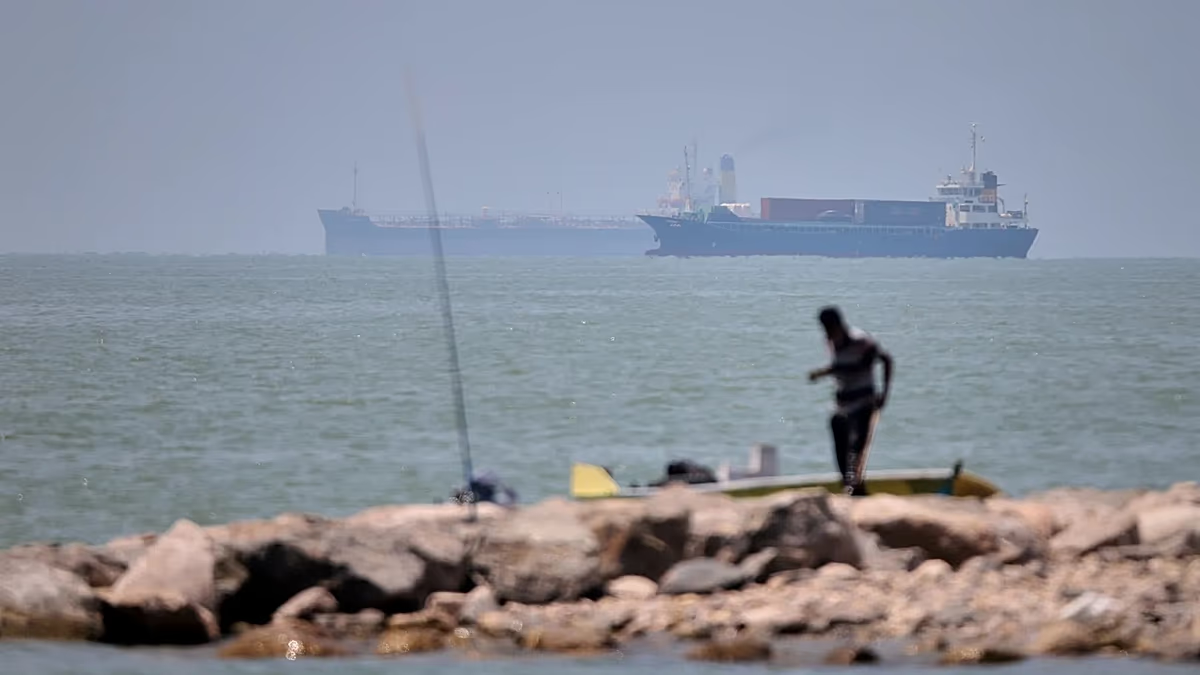
Crimea’s geography makes it a crucial yet vulnerable strategic hub for Russia. Connected to the occupied mainland only by the narrow Perekop isthmus and a handful of vulnerable routes, the peninsula depends entirely on these ground lines of communication for the steady flow of troops, ammunition, and—most critically—fuel. Russia has historically relied on three channels: the iconic Kerch Bridge from mainland Russia, maritime shipments, and the overland routes from occupied Kherson. Ukraine’s targeted campaign is methodically dismantling this triad. By focusing drone and precision strikes on fuel depots, rail lines, and bridges, Ukraine has triggered the most severe fuel crisis in Crimea since its illegal annexation in 2014. The scale of the disruption has grown so significant that the Kremlin has been forced into rare public acknowledgements of the severe logistical challenges, underscoring the tangible impact of Ukraine’s asymmetric warfare.
Amidst this military pressure, a powerful political and humanitarian message is being amplified from the Crimean Tatar community, which has suffered profoundly under occupation. Refat Chubarov, Chairman of the Mejlis of the Crimean Tatar People, issued a direct video appeal to Russian citizens who have relocated to Crimea since 2014. He clarified that their presence, often backed by forged Russian property documents, is illegal under both Ukrainian and international law. With Crimea now a active frontline, Chubarov stated that its liberation is inevitable. His warning was stark: the window for a safe departure is closing. He explicitly urged these individuals to use the remaining functionality of the Kerch Bridge and land corridors to “avoid inevitable punishment” and leave voluntarily before those final escape routes are severed by impending military operations.
This confluence of military strategy and political messaging creates a potent, two-pronged assault on Russian occupation. On one hand, the physical “logistics lockdown” aims to strangle the military and economic sustenance of the peninsula. On the other, appeals like Chubarov’s seek to undermine the demographic and social engineering that Russia has pursued for a decade, potentially precipitating a civilian exodus that would further destabilize Moscow’s claim to normalized control. The strategy reflects a calculated understanding that reclaiming territory requires making it impossible for the enemy to stay, both materially and psychologically. The promise of intensified strikes and the explicit countdown on safe passage are designed to compound the anxiety and isolation felt by both the occupation administration and the civilian settlers.
Ultimately, Ukraine’s campaign represents a decisive shift toward the active and irreversible preparation for Crimea’s liberation. It moves the peninsula from the realm of a contested political symbol to the reality of a besieged military logistiscs node. The increased drone strikes on bridges and rail lines are the tangible manifestations of Fedorov’s warning that Crimea is being turned into an island. Combined with the moral and legal pressure voiced by Crimean Tatar leaders, this strategy seeks to collapse the occupation from within and without. As the strikes continue and the fuel crisis deepens, the stage is being set not just for isolation, but for a future confrontation where a cut-off and weakened Crimea may face the final phase of its return to Ukraine.