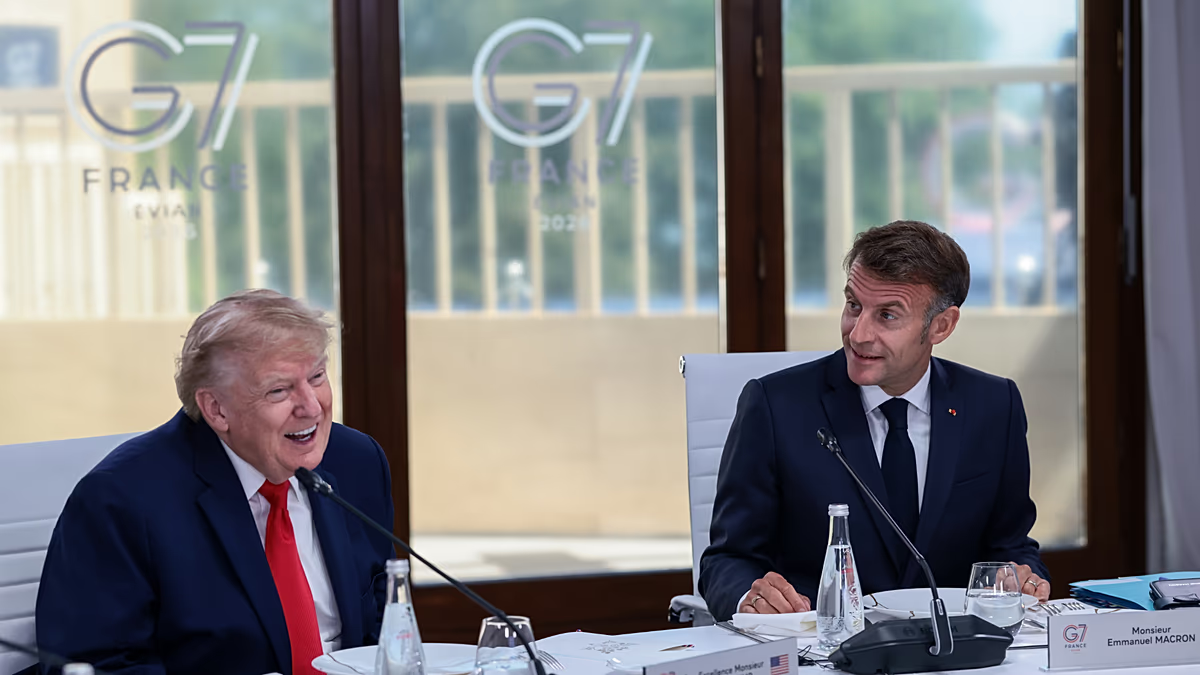




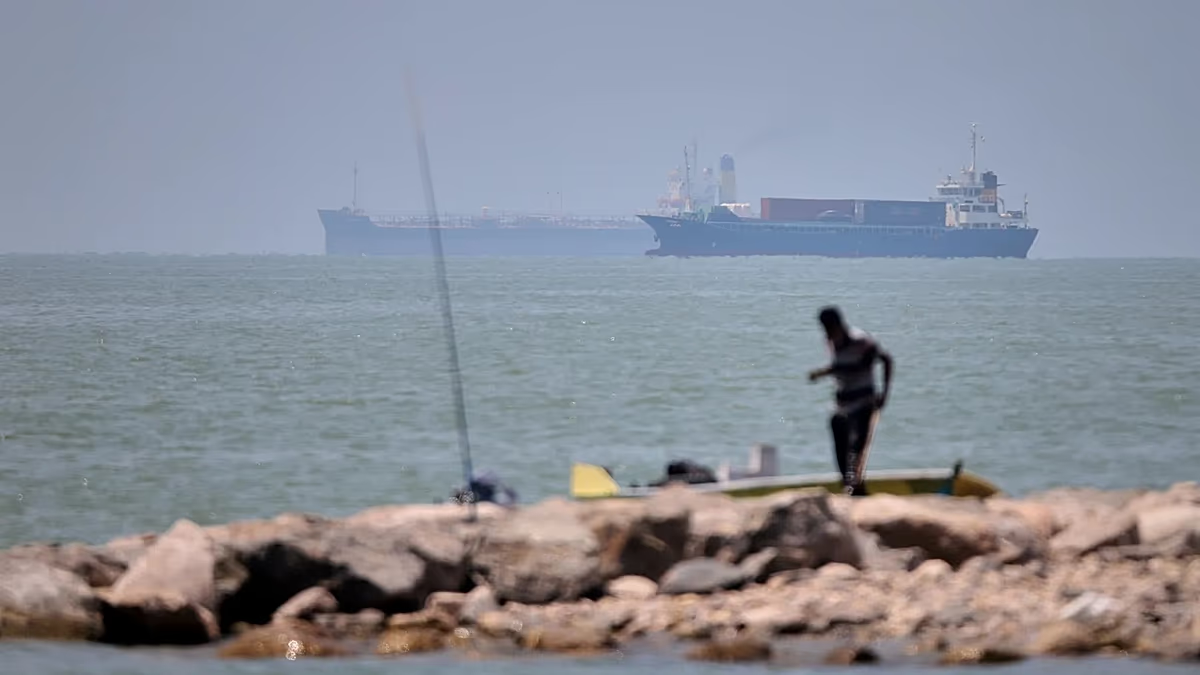
A tentative agreement between the United States and Iran promises to reopen the Strait of Hormuz, a vital maritime artery blocked for over three months. Announced during the G7 summit in Évian and set for formal adoption, the framework outlines a 60-day process where the U.S. will end its naval blockade and Iran pledges to facilitate safe commercial passage. This news brings a profound sigh of relief to a global economy strained by soaring energy prices and supply chain disruptions. However, within the shipping industry, this relief is heavily tempered by deep-seated caution. Executives recognize that a diplomatic signature is merely the first step on a long, complex road back to normalcy. The physical and psychological scars left by weeks of military activity, including the threat of sea mines and attacks, mean that resuming traffic is not as simple as lifting a gate.
The immediate challenge is one of practical safety and restored confidence. As Maersk CEO Vincent Clerc emphasized, normal operations cannot resume until a comprehensive survey of the waterway is conducted to detect and clear sea mines and chart secure routes. The prospect of over 100 laden oil tankers, currently trapped in the Gulf, rushing into a potentially hazardous strait is a scenario that gives insurers and ship owners pause. Jotaro Tamura, CEO of Mitsui OSK Lines, articulated the industry’s skepticism, stating that a simple agreement is insufficient to rebuild the trust shattered by recent events. He predicted a timeline of weeks, if not months, for operations to genuinely resume, contingent on the deal being “materially” reflected in the real conditions on the water. While some, like Hapag-Lloyd, expressed hope for a swift evacuation of remaining vessels, the consensus is that recovery will be a deliberate, phased process.
Complicating this operational recovery is a looming political struggle over who controls the reopening process. Iranian Foreign Ministry spokesperson Esmaeil Baghaei asserted that Iran alone will manage the restoration of traffic, declaring no need for outside intervention. This stance directly conflicts with plans articulated by Western nations. A coalition of 36 countries, including 22 EU members, Canada, Japan, and Australia, has pledged support for an independent, defensive mission to escort commercial shipping and conduct mine clearance. Germany has already dispatched minehunter vessels toward the region, and France has signaled readiness to deploy within days. This sets the stage for a delicate and potentially tense backdrop to the reopening, where the practical work of making the strait safe risks being entangled in diplomatic posturing over sovereignty and authority.
The economic repercussions of the closure have been severe, and the path to recovery will be equally impactful. Energy analysts from firms like Kpler warn that the return of oil and gas flows will be “slow and uneven,” predicting meaningful divergence across different energy products and consumer countries well into 2027. An initial spike is expected as the pent-up supply of trapped tankers is released, potentially reaching 40 transits per day within a month. However, this is just the beginning of a long rebalancing act. Global energy markets, having adapted to shortages and rerouted supplies at great cost, will not snap back instantly. The prolonged disruption has altered trade patterns, and rebuilding consistent, reliable traffic through the strait will require sustained stability and proven security over time.
Amidst these geopolitical and economic calculations, the human dimension remains paramount. International Maritime Organization Secretary-General Arsenio Dominguez highlighted the agreement as a crucial opportunity to evacuate thousands of seafarers who have been stranded aboard ships in the Gulf under conditions of prolonged uncertainty and danger. Their welfare is an urgent humanitarian priority. The courage of these crews, who maintained critical vessels under immense strain, underscores that the shipping industry is ultimately powered by people. Restoring confidence is not just a matter for corporate boardrooms; it is essential for the mariners who must once again trust that the waters they sail are secure.
In conclusion, the diplomatic breakthrough between the U.S. and Iran is a necessary and welcome first step away from the brink. It offers a framework to de-escalate a crisis that has choked global trade and inflamed regional tensions. Yet, the journey from parchment to practice is fraught with hurdles. The careful work of mine clearance, the diplomatic friction over control of the process, the slow rebuild of commercial and insurance market confidence, and the urgent need to relieve stranded seafarers all stand between the current moment and a full return to normalcy. The world will be watching the Strait of Hormuz not just for the resumption of oil tankers, but for signs that a fragile peace can be translated into lasting, secure passage. The coming weeks will reveal whether this agreement marks a true turning point or merely a temporary pause in a volatile chapter for one of the world’s most strategic waterways.