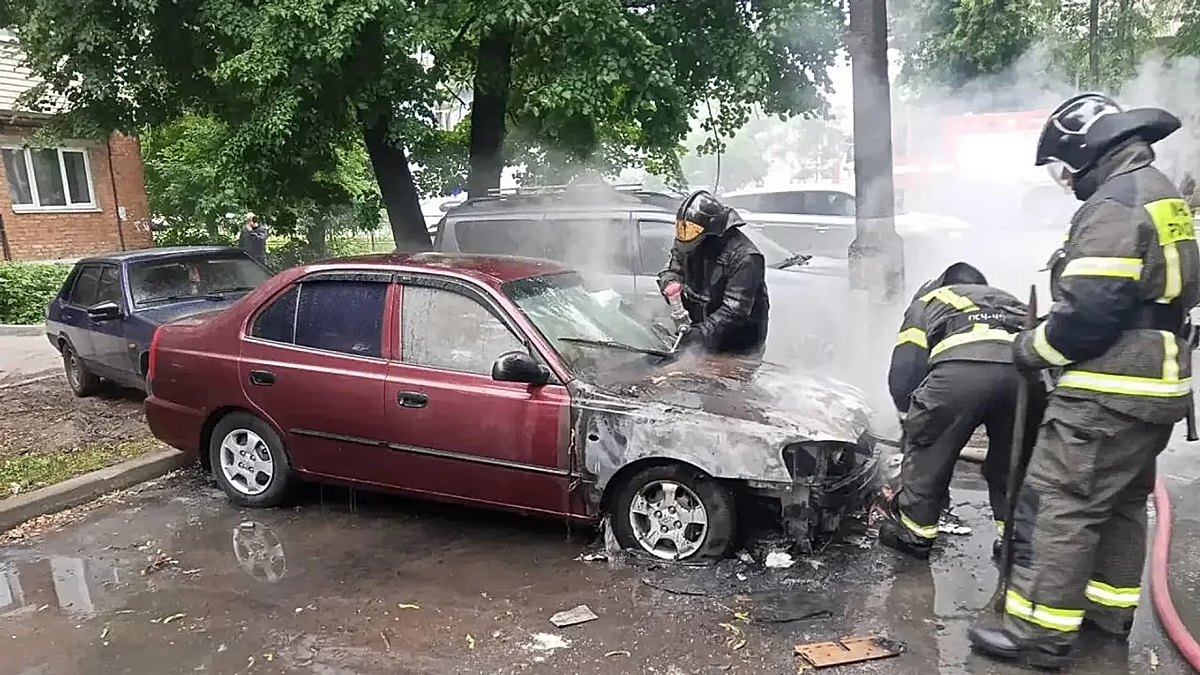


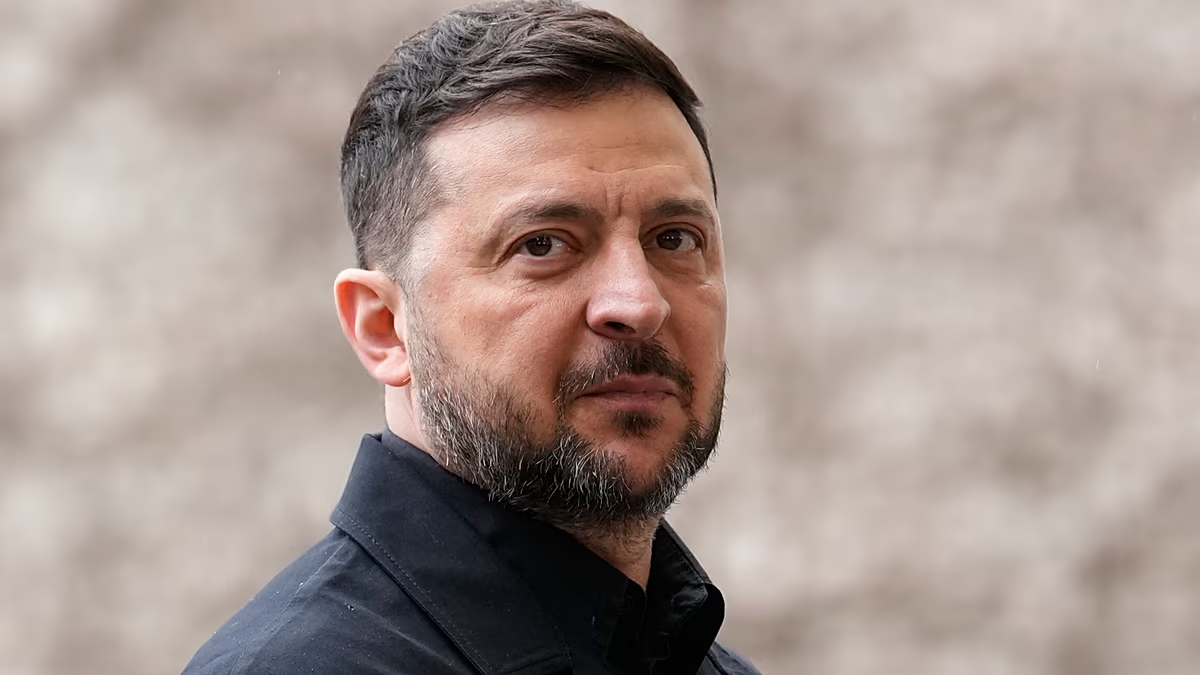
On June 18, 2026, Ukrainian President Volodymyr Zelenskyy delivered a stark and poignant message following a Ukrainian drone strike on a major Moscow oil refinery. His words were not merely a military report but a deeply human reflection on justice, endurance, and the painful logic of a protracted war. He framed the attack as a direct and justified response to a Russian assault on the Kyiv-Pechersk Lavra, one of Ukraine’s most sacred historical and religious sites. Standing at the damaged Lavra earlier, Zelenskyy had promised a retaliation, telling his people, “We will prepare a response and you will see it.” The strike on the refinery was that promise fulfilled. With the solemn declaration, “If Ukraine burns, so will Moscow,” he articulated a principle of painful symmetry: the destruction of a nation’s soul will inevitably lead to consequences for the aggressor’s core infrastructure.
Zelenskyy emphasized that this action, though forceful, stems from a fundamental desire for peace, not escalation. He reiterated that Ukraine “does not want this war and never has,” a sentiment he stressed is understood by both the international community and Ukraine’s partners. The strike, therefore, was portrayed not as an act of aggression but as a defensive measure born from necessity, a signal sent through the only channel seemingly available when diplomatic appeals are overshadowed by violence. He underscored the tactical significance of the operation, noting that it successfully penetrated Moscow’s formidable three-ring air defense system. This detail served to demonstrate Ukrainian resilience and technological capability, challenging the perception of Russian invulnerability and showing that the reach of the conflict can extend directly to the heart of the aggressor state.
The target itself, the Moscow oil refinery, is a cornerstone of Russia’s economic and logistical infrastructure. It supplies approximately 40% of the Moscow fuel market, the majority of the region’s petrol, and aviation fuel to all four major Moscow airports, processing over 12 million tonnes of crude oil annually. By striking such a vital facility, Ukraine aimed not only to deliver a symbolic reprisal but also to impose tangible economic and operational costs on Russia. This move aligns with Zelenskyy’s broader strategic argument that the path to ending the war lies in intensifying pressure on Russia’s critical systems. He called for a concerted effort to target Russia’s energy sector, its shadow fleet, oil revenues, banking system, and military-industrial complex through sanctions, aiming to make the continuation of the war palpably unsustainable for the Russian state.
Beyond economic and military strategies, Zelenskyy’s message carried a profound appeal to the Russian populace. He sought to disentangle the Russian people from the actions of their leadership, stating, “The main thing is for the Russian people to begin to realise that it is just one man, Putin, who is waging this war, whilst it is the people who are paying the price for everything.” This distinction is central to his vision of a resolution. He argued that pressure must intensify not only from Ukraine, Europe, and the United States but also from within Russia itself. His concluding plea, “It is also time for the Russians to come to their senses and put pressure on their leader,” was a direct call for civic awakening, hoping that domestic realization of the war’s true costs could become a force for change.
The President’s comments, delivered via a WhatsApp chat with reporters, reflect the modern, adaptive nature of his communication in a time of war. Yet, the content was timeless in its themes: the defense of homeland and heritage, the search for a just equilibrium in response to violence, and the universal human desire for peace. Zelenskyy positioned Ukraine not as a mere combatant but as a nation forced into a cycle of response, acting to protect its identity and existence. The strike on the refinery was presented as a measured, albeit severe, counterstroke, a demonstration that Ukraine retains the agency to answer attacks on its cultural spirit with impacts on the enemy’s material core.
In essence, Zelenskyy’s statement was a multi-layered discourse on sovereignty, resilience, and the hope for an eventual peace. It combined a tactical military explanation with a strategic economic rationale, a moral justification rooted in cultural defense, and a psychological appeal aimed at the citizens of the opposing nation. He reaffirmed Ukraine’s unwavering stance: it does not seek war but will not remain passive when attacked. Every response, even one that reaches deep into Moscow, is framed as a step towards compelling an end to the conflict, a painful necessity in the long journey to reclaim security and peace for his people.