


In a world often defined by geopolitical strife, the impending signing of a Memorandum of Understanding between Iran and the United States represents a profound moment of potential reconciliation. After months of destructive conflict, the mere act of formalizing a framework for peace is a monumental step. To mark such a historic occasion, a location of equal gravity was required—somewhere that spoke not just to luxury, but to the weight of history itself. It was therefore fitting that former U.S. President Donald Trump chose the Hall of Mirrors at the Palace of Versailles for the initial signing ceremony. The opulent setting, with its abundance of gilded ornamentation, mirrored a certain aesthetic favored in his own White House. Yet, the choice resonated far deeper, for it was in that very room in 1919 that the Treaty of Versailles was signed, imposing reparations on a defeated Germany. The unspoken parallel—of one nation dictating terms to another in the same hallowed space—hung in the air, a silent, complex footnote to a hopeful new beginning.
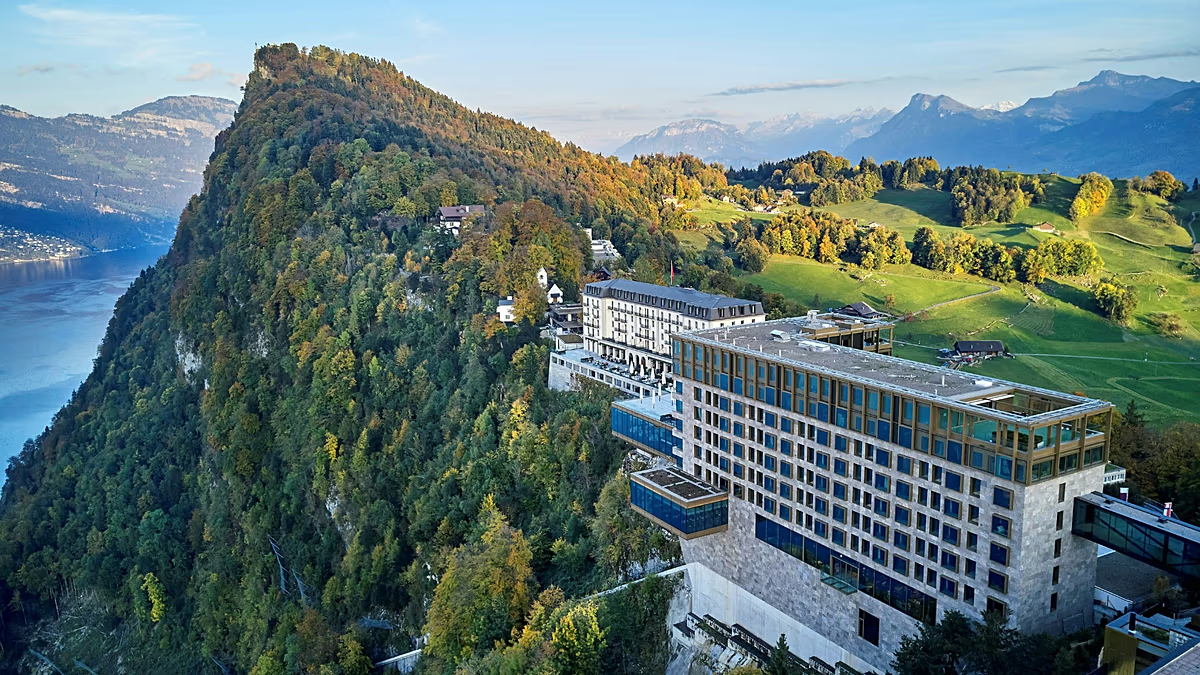
With the foundational document signed, the arduous work of translating its principles into a lasting final agreement now begins. This next critical phase will unfold not in a palace, but at the Bürgenstock Resort Lake Lucerne in Switzerland. The shift in venue from symbolic grandeur to secluded tranquility is deliberate. Originally scheduled for a different Swiss location, the talks, mediated by Pakistan and Qatar, have found a home at this legendary resort. This is no ordinary hotel; it is a site steeped in its own tradition of diplomacy and discreet luxury. Since opening in 1873, it has hosted a constellation of global figures, from U.S. President Jimmy Carter and Prime Minister Indira Gandhi to icons like Audrey Hepburn. More significantly, it has repeatedly served as a neutral ground for peace, most recently hosting the Ukraine Peace Summit in 2024. For negotiators seeking a setting free from the public spectacle of a “Four Seasons Total Landscaping” moment, Bürgenstock offers proven serenity and credibility.
The resort’s practical advantages for high-stakes diplomacy are as compelling as its history. Perched on a secluded cliff 500 meters above the serene waters of Lake Lucerne, it is a natural fortress. Access is typically a picturesque journey involving a catamaran and a funicular railway, but the site can be easily secured, with helicopter pads and a nearby private airstrip ensuring controlled and private movement for delegations. The complex itself is a small village of calm, comprising several distinct hotels and residence suites, including the flagship Bürgenstock Hotel & Alpine Spa, the Waldhotel, and the charming Taverne 1879. This layout allows for both communal negotiation and private retreat. With the Memorandum stipulating a maximum 60-day window to reach a final deal, the pressure is immense. The environment at Bürgenstock is designed to insulate that intense process from the outside world’s chaos, providing a cocoon where focus can be maintained.
Thankfully, the resort is equally designed to alleviate the immense psychological pressures of such negotiations. After grueling hours at the negotiating table, delegates will find a breathtaking array of amenities to soothe strained nerves. The crown jewel is the Bürgenstock Alpine Spa, the largest hotel spa in Europe. Within its 10,000 square meters, negotiators can seek solace in five different pools, including an outdoor infinity pool that seems to spill into the Alpine panorama, or detoxify in a series of saunas and plunge pools. History shows that not all breakthroughs happen in conference rooms; many are forged on the golf course. The resort’s nine-hole Alpine Golf course and Davis Cup-standard tennis courts offer alternative arenas for informal, side-channel discussions. Whether through sport, spa, or simply the act of walking the famed cliff walk beside Europe’s highest outdoor lift, the environment actively encourages the mental reset essential for compromise.
The experience extends to culinary diplomacy, where shared meals can build bridges. The resort’s dining venues thoughtfully cater to both ceremony and comfort. Delegates can sample local Swiss cuisine at the rustic Taverne or contemplate the stunning lake views from the sophisticated Lakeview Bar. In a particularly considerate touch, the Iranian delegation can find a taste of home at Parisa, a restaurant serving authentic Persian cuisine—a small but meaningful gesture of cultural respect in a neutral space. This attention to detail is perhaps unsurprising given the resort’s ownership: it is part of Katara Hospitality, a subsidiary of the Qatar Investment Authority. The concept originated in Doha, a nod to the mediating role Qatar itself plays in these talks. From the spa to the suites, the ambiance reflects a Qatari philosophy of discreet, high-level hospitality perfected in venues like Doha’s Souq Waqif, now applied to the service of international peace.
In conclusion, the journey from the symbolic grandeur of Versailles to the serene practicality of Bürgenstock encapsulates the entire peace process: from the high-stakes, image-heavy declaration of intent to the gritty, private, and deeply human work of building lasting accord. The Memorandum signing at Versailles invoked the heavy lessons of history, for better or worse. The talks at Lake Lucerne now must transcend that history. Within the resort’s secure and beautiful confines, amid its spas, golf courses, and dining rooms, negotiators are tasked with an extraordinary human endeavor: to move beyond entrenched positions, to understand the other, and to craft a shared future. The Bürgenstock Resort provides the stage, but the actors—the American, Iranian, and mediating diplomats—must now write the script. Their success will depend not just on political will, but on the very human capacity for dialogue, resilience, and hope that such a carefully chosen environment is meant to foster.