

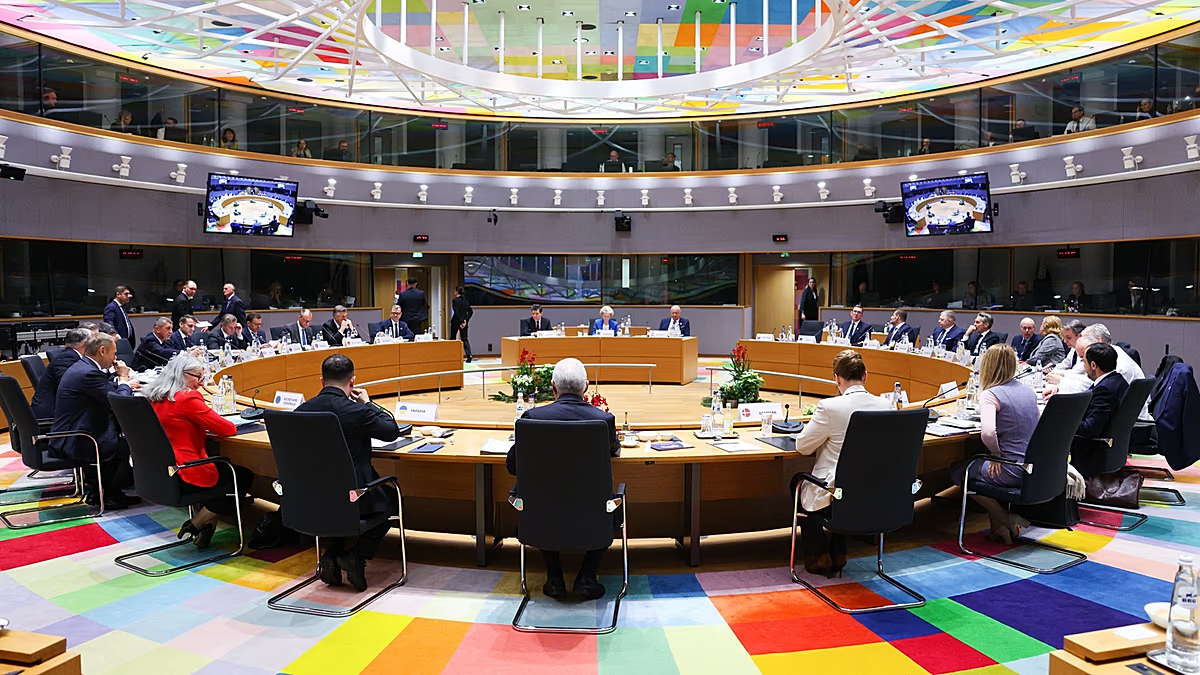
At a pivotal European Council summit in Brussels, leaders convened under the shadow of ongoing war and economic uncertainty, with key discussions revolving around security, EU finances, and the bloc’s future direction. The atmosphere was notably shaped by the presence of four new prime ministers, signalling potential shifts in European dynamics. Among them, Hungary’s Péter Magyar marked a dramatic departure from the confrontational stance of his predecessor, Viktor Orbán, by expressing his happiness to represent Hungary and indicating a willingness to cooperate on summit conclusions. This shift promised to ease the chronic gridlock that had characterized Orbán’s relationship with Brussels. Similarly, the revival of the Visegrád Group meeting, hailed as a “very special moment” by Poland’s Donald Tusk, underscored a renewed attempt at Central European cooperation following years of discord over Ukraine.
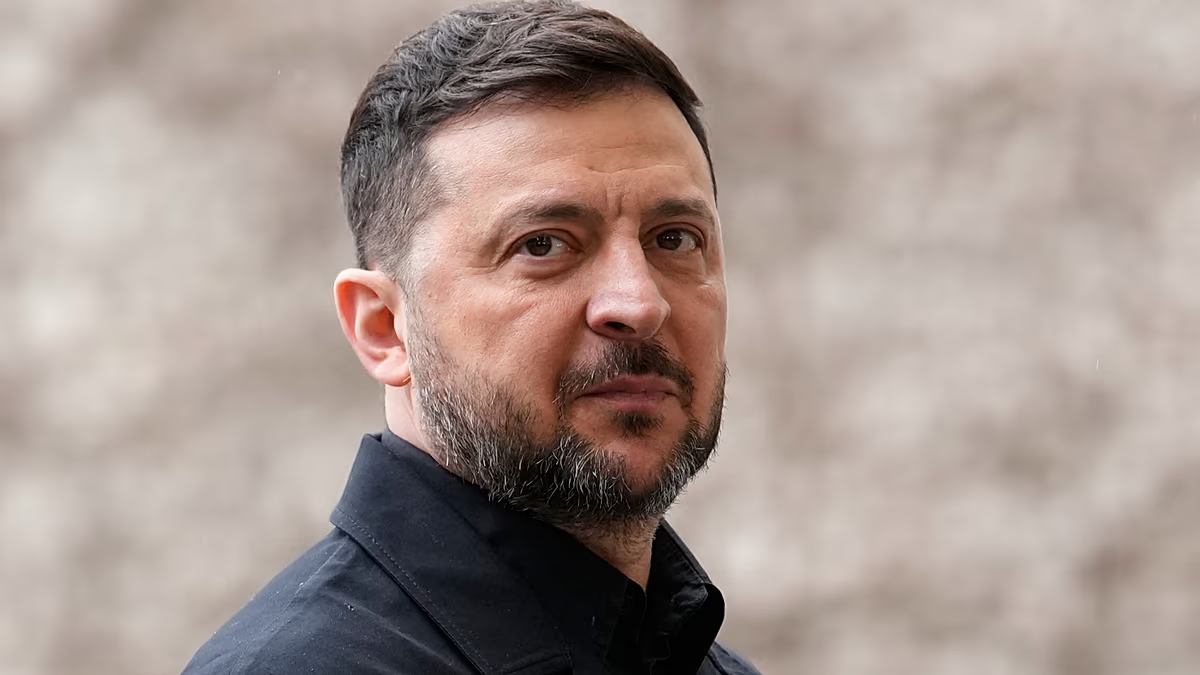
The war in Ukraine remained a central, urgent concern, with President Volodymyr Zelenskyy present to advocate for accelerated EU accession talks. He pushed ambitiously for all remaining negotiation clusters to be opened “within weeks,” a demand that highlighted the tension between Ukraine’s immediate aspirations and the EU’s methodical enlargement process. Support for Kyiv was strongly reiterated by leaders like Latvia’s new Prime Minister, Andris Kulbergs, who asserted Ukraine had “earned” its place in the EU, and the Netherlands’ Rob Jetten, who warned against “naive” outreach to Russia without clear signals from Putin for genuine negotiation. However, dissenting voices persisted, as illustrated by Bulgaria’s new Prime Minister, Rumen Radev, who opposed sanctions against Russia’s Patriarch Kirill, claiming “the era of Crusades is over.”
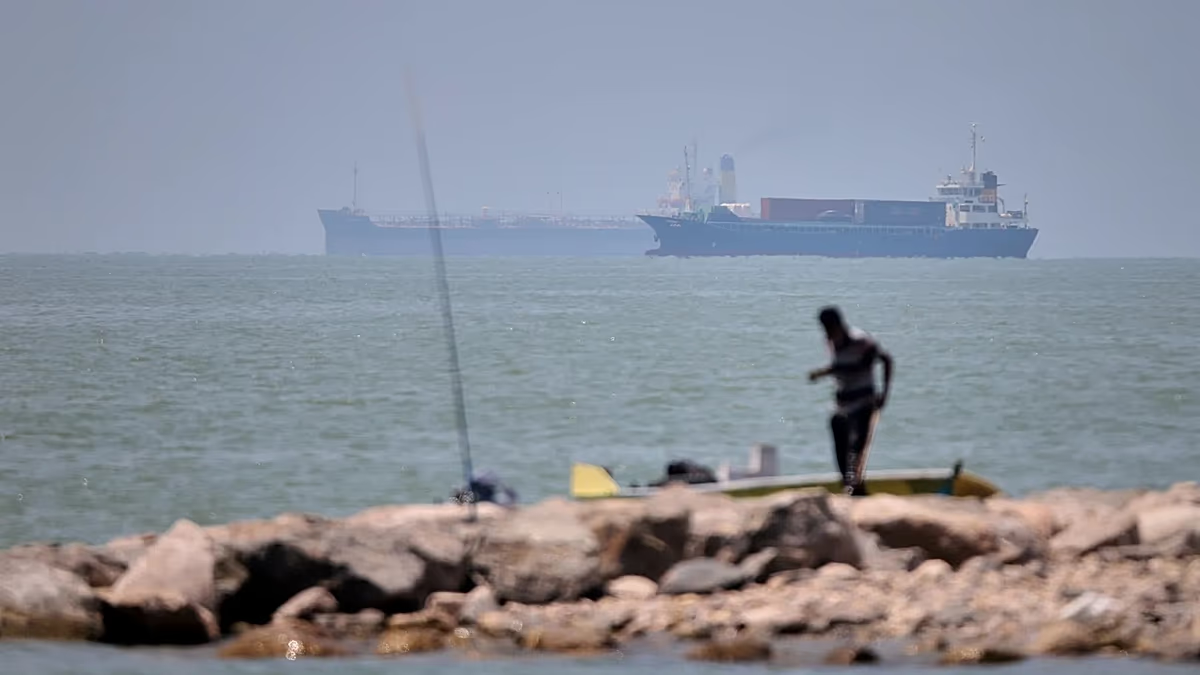
A significant subplot to the security discussions was the recently announced US-Iran framework deal concerning the Strait of Hormuz. This potential de-escalation was welcomed by several leaders, with Greek Prime Minister Kyriakos Mitsotakis directly linking the reopening of the vital waterway to the imperative of lowering energy prices for European consumers. German Chancellor Friedrich Merz went further, expressing Germany’s conditional willingness to provide military support, such as mine-sweeping vessels, for the deal’s implementation, pending a legal mandate from the German parliament. Cyprus President Nikos Christodoulides, whose nation experienced spillover violence earlier in the conflict, stressed that the “implementation of the agreement” was now crucial for regional stability.
On the home front, a fierce battle over the EU’s next long-term budget, potentially exceeding €2 trillion, was underway. Chancellor Merz set a firm red line, declaring “there cannot be any new European debt,” and emphasizing intense negotiations ahead. This “frugal” stance was echoed by Prime Minister Jetten, who rejected the current Cypriot presidency proposal as unserious and advocated for shifting funds from traditional areas like agriculture and cohesion toward new security and economic challenges. Concurrently, Merz championed the need to roll back European bureaucracy to boost competitiveness, a slow but necessary process, he argued. These debates laid bare the fundamental rift between member states advocating fiscal restraint and those fighting to preserve cohesion funds.
The summit was also punctuated by grave concerns over hybrid threats and political violence on European soil. Polish Prime Minister Donald Tusk revealed that the assassination of Russian dissident Semyon Skrepetsky on Polish territory was being investigated as potential “state terrorism,” a frightening first for Poland. In a more hopeful security development, Tusk expressed optimism about a “permanent American base” on Polish soil, following positive signals from Washington, which he believed would radically enhance Poland’s and the region’s security. These incidents underscored a Europe increasingly conscious of its vulnerability and taking steps to fortify its defenses, both internally and through transatlantic ties.
As the summit progressed, the contrasting priorities of the EU’s member states were on full display. From the urgent, existential support for Ukraine and the careful navigation of Middle Eastern diplomacy to the protracted, granular battles over euros and regulations, the meetings captured a union at a crossroads. The arrival of new leaders like Magyar and Kulbergs injected fresh perspectives, yet the core challenges—financing European ambitions, maintaining unity against external aggression, and streamlining the bloc for a more competitive world—remained daunting. The outcomes of these Brussels talks would set the course for the EU’s strategic and financial landscape for years to come, testing its cohesion and resolve in an increasingly volatile global environment.