



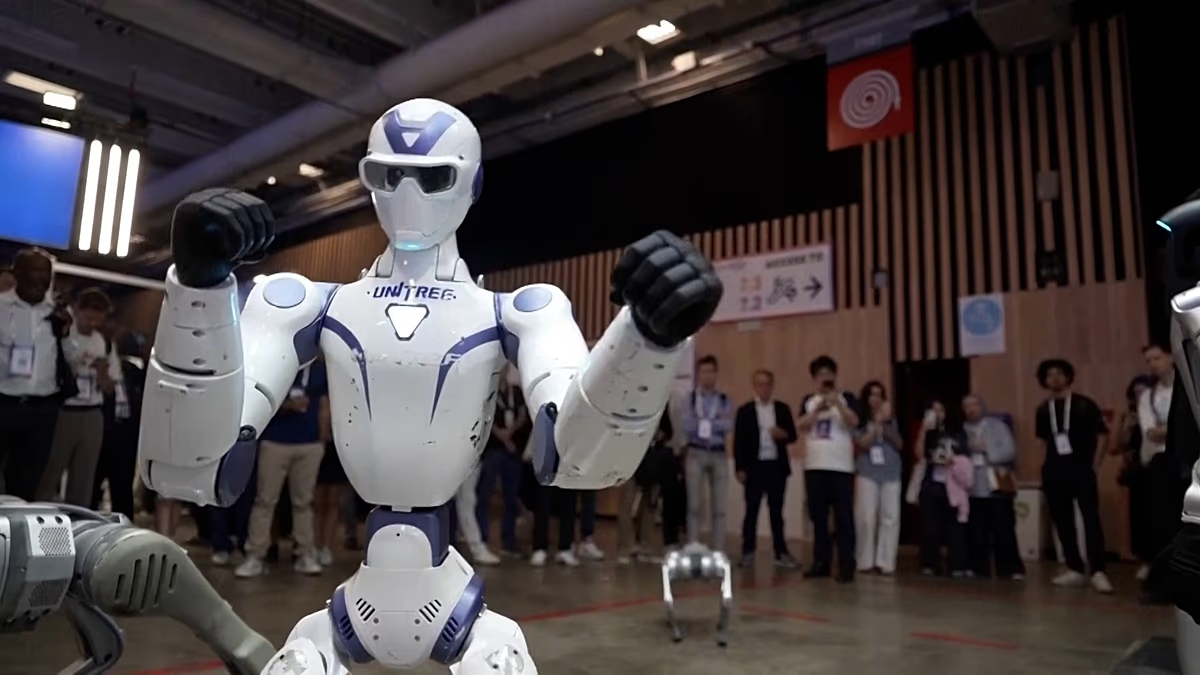
The annual technology exhibition in Paris is currently offering the world a captivating window into the rapidly evolving integration of artificial intelligence, demonstrating its shift from theoretical promise to tangible reality. Visitors are immediately greeted by dynamic showcases of physical automation, where sophisticated humanoid robots from companies like China’s Unitree execute complex tasks with surprising agility. These machines are seen performing boxing maneuvers, balancing acts, and navigating crowded halls, providing a clear sign of how far the field of robotics has advanced. The presence of robotic dogs weaving through attendees further emphasizes this trend, which is largely driven by practical demands from industries such as manufacturing, logistics, and warehousing. This section of the exhibition serves as a powerful statement: the future of work will increasingly involve seamless collaboration between humans and intelligent machines, with the primary focus being on efficiency, safety, and support rather than replacement.
Moving beyond the spectacle of robotics, the event dedicates significant space to showcasing how AI is being woven into the very fabric of daily life. In a clear demonstration of this transition, major consumer electronics firms like Samsung are presenting their vision of a connected home, anchored by smart appliances. Here, a refrigerator is not just a cooling unit but an intelligent kitchen assistant capable of tracking its contents, suggesting recipes based on available ingredients, and automatically generating digital shopping lists—all through an intuitive touchscreen interface. These exhibits highlight a consumer-focused frontier where AI acts as an invisible but helpful presence, managing mundane tasks, reducing waste, and personalizing domestic experiences. The underlying message is that artificial intelligence is no longer confined to research labs or industrial settings; it is actively being shaped into a quiet, useful partner in our personal spaces.
The vibrant energy of the exhibition hall is amplified by interactive installations that are both educational and engaging, drawing crowds of professionals and curious onlookers alike. Large, immersive digital displays and hands-on educational games demystify complex algorithms and machine learning concepts, making the technology more accessible to a general audience. This playful, interactive approach is crucial, as it fosters understanding and demystifies a technology that can often seem opaque or intimidating. By allowing visitors to directly engage with AI applications—whether through games that adapt to their skill level or visualizations of data processing—the exhibition builds a bridge of comprehension. It subtly argues that a successful technological future depends not just on innovation but on public literacy and comfort with these new tools.
Running until June 20th, the event has successfully drawn a truly global community, becoming a nexus for startups brimming with novel ideas and established industry leaders defining market directions. The gathering has attracted international delegations, investors, and technologists from across the globe, transforming the venue into a buzzing hub of cross-cultural exchange and potential partnership. This convergence underscores a universal recognition: the AI revolution is a global phenomenon, and no single country or corporation holds a monopoly on innovation. The presence of diverse international participants signals a shared commitment to exploring the boundaries of what’s possible and a collective effort to steer the technology’s development toward beneficial outcomes for different societies and economies.
The substance of the event extends far beyond the exhibition booths, as it hosts critical high-level discussions among technology executives, policymakers, and thought leaders. These forums are expected to delve deeply into the foundational pillars required to sustain this technological boom, focusing on themes like building resilient digital infrastructure, establishing ethical frameworks for development, and fostering innovation ecosystems. Conversations are likely to grapple with the dual nature of AI’s expanding role—its power to drive business efficiency and create new consumer products, but also the accompanying challenges related to privacy, job market shifts, and global governance. These dialogues are arguably the exhibition’s most vital component, providing a necessary space to confront hard questions and shape the principles that will guide AI integration into our world.
In essence, the Paris exhibition paints a comprehensive and humanized portrait of our technological moment. It successfully balances the awe of humanoid robots and smart appliances with a grounded focus on practical utility, education, and global collaboration. The event tells a coherent story of a technology in transition, moving from raw potential to integrated application. It acknowledges the excitement of the new tools while consciously creating forums for the serious discussions their adoption necessitates. By doing so, the exhibition offers not just a snapshot of current capabilities but a thoughtful preview of a near future where artificial intelligence becomes a normalized, collaborative, and hopefully beneficial thread in the fabric of both industry and everyday human life.