


Here is a humanized and expanded summary of the provided content, structured into six paragraphs as requested.
Paragraph 1: A Gathering of Conscience in Brussels
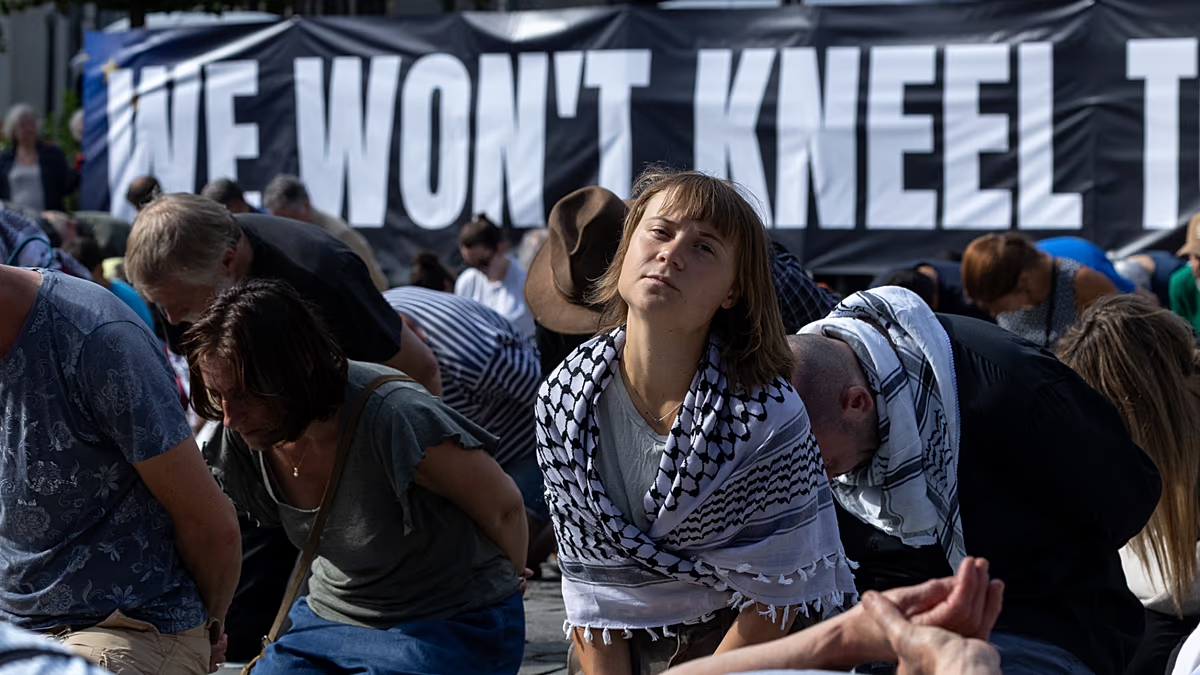
In the shadow of the European Union’s grand institutions in Brussels, a diverse coalition of voices assembled not in protest of the EU itself, but in urgent appeal to its conscience. The gathering brought together seasoned human rights campaigners, grassroots activists, and participants from a recent, intercepted Gaza-bound flotilla. Their shared purpose was to challenge the bloc’s stance on Israel, specifically regarding the ongoing war in Gaza and the persistent expansion of Israeli settlements in occupied Palestinian territories. They argued that the EU, through its substantial economic and diplomatic relationship with Israel, possesses a powerful but underused leverage to advocate for peace and justice.
Paragraph 2: The Power of the Purse: Targeting Settlement Goods
The demonstration, meticulously organized by the global advocacy group Avaaz, translated complex foreign policy into tangible, everyday symbols. Protesters hoisted signs with clear, compelling messages like “EU, stop buying what Israel steals,” directing attention to the economic underpinnings of the occupation. Their demands focused sharply on EU trade policy, calling for restrictions on imports such as dates, avocados, and other agricultural products that originate from Israeli settlements. These communities, built on land captured in 1967, are considered illegal under international law by most of the world, including the EU’s own official position. The activists’ logic was straightforward: by economically benefiting from these settlements, European consumers are inadvertently supporting their existence and growth.
Paragraph 3: A Moral Leverage: The EU’s Responsibility
Pascal Vollenweider, an official representing Avaaz, crystallized the campaign’s core argument. He emphasized that the European market is not a passive entity but a source of significant moral and economic leverage. As one of Israel’s largest trading partners, the EU’s collective purchasing power and political clout could, in theory, be harnessed to pressure the Israeli government to alter policies deemed detrimental to a two-state solution. The protestors contended that this leverage must move beyond rhetorical condemnation of settlements into concrete, impactful actions, such as rigorously differentiating between products from Israel proper and those from the occupied territories.
Paragraph 4: Personal Testimony from the Mediterranean
The rally was grounded in personal narrative as much as political argument. Among the speakers was Arno Meyns, a participant from the recent “Freedom Flotilla” mission. He shared his firsthand experience of being detained by Israeli forces while attempting to break the maritime blockade of Gaza to deliver humanitarian aid. His testimony served as a visceral reminder of the human cost of the conflict and the intense restrictions faced by Palestinians in Gaza. By including such voices, the protest connected the EU’s trade discussions in Brussels to the stark realities of life and activism in the Mediterranean, framing the issue as one of immediate human consequence, not abstract policy.
Paragraph 5: A Broader Campaign for European Action
This demonstration was not an isolated event but a strategically timed component of a wider European campaign. The choice of location and date was deliberate: to amplify public pressure just ahead of a scheduled meeting of EU national leaders in Brussels on June 18. The presence of high-profile figures like Swedish climate activist Greta Thunberg, who has consistently linked ecological justice with human rights, brought additional visibility and underscored the intersectional nature of the cause. The organizers aimed to ensure that the plight of Palestinians and the question of EU complicity would be on the agenda when those leaders convened, pushing for a shift from vague declarations to enforceable measures.
Paragraph 6: The Essential Question of Complicity
Ultimately, the protest in Brussels was a public interrogation of European values. The activists framed the EU’s continued import of settlement goods as a form of complicity that undermines its own commitments to international law and human rights. Their message was a call for coherence: if the European Union officially regards the settlements as illegal, then why does it facilitate their prosperity through trade? The rally served as a poignant, public reminder that in a globalized world, economic choices are inherently political and moral ones. By holding avocados and dates as symbols, the protestors challenged every European citizen and leader to consider the hidden costs embedded in their market and to demand that their union’s policies align with its professed principles of peace and justice.