


Europe’s AI Ambition Finds a Home in Paris
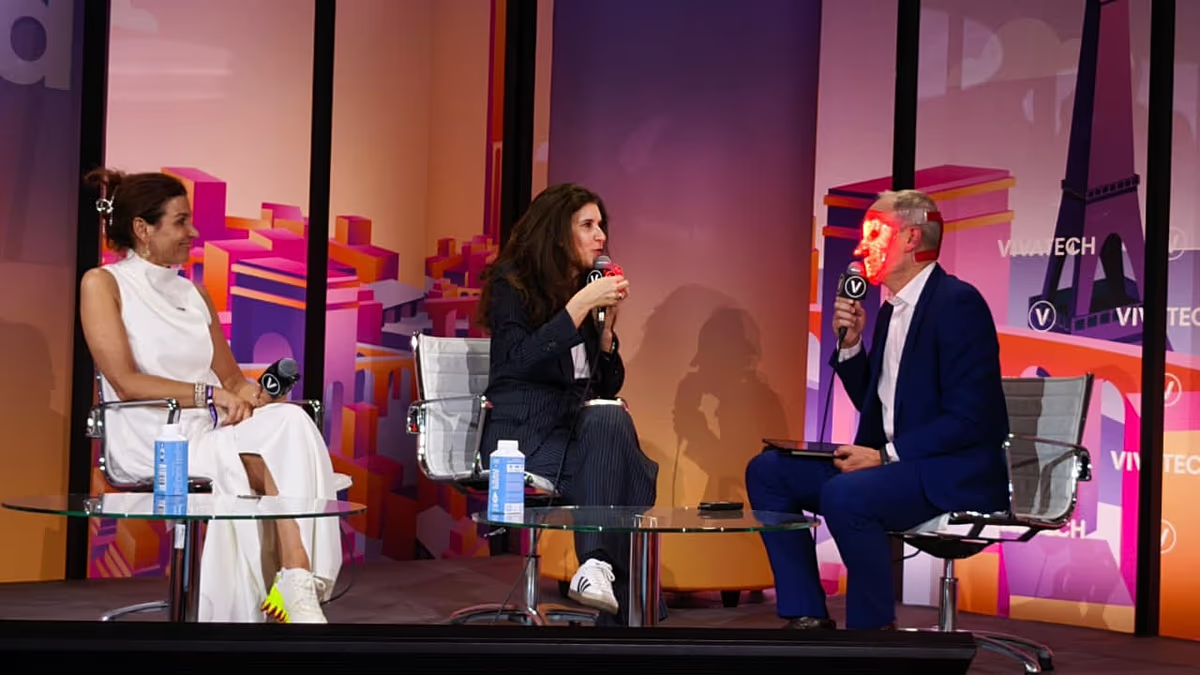
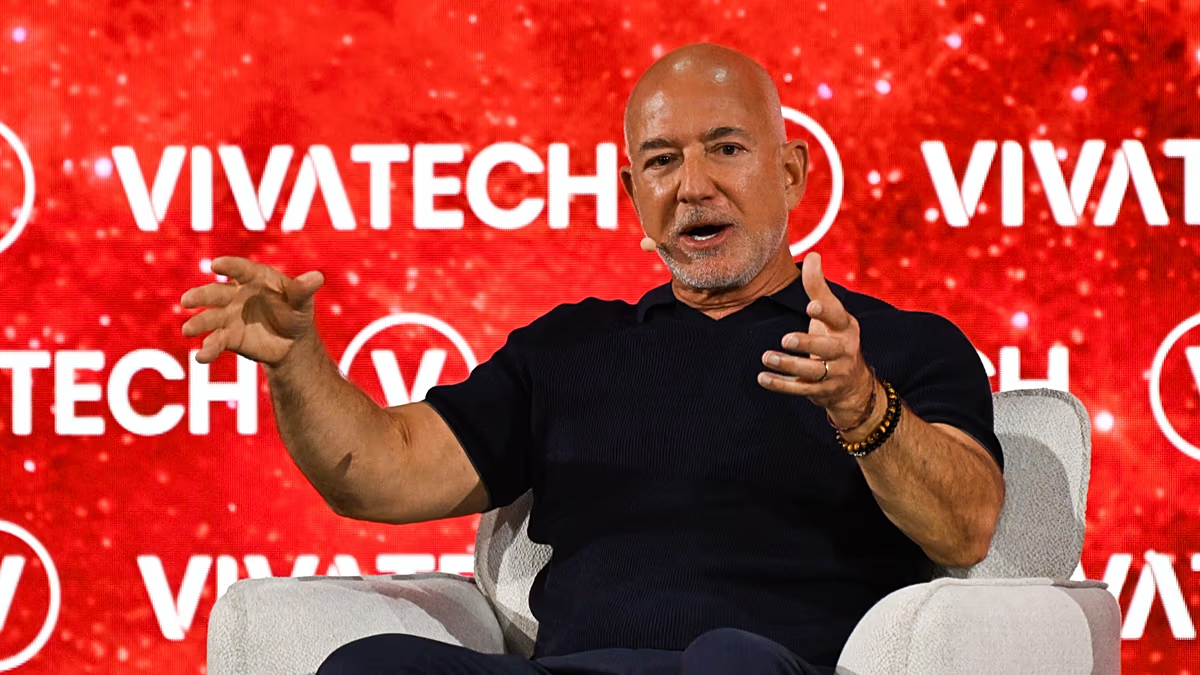
This week, Paris solidifies its position as the beating heart of Europe’s artificial intelligence future. The city’s flagship VivaTech conference has transformed from a 45,000-person gathering into a colossal event drawing over 200,000 global attendees, becoming Europe’s premier stage for technological ambition. Now, its agenda carries profound geopolitical weight, centered squarely on a critical question: can Europe build its own sovereign AI destiny? Against this backdrop, global giants are converging on France, not merely as visitors, but as strategic partners betting that the path to a self-reliant European AI ecosystem runs directly through Paris.
The conference served as the launchpad for a powerful symbol of this continental ambition: a landmark partnership between Taiwanese manufacturing titan Foxconn and the French computing firm Bull. Their mission is to manufacture advanced AI servers on European soil, specifically designed to power the burgeoning network of “AI factories”—the large-scale computing centers that form the essential backbone of modern AI infrastructure. Foxconn’s Vice President, James Wu, articulated a clear vision, stating that France’s reservoir of high-tech talent and its “great ambitions in solving AI projects” made it an indispensable ally. The physical supply chain will span the continent, with components built in Foxconn’s Czech facilities and final assembly and validation occurring at Bull’s factory in Angers, France, aiming squarely at European cloud providers and AI factories.
France’s Strategic Allure in the AI Race
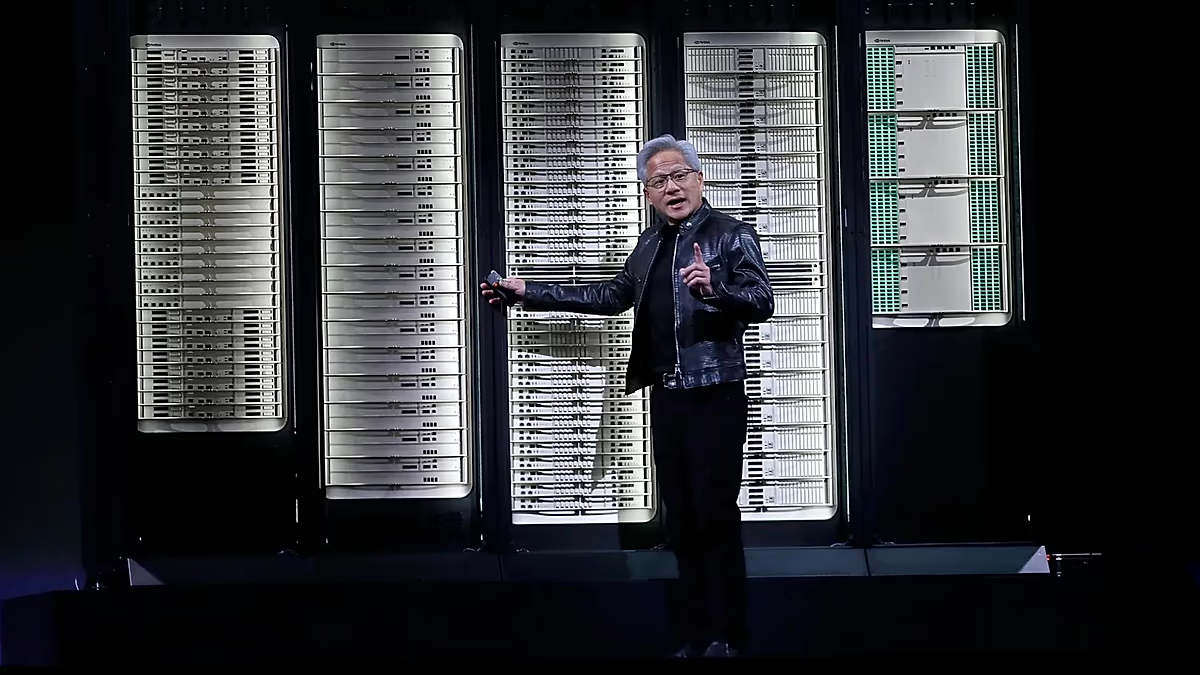
This deal is far from an isolated event; it is a cornerstone in a sweeping wave of AI infrastructure investment washing over Europe, a wave significantly driven by the chip powerhouse Nvidia. Last year at VivaTech, Nvidia’s CEO Jensen Huang committed to fostering over 20 AI factories across Europe and anointed the French startup Mistral AI as a champion of sovereign compute. This year, that relationship deepened with the announcement of “Mistral Compute,” a joint project to create a GPU cloud platform tailored for Europe’s needs. France’s attractiveness to these giants is multifaceted and strategic. Under President Emmanuel Macron’s “startup nation” push, the country has aggressively positioned itself as a tech leader. Crucially, France offers a unique and powerful advantage: affordable, stable, and low-carbon energy from its nuclear-powered grid. As Wu highlighted, in an era where AI’s thirst for electricity is immense, France’s energy infrastructure is a foundational competitive edge.
Nvidia’s leadership frames AI as a complex, layered ecosystem—a “five-layer cake” of energy, chips, infrastructure, servers, and finally, the AI models themselves. France, they argue, is uniquely positioned to excel across all layers. Nat Ives of Nvidia pointed to the synergy between France’s state-backed energy company EDF, its nuclear and renewable power, and the growing AI sector. This allows for planning data centers where sustainability is a core component, aligning with Nvidia’s own environmental goals, including powering its operations with renewable energy and designing more efficient chips like its latest Blackwell architecture. Beyond power, France’s strength lies in its human capital and innovative companies. It is home to a vibrant constellation of AI champions like Mistral AI, which began as a small team in a Parisian café and has grown with Nvidia’s support into a beacon for the European open-source AI movement.
Building a Complete, Sovereign Ecosystem
The vision extends far beyond server racks in data centers. Foxconn and its partners see an opportunity to catalyze France’s entire technology ecosystem. At VivaTech, alongside the AI server announcement, Foxconn showcased electric vehicles equipped with AI and a wheeled humanoid robot capable of precision tasks—hinting at a future where AI permeates everything from mobility to advanced manufacturing. The goal is to foster a holistic environment where the infrastructure built by Foxconn and powered by Nvidia’s chips enables French and European companies to innovate at every level, from foundational models to consumer applications. This partnership is a tangible step toward technological sovereignty, reducing reliance on external infrastructures and fostering a self-sustaining cycle of European innovation.
Ultimately, the flurry of activity in Paris this week represents more than business deals; it signifies a collective bet on a distinct European path for AI. It is a path that prioritizes strategic autonomy, leverages unique regional advantages like France’s energy mix, and champions an open-source philosophy to ensure broader access and a more balanced competitive field. The race to build Europe’s AI future is fully underway, and through partnerships that blend global manufacturing prowess with local talent and strategic assets, Paris has convincingly made its case as the continent’s central engineering hub and the symbolic capital of this ambitious new chapter.