



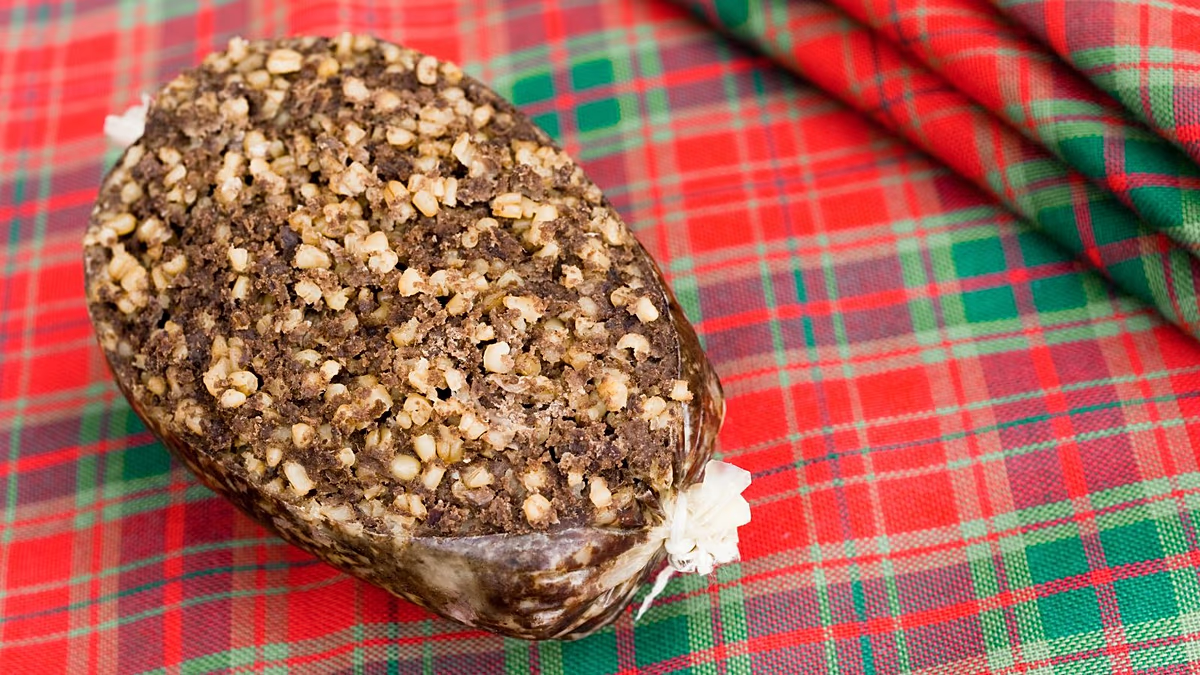
The spirit of Scotland has descended upon Massachusetts, and it’s about more than just football. While the Scottish national team’s recent victory over Haiti marked a triumphant return to the World Cup stage after nearly three decades, an equally passionate off-field campaign by their legendary supporters, the Tartan Army, has scored a unique cultural victory. Their target? The humble, misunderstood, and fiercely beloved Scottish dish: haggis.
For over fifty years, haggis has been banned from American dinner tables due to a federal prohibition on the consumption of sheep lungs, an ingredient that constitutes a portion of the traditional recipe. This culinary injustice became a focal point for Scottish butcher Simon Howie, who launched a campaign to lift the ban as a symbolic gesture ahead of the World Cup. The Tartan Army, never a group to shy away from a passionate cause, took up the mantle with characteristic enthusiasm.
Their efforts culminated in a charming and slightly surreal political moment. David McIntosh Jr., a Scottish podcaster and Tartan Army member, secured a meeting with Massachusetts Governor Maura Healey. In a lighthearted act of solidarity with the thousands of Scottish fans who had transformed Boston into a sea of tartan, Governor Healey signed an “executive order” purportedly legalizing haggis within the state. While the gesture is symbolic—food import laws remain a federal matter—its significance is profound. It was a warm, official embrace of Scottish culture, a nod to the joyous invasion that had captured the state’s heart.
Governor Healey’s actions were a response to an undeniable phenomenon. More than 20,000 Scottish fans flooded Boston, bringing what she described as “energy, joy, and enthusiasm.” Their impact was felt far beyond the stadium. Local bars, overwhelmed by the notoriously thirsty supporters, reported beer shortages, leading to the swift passage of a local “Tartan Army Bill” extending pub hours. Furthermore, the Scots imported one of their most iconic urban traditions: the ceremonial placement of traffic cones on statues. Boston’s monuments soon sported orange cone headgear, a direct homage to the perpetually cone-capped Duke of Wellington statue outside Glasgow’s Gallery of Modern Art.
This series of events paints a picture of a cultural exchange that is both powerful and playful. The Tartan Army is not merely a group of football fans; they are roving ambassadors of Scottish identity, expressed through communal singing, irreverent humor, and a deep-seated pride in their heritage—even the parts involving offal. Their campaign for haggis, while whimsical on the surface, is fundamentally about sharing and validating a core piece of their national story.
As Scotland prepares for its next crucial match against Morocco, the team leads its group. But back in the streets of Boston, another legacy is being cemented. The Tartan Army has already secured a different kind of win. They have, through sheer force of good-natured spirit, momentarily bent the rules, prompted new legislation, adorned a city with cones, and convinced a governor to put pen to paper for a spiced meat pudding. In doing so, they’ve reminded everyone that the World Cup’s true magic often lies not just in the goals scored on the pitch, but in the connections forged and the harmless, delightful chaos sparked in its host communities.