



In a significant shift of national energy policy, Switzerland’s parliament has taken a decisive step toward reviving its nuclear power sector. On June 18, 2026, both the upper and lower houses voted to overturn a 2018 ban on constructing new nuclear power stations, a ban that itself was the result of a 2017 referendum won by anti-nuclear campaigners. This parliamentary approval now sets the stage for another national vote, putting the final decision directly into the hands of Swiss citizens. Energy Minister Albert Rosti championed the proposal during debates, framing nuclear power as a critical component for securing the country’s long-term energy independence and meeting its ambitious climate targets. While the legislative hurdle has been cleared, parliamentarians stipulated that any future projects would only receive authorization if their financing is completely secured, adding a layer of fiscal prudence to the politically charged initiative.
This parliamentary move has ignited immediate and fierce opposition, guaranteeing that the issue will be settled by popular vote. A broad coalition of environmental groups and political parties, spearheaded by the Green Party, announced it would launch a referendum to challenge the law. Greens president Lisa Mazzone sharply criticized the vote, arguing that it “sabotages the rapid development of renewable energies, climate protection and our energy sovereignty.” The process to trigger this referendum under Switzerland’s direct democracy system will begin swiftly, with the collection of 50,000 valid signatures required within 100 days of the law’s official publication—a threshold the opposition is confident it can meet. This sets up a high-stakes national debate, echoing the 2017 referendum but under vastly different global and energy circumstances.
The government’s push to reverse the nuclear ban, active since 2024, is rooted in a transformed geopolitical and environmental landscape. Officials cite the urgent need for domestic, low-carbon electricity to achieve Switzerland’s legally binding goal of net-zero emissions by 2050. Furthermore, recent global events, such as the war in Ukraine and other international conflicts, have exposed vulnerabilities in energy security, heightening fears of winter shortages and over-reliance on electricity imports. The government’s proposal frames new nuclear power not as a primary solution, but as a necessary “insurance policy.” It argues that next-generation reactors could safeguard the electricity supply if renewable sources like solar and wind prove insufficient or if other scalable, climate-friendly technologies fail to materialize in time.
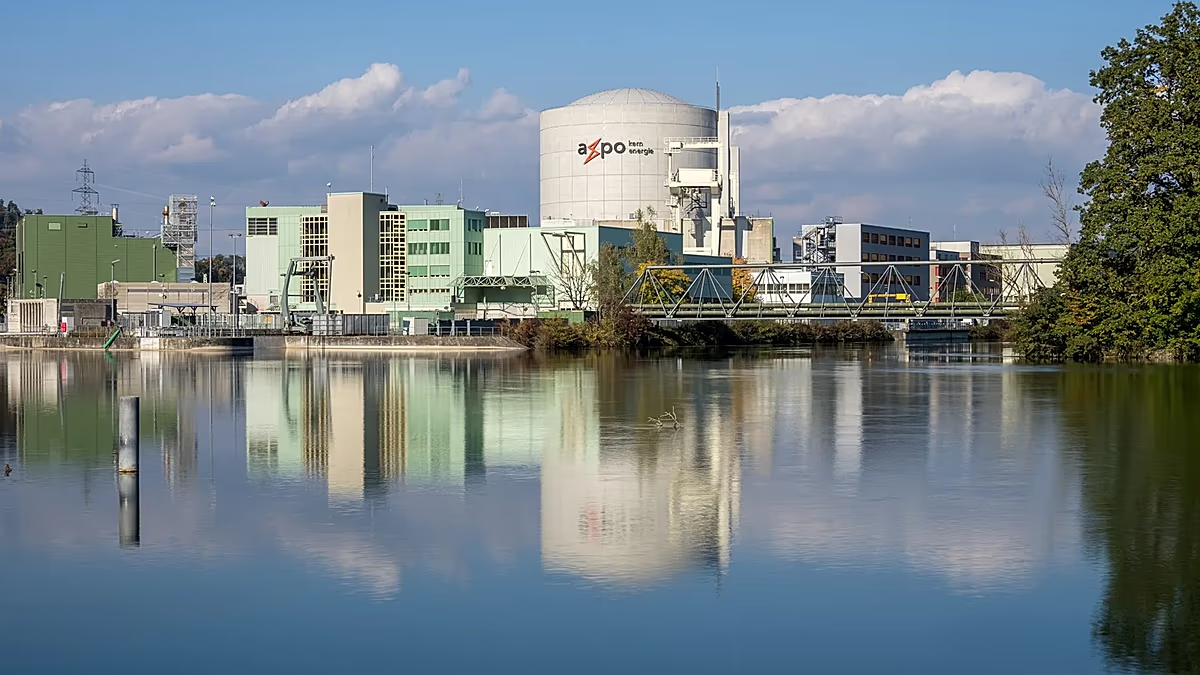
To understand the gravity of this policy reversal, one must look back to its origins. The 2018 ban was the culmination of a long public reckoning with nuclear power, a process accelerated globally by the 2011 Fukushima disaster in Japan. The tragic accident, caused by a tsunami, renewed worldwide fears about nuclear safety and led Switzerland to approve the gradual phase-out of its existing fleet. Today, the country still operates four aging reactors, all constructed in the 20th century: Beznau 1 and 2, Gösgen, and Leibstadt. Beznau 1, commissioned in 1969, holds the distinction of being the oldest operational nuclear reactor in Europe. With these plants scheduled for decommissioning between 2032 and 2033, the government faces a pressing deadline to replace a significant portion of its reliable, base-load electricity generation.
The coming referendum campaign will therefore be a clash of two compelling narratives about Switzerland’s future. Proponents, including the governing coalition, will advocate for a diversified, secure, and climate-responsible energy mix. They will present advanced nuclear technology as a clean, reliable complement to renewables, essential for keeping the lights on during long, still winter months when solar output is low and hydropower reservoirs may be depleted. Opponents, led by the Greens and environmental activists, will counter that the vote is a dangerous step backward. They will argue that the immense financial costs and long construction timelines for new nuclear plants would drain crucial investment from faster, safer, and more decentralized renewable energy projects like wind, solar, and geothermal, ultimately delaying the clean energy transition.
Ultimately, the decision rests with the Swiss electorate, who will weigh complex factors of safety, cost, environmental stewardship, and national sovereignty. The debate transcends simple technology choices; it is a referendum on how Switzerland navigates risk and opportunity in an unstable world. Will citizens view new nuclear power as a prudent “insurance policy” for a climate-constrained future, or as an unacceptable gamble that undermines a renewable energy revolution? The collection of signatures and the ensuing campaign will shape this historic dialogue, with the outcome determining Switzerland’s energy trajectory for decades to come. The world will be watching, as one of the globe’s most stable democracies decides how to power its future.