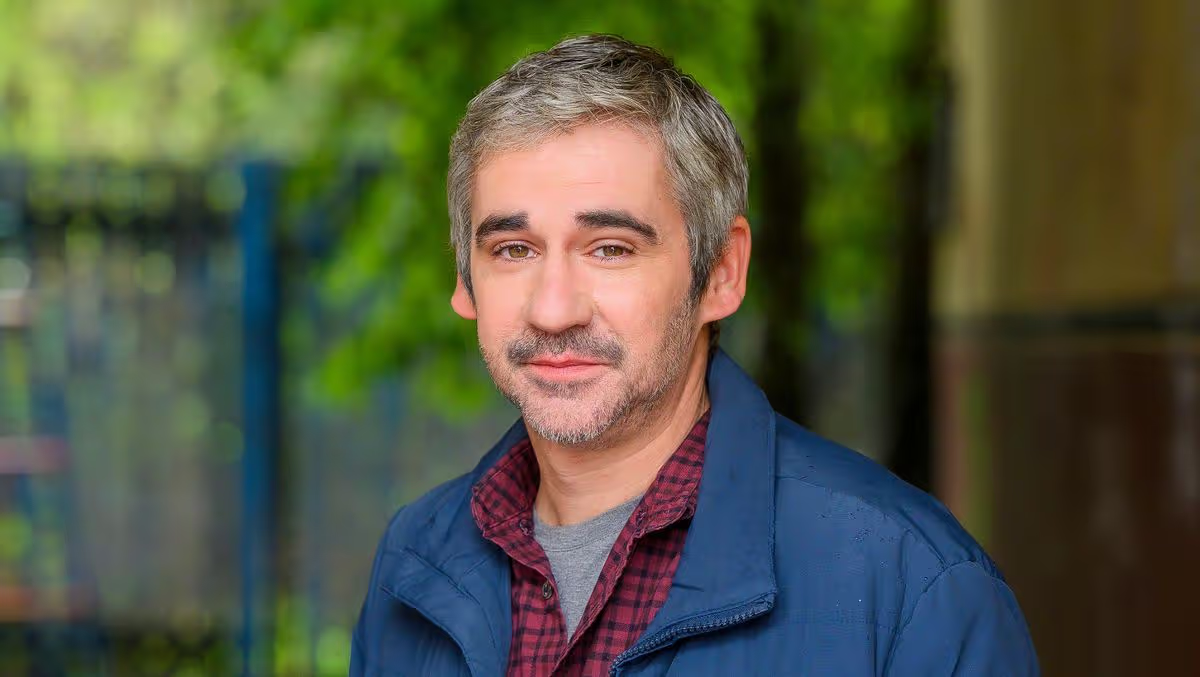




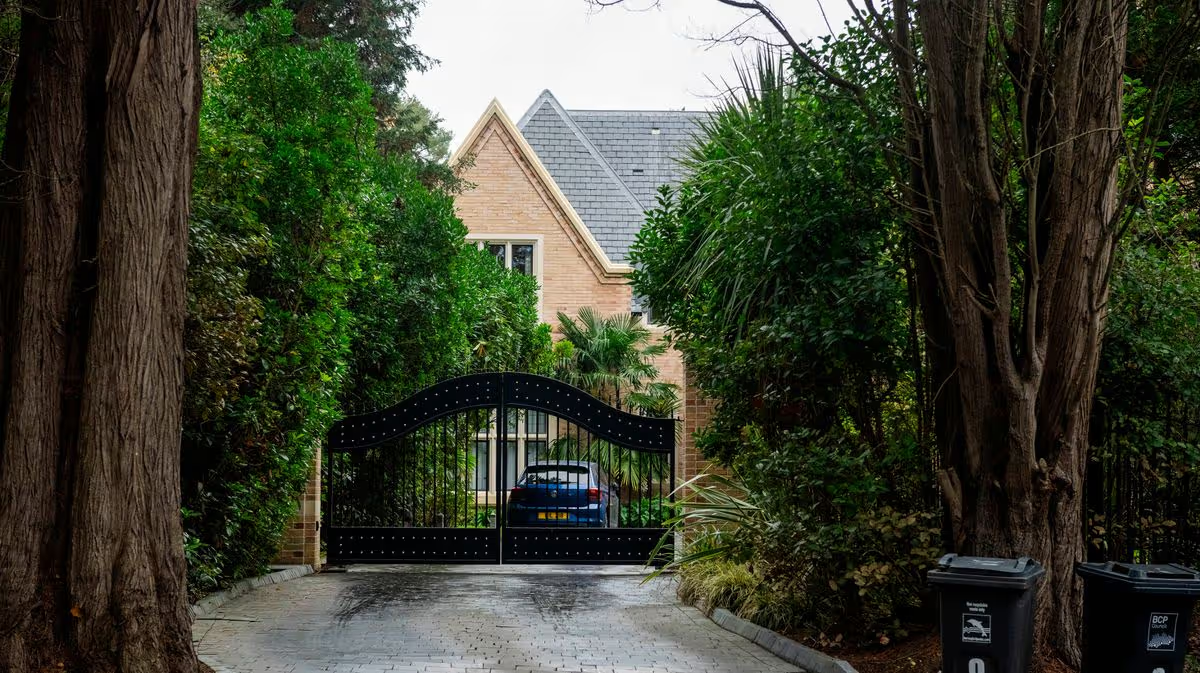
In the tranquil, leafy enclave of Branksome Park in Poole, Dorset, a modern conflict between private leisure and communal peace has reached a decisive moment. Residents of this affluent conservation area are breathing a collective sigh of relief after the local council rejected a millionaire’s ambitious plan to install a professional-grade padel court in his garden. The proposal, submitted by 52-year-old IT entrepreneur Paul Woods for his £4 million mansion, sought to bring the world’s fastest-growing sport directly to his back garden. However, what Mr. Woods envisioned as a private sporting haven, his neighbours perceived as an imminent threat to the very character that defines their prestigious neighbourhood—a threat they successfully banded together to avert.
The proposed development was far from modest. Plans detailed a full-sized open-air padel court, encircled by 14-foot-tall steel mesh and glass walls, and illuminated by four 20-foot floodlights. For Mr. Woods, managing director of a successful IT marketing firm and a former “entrepreneur of the year,” this court was to be a pinnacle of at-home leisure. Yet, to the residents of Branksome Park, these stark, urban structures represented a jarring intrusion. Their primary concern centred on noise—specifically, the distinctive, loud “piercing” sound generated when a solid padel racket strikes the ball, a noise they feared would echo repeatedly through the quiet, sylvan streets and shatter the area’s renowned tranquillity.
This clash of interests culminated in a formal planning decision by the BCP Council, which sided unequivocally with the residents. Planning officer Emma Woods delivered a verdict that went beyond mere noise complaints, addressing the fundamental integrity of the conservation area. She concluded that the court and its infrastructure would “result in an erosion of the spacious, verdant and sylvan character” of Branksome Park, introducing an “overly urbanised and visually intrusive” development. This assessment was bolstered by the council’s own conservation officer, who singled out the padel court as a “particularly harmful element,” noting that the towering floodlights would create “visual clutter” by day and erode the cherished “dark, tranquil qualities” of the area by night.
The refusal was met with quiet satisfaction among the community. One neighbour simply stated, “I am pleased it has been refused, that is good news and the right decision.” Their concerns had found a vocal advocate in local councillor Gavin Wright, who had been approached by multiple constituents. He encapsulated the opposition’s core argument, stating, “I wouldn’t want to live next to a padel court because they are incredibly noisy. Padel is a great game… but it has to be in the right place such as a tennis club, not in a residential area because of the repetitive noise.” This sentiment highlights a broader tension in exclusive residential areas: the point at which a homeowner’s personal amenity infringes upon the collective right to peaceful enjoyment.
Beneath the formal planning arguments lay a more colourful social narrative, hinted at by one local’s fear that the garden would transform into a noisy “boys’ club” where Mr. Woods and his friends would enjoy “padel and beers.” This characterization, while anecdotal, underscored the perceived incompatibility of a lively, sports-focused facility with the area’s subdued, refined atmosphere. It is worth noting that Mr. Woods’ application did garner letters of support, with advocates arguing the noise impact would be minimal. However, these were ultimately overshadowed by the overwhelming consensus that the development was fundamentally misplaced in such a sensitive environmental and residential setting.
For now, the matter rests with the council’s ruling, but the final chapter may not yet be written. A spokesperson for Mr. Woods’ architects indicated they plan to meet to discuss the possibility of an appeal. This leaves the community in a state of provisional victory, their prized tranquillity preserved—for the moment. The dispute in Branksome Park serves as a modern parable about community cohesion, planning authority, and the limits of personal property rights in protected landscapes. It demonstrates that even in the gardens of the wealthy, the collective voice of a community, when united by a shared vision for their environment, can still hold significant sway against the plans of a single, determined individual.