


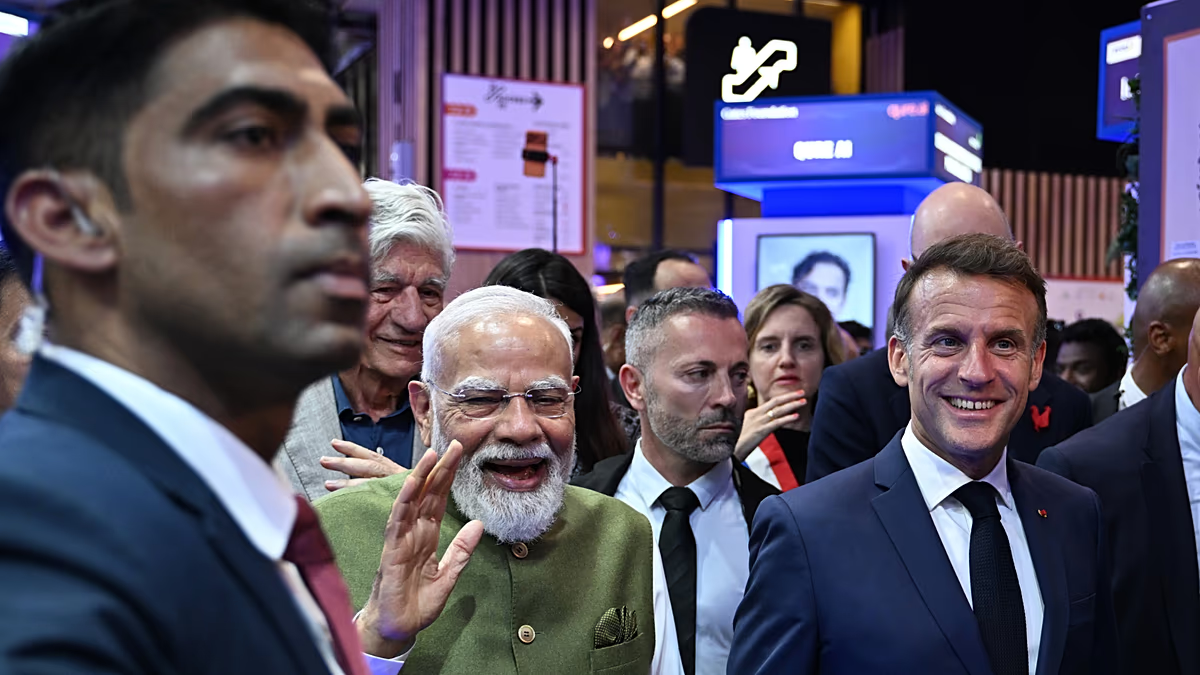
The late spring of 2026 in Paris was more than just a season; it was a symbol of a flourishing partnership. Against the vibrant backdrop of VivaTech, one of Europe’s premier technology gatherings, French President Emmanuel Macron and Indian Prime Minister Narendra Modi embarked on a joint visit that was rich in symbolism and substance. Their presence together at the Indian pavilion, located within the expansive Paris Expo Porte de Versailles, was a powerful visual testament to a relationship moving beyond traditional diplomacy into the dynamic realms of innovation and enterprise. As they navigated the bustling aisles, pausing to converse with entrepreneurs, listen to exhibitors, and greet attendees, their interactions were not mere formalities. They were deliberate engagements, underscoring a mutual recognition that the future of Franco-Indian ties will be written in the language of technology, startup culture, and collaborative creation.
This moment was carefully set within a broader framework: the Franco-Indian Year of Innovation, officially launched in Mumbai earlier in February 2026. This dedicated year was conceived as a catalyst, designed to propel collaboration across critical fields like scientific research, cutting-edge technology, and entrepreneurial ventures. The choice of VivaTech as a stage was particularly apt. The event, a magnet for startups, visionary investors, and global corporate leaders, provided the perfect arena to highlight India’s meteoric rise as a global innovation powerhouse. India’s significant and highly visible presence at the expo, with a diverse delegation spanning software, advanced manufacturing, biotechnology, and even space technology, served as tangible proof of this evolution. The leaders’ tour drew the world’s attention not just to the pavilion itself, but to India’s expanding and influential role within the global startup ecosystem.
The narrative of collaboration was further reinforced by its timing. The VivaTech visit came mere days after President Macron and Prime Minister Modi had jointly inaugurated “Bharat Innovates 2026” in the French city of Nice. This event served as a dedicated showcase for emerging Indian tech ventures on European soil. This sequence of events—from Nice to Paris—was no coincidence. It created a compelling continuum, a week-long spotlight deliberately cast on the depth and breadth of Indian innovation. It signaled a coordinated effort to weave Indian technological prowess into the fabric of European business and investment landscapes, with France acting as a primary conduit and partner.
The thematic heart of VivaTech 2026 also perfectly aligned with the leaders’ shared priorities. The event’s programming placed a heavy emphasis on the practical, real-world applications of artificial intelligence. This focus mirrored a broader industry shift from theoretical speculation about AI’s potential to its tangible deployment in solving problems and creating value. Organizers noted the growing trend of businesses leveraging AI tools to enhance productivity, pioneer new services, and forge stronger international partnerships. In this context, the Macron-Modi visit was a powerful endorsement of this pragmatic approach. It positioned AI and digital infrastructure not as abstract concepts, but as essential pillars for the future economic cooperation between their nations. Their presence together suggested a shared vision: to pool French and Indian expertise in these advanced fields to drive progress that benefits both societies.
Beyond the grand themes, the human element of the visit remained central. The image of the two leaders engaging directly with founders and inventors at their booths was perhaps the most resonant. It transformed policy into personal interaction, allowing Macron and Modi to witness the passion of entrepreneurship firsthand. These conversations, whether about a breakthrough in biotech or a new software solution, grounded the high-level diplomatic agenda in the lived reality of innovators. For the entrepreneurs, this unprecedented access was a monumental vote of confidence, offering invaluable exposure and signaling that their work was recognized at the very highest levels of both governments. This human connection fostered a sense of shared mission and possibility.
In summary, the joint visit by President Macron and Prime Minister Modi to the Indian pavilion at VivaTech 2026 was a multifaceted event that successfully wove together symbolism, strategy, and substance. It celebrated the launchpad of the Franco-Indian Year of Innovation, showcased India’s ascendant tech ecosystem on a major global stage, and emphasized a common commitment to applied technologies like artificial intelligence. By following their collaborative appearance in Nice, it created a sustained narrative of partnership. Ultimately, the event underscored a forward-looking truth: the relationship between France and India is being increasingly built not just on historical ties, but on a shared investment in the next generation of ideas, industries, and inventors who will shape the decades to come.