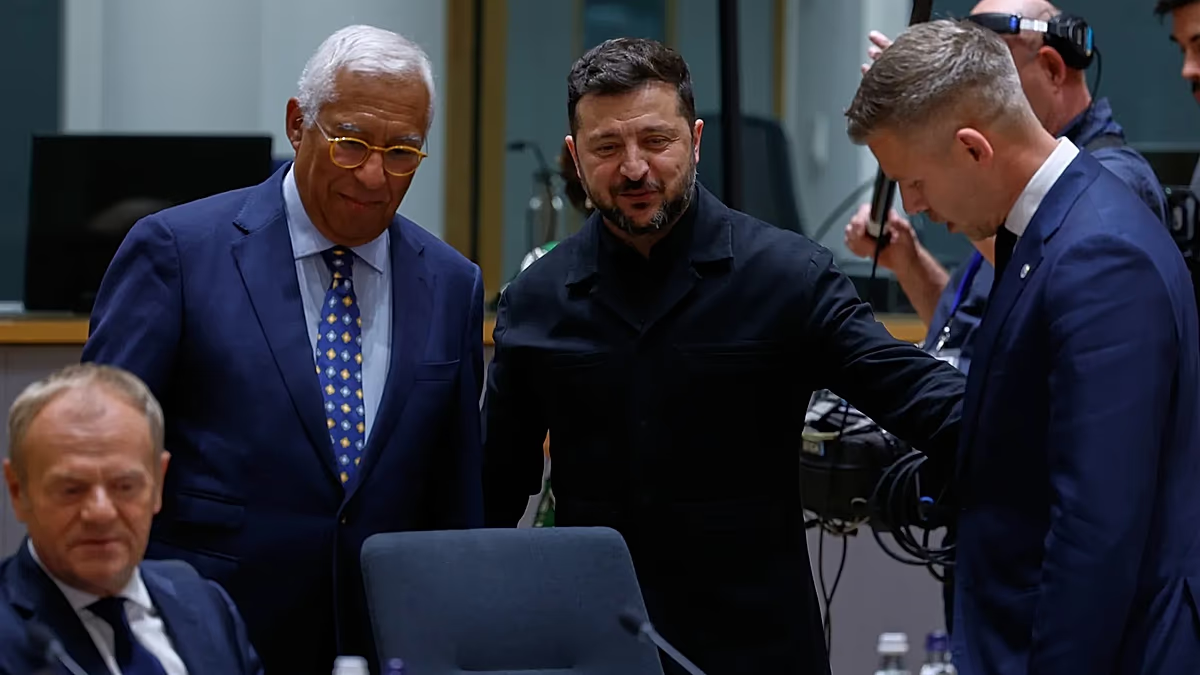


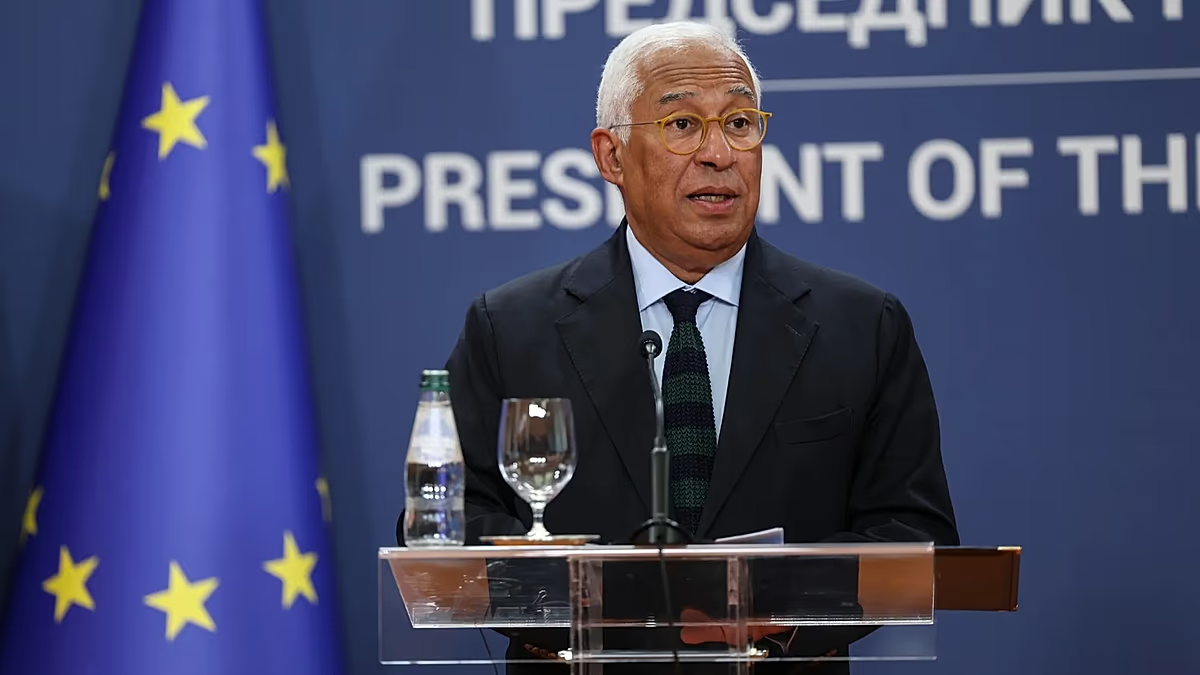
The recent European Union summit in Brussels was dominated by an unexpected and contentious diplomatic move by its Council President, António Costa. In a revelation that caught many member states off guard, it emerged that Costa had authorized his chief of cabinet to open a discreet channel of communication with the Kremlin. The stated aim was to assess whether conditions existed for potential peace negotiations regarding the war in Ukraine, a probe his team ultimately concluded was not viable at this time. This initiative, undertaken without broad consultation, has thrust into sharp relief the fragile and often divergent positions within the EU on how to engage with Russia, testing the unity Costa has championed as a central tenet of his presidency.
The operation was characterized by EU officials as preliminary “diplomatic work,” with no substantive negotiations taking place. Costa defended the move as a necessary step to ensure the EU’s readiness to defend its interests “when the right moment comes.” He cited encouragement from Ukrainian President Volodymyr Zelenskyy, who has previously called for Europe to play a more robust role in the peace process, including dialogue with Moscow. The communication, believed to be with a top aide to Vladimir Putin like Yuri Ushakov, occurred just days before the summit, where leaders formally agreed the EU was ready to “step up its engagement” in negotiations. This timing led to questions about whether Costa had a clear mandate or was acting with the backing of only a subset of allies.
Reaction among the 27 member states was deeply divided, illuminating the geopolitical fault lines within the bloc. A cohort of nations, including Slovenia, Austria, Slovakia, and Bulgaria, expressed support for the outreach. Slovenian Prime Minister Janez Janša captured this sentiment, stating that any steps toward ceasing hostilities should be welcomed. Some leaders even suggested Costa could be the “natural representative” for the EU in any future direct talks, floating his name for a potential special envoy role. This perspective views any exploratory dialogue as a pragmatic, forward-looking measure, separate from military support for Ukraine.
However, a significant and strategically important group of member states voiced strong concern or outright disagreement. Poland, the Baltic states, and Nordic countries were among those alarmed by the initiative. Their apprehension stems from a fundamental belief that any form of engagement, however preliminary, is inappropriate while Russia continues its aggressive war. They argue it risks legitimizing the Kremlin and undermining the principle that negotiations cannot begin without a demonstrable shift in Russia’s stance. Furthermore, some suggested that such delicate diplomatic tasks should fall to the established “E3” format—Germany, France, and the United Kingdom—rather than a new, unilateral channel from the European Council president.
The controversy underscores a persistent strategic dilemma for Europe. As Dutch Prime Minister Rob Jetten articulated, while everyone agrees negotiations are ultimately necessary for a lasting peace, there is a chasm between those who believe Europe must prepare the ground now and those who insist that talking is only possible once Ukraine has consolidated a stronger position on the battlefield. The episode also raises procedural questions about the European Council president’s role. By not consulting widely, Costa opened himself to criticism that he bypassed the very unity he seeks to uphold, with several diplomats confirming they learned of the contacts through media reports rather than official channels.
Ultimately, while the direct channel has been deemed non-viable for now, the debate it sparked is far from over. It has forcefully highlighted the EU’s internal balancing act: maintaining unwavering support for Ukraine’s defense while grappling with the complex, long-term diplomacy required to end the war. The summit conclusions represent a fragile consensus to be more engaged, but the path forward remains contested. Costa’s gamble, though currently paused, has set a precedent and framed a critical question for the bloc—who speaks for Europe to Russia, and when—a question that will continue to resonate as the conflict evolves.