

The Stalled Sanctions: Europe’s Internal Struggle Over Patriarch Kirill
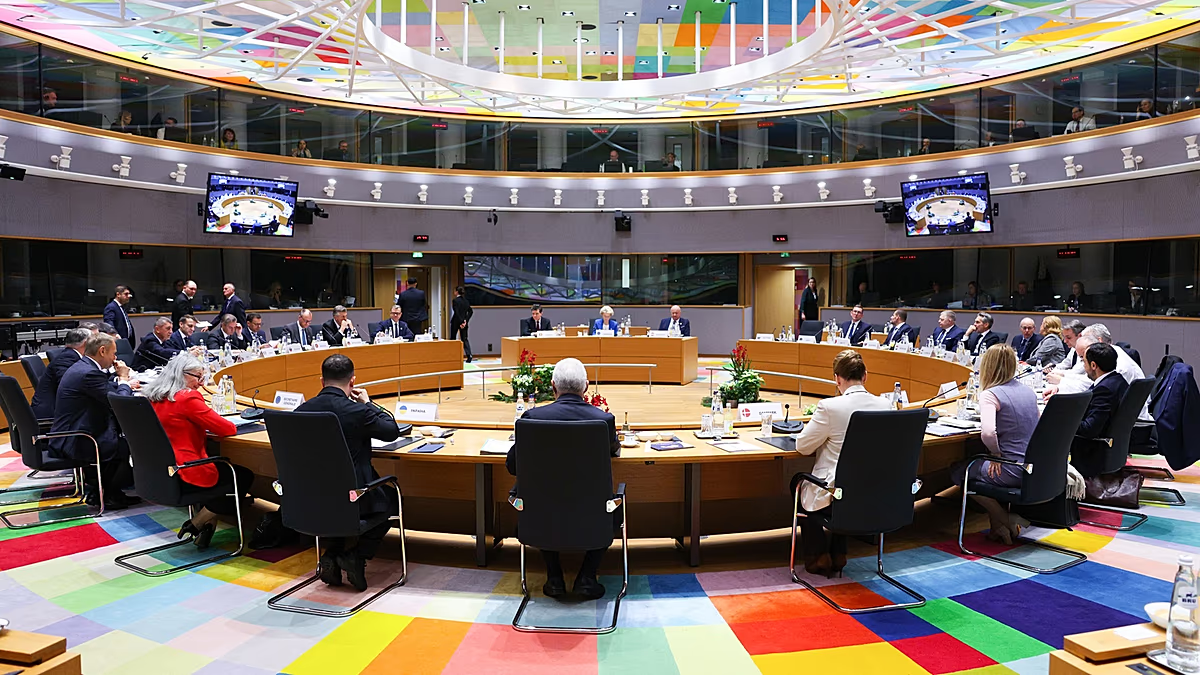
The European Union’s quest to impose sanctions on Patriarch Kirill, the head of the Russian Orthodox Church, has hit another formidable roadblock, revealing deep internal divisions that extend beyond geopolitics into the sensitive realms of faith and cultural identity. After Hungary, under its new government, lifted its long-standing veto—a move that briefly galvanized EU officials—the obstacle has now shifted to Bulgaria. This small Balkan nation, traditionally seen as a bridge between East and West, has emerged as the new decisive voice in a decision requiring unanimous approval from all 27 member states. The Bulgarian opposition underscores a complex and often overlooked dimension of the Ukraine conflict: for many in Eastern Europe, the war is not merely a political or territorial dispute but a profound spiritual and cultural schism.
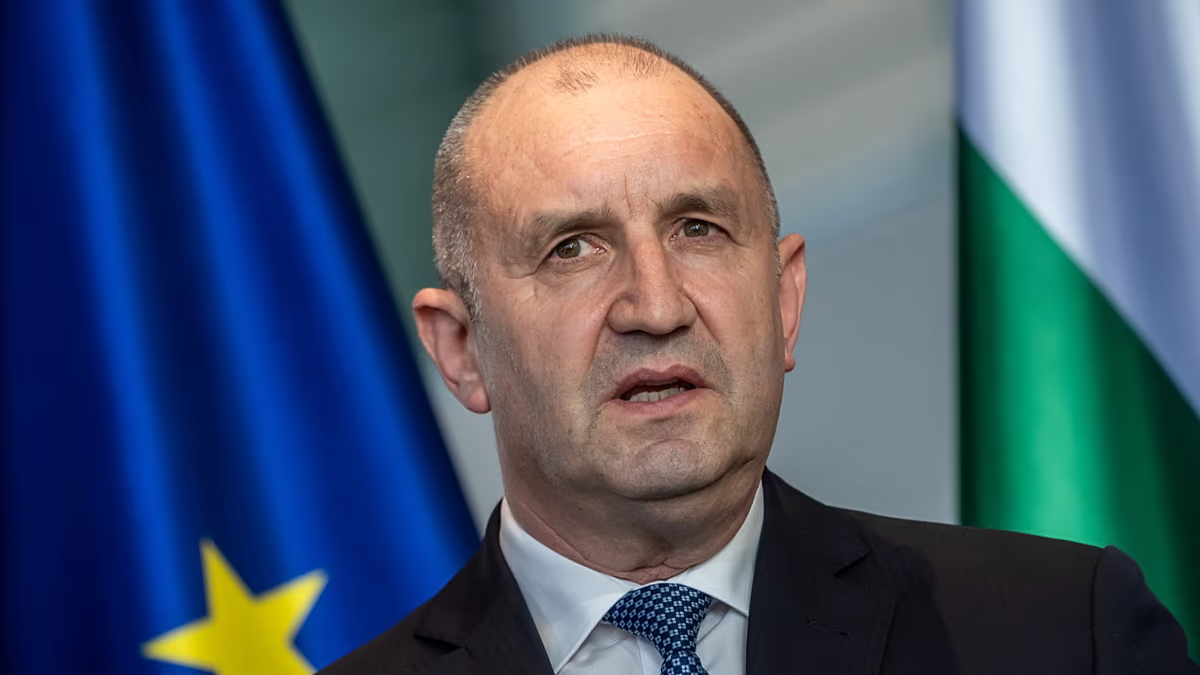
The heart of Bulgaria’s resistance was articulated by its new Prime Minister, Rumen Radev, just before his inaugural EU summit. He framed the proposed sanctions not as a targeted strike against an individual, but as a dangerous escalation into the religious sphere. “What message are we sending when we extend sanctions and war into the sphere of religion?” Radev questioned, appealing to a sense of historical precedent by declaring, “The era of the Crusades is over.” His argument hinges not on a defense of Kirill’s actions, but on a deep-seated solidarity with the broader Eastern Orthodox community. He emphasized that Kirill is not merely a political actor but the spiritual leader of a church that shares faith, dogma, and centuries of cultural history with the Bulgarian Orthodox Church. For Radev, sanctioning the Patriarch is perceived as an affront to millions of believers, potentially alienating them and casting the EU as an outsider meddling in sacred affairs.
This theological and cultural solidarity was echoed by Bulgaria’s Foreign Minister, Velislava Petrova-Chamova, who dismissed the proposed sanctions as a purely “symbolic” gesture. She argued that while the measures—a travel ban and asset freeze—would have little tangible economic impact, they carried a significant strategic risk. In her view, such a move would provide potent fuel for anti-European propaganda, reinforcing a narrative that the EU is waging a cultural war against Orthodox Christianity. This perspective highlights a central tension within the bloc: the desire to take a moral stand against those complicit in the Ukraine war must be balanced against the potential for alienating entire communities within its own borders who see the conflict through a different, faith-based lens.
The individual at the center of this controversy, Patriarch Kirill, is a figure of immense influence and notoriety. He has repeatedly used his pulpit to champion a nationalist, revisionist vision of Russia’s destiny, actively blessing the war effort. Under his leadership, the Russian Orthodox Church has endorsed documents that deny Ukrainian sovereignty and have framed the invasion as a metaphysical “Holy War.” It is precisely this merging of religious authority with aggressive state propaganda that led the EU to first attempt to blacklist him in 2022. That initial effort was thwarted by Hungary’s then-Prime Minister Viktor Orbán, who defended his veto on grounds of religious freedom, causing significant frustration among other member states.
Now, with Hungary’s surprising reversal under its new leadership, momentum seemed to have finally shifted. EU diplomats moved swiftly to include Kirill’s name on the latest sanctions list, viewing it as a crucial step in holding all enablers of the war accountable. However, Bulgaria’s intervention has stalled this momentum, demonstrating that the unity of the European project is continually tested by the diverse historical experiences and cultural loyalties of its member states. The debate over Kirill is no longer just about punishing a supporter of the Kremlin; it has become a litmus test for how the EU navigates issues where political condemnation intersects with deeply held religious identity.
Ultimately, the impasse over Patriarch Kirill exposes a fundamental challenge for the European Union. Its foreign policy, designed to project unified strength and moral clarity, must sometimes contend with the intricate and often painful historical tapestries of its own members. For Bulgaria, and potentially other Orthodox-majority nations, the decision transcends politics—it touches upon centuries of shared religious tradition. The EU now finds itself grappling with whether punitive measures against a religious leader, however justified by his political actions, risk fracturing the very unity they are meant to protect. As diplomats negotiate, they are not merely debating a name on a list, but the boundaries between secular accountability and spiritual solidarity in a continent still shaped by its ancient divides.