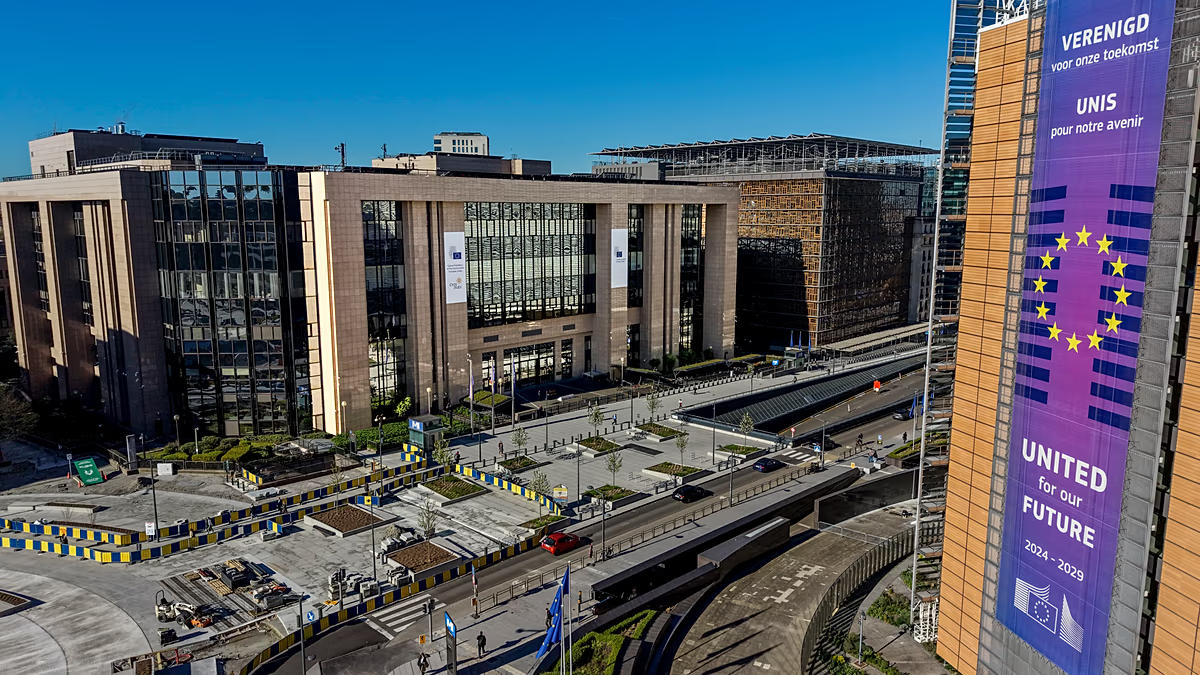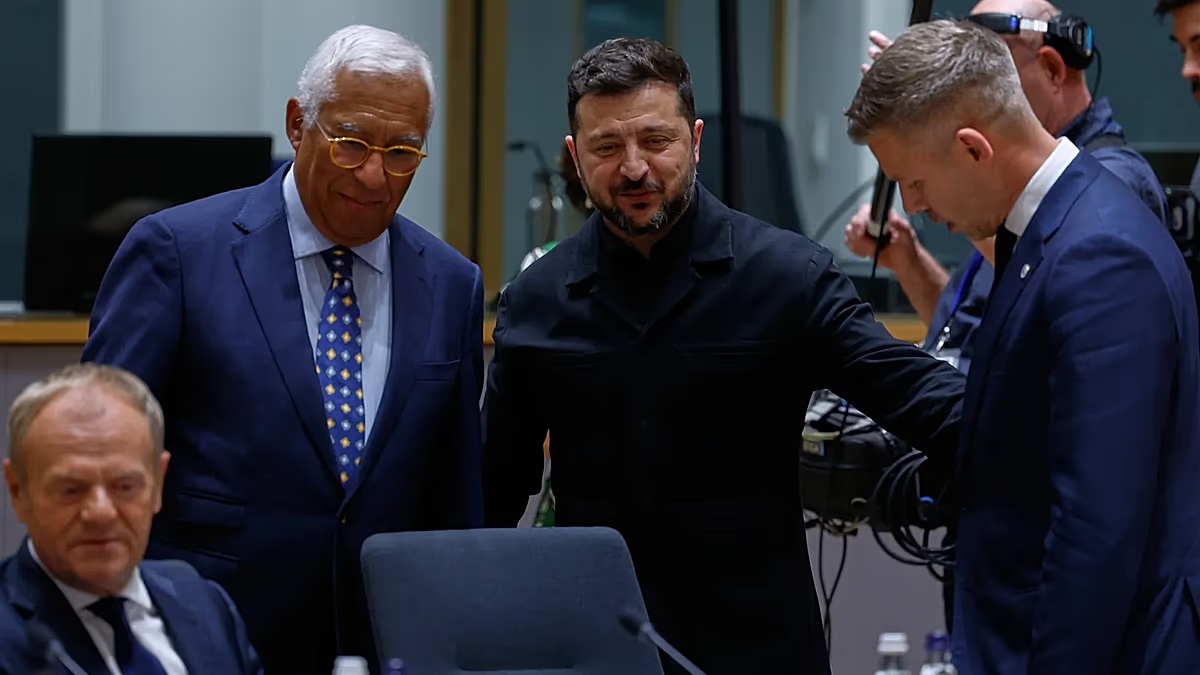




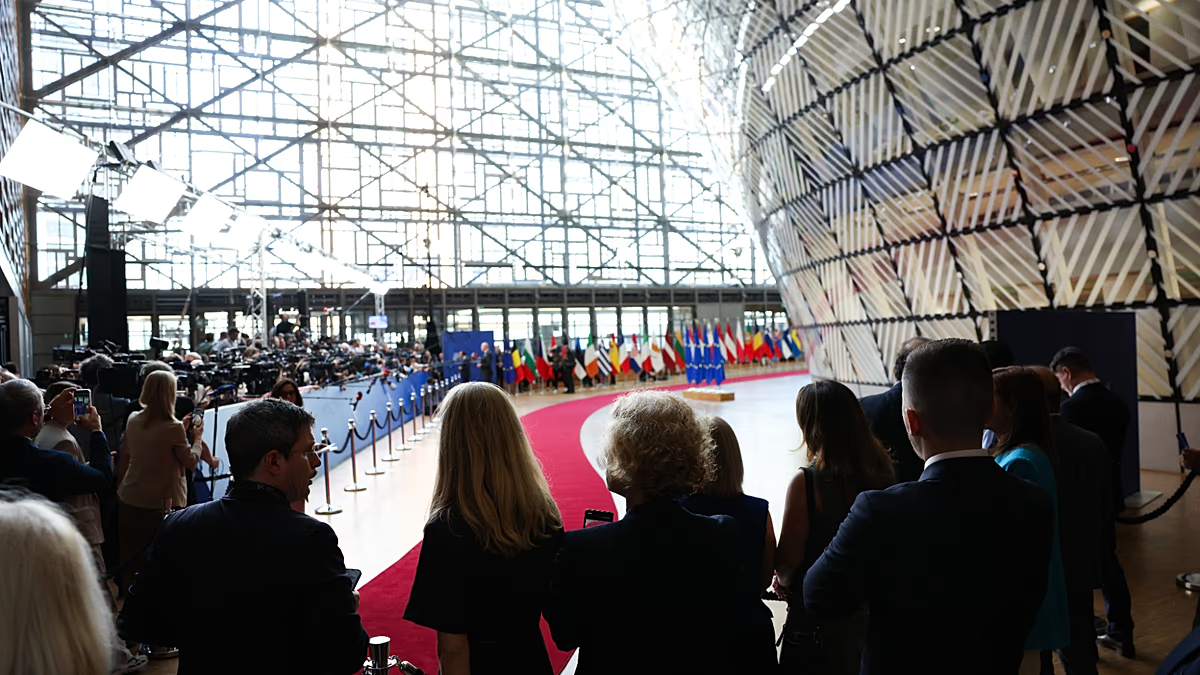
As the European Council reconvenes on Friday, the air in Brussels is thick with the tension of a high-stakes negotiation. The agenda centers on the European Union’s long-term budget, known in the labyrinthine jargon of the EU as the Multiannual Financial Framework (MFF). This is not merely a routine financial planning exercise; it is a profound debate about the Union’s very priorities and identity for the years to come. The discussions have crystallized into a standoff between two broad coalitions of member states, each carrying a distinct vision for Europe’s future. On one side stand the nations frequently labeled the “frugals,” while on the other is the more numerous bloc known as the “friends of cohesion.” Their disagreement sets the stage for a classic EU drama, where shared ambition clashes with national interest, and compromise is both necessary and painfully difficult.
The “frugal” camp, a term its members often bristle at, is composed of some of the Union’s wealthiest and most economically stable nations: Germany, the Netherlands, Denmark, Sweden, Finland, and Austria. As the primary net contributors to the EU budget—sending more money to Brussels than they receive back—this group is small in number but immense in influence. Their core argument is one of fiscal discipline and modernization. They advocate for a leaner overall budget, arguing that the EU, like any responsible household or government, must tailor its spending to a post-pandemic, geopolitically turbulent reality. They seek a decisive shift in funding away from what they see as traditional, perhaps outdated, pillars like the Common Agricultural Policy and regional cohesion funds, and toward new frontier priorities: bolstering European competitiveness in the global tech race, strengthening common defence capabilities, and financing the green transition. Preferring the title “modernisers,” they frame their stance not as mere penny-pinching, but as a necessary evolution to keep the Union relevant and secure.
In stark contrast, the “friends of cohesion” present a far more populous and geographically diverse front. This coalition encompasses 17 member states, including Bulgaria, Croatia, Cyprus, Estonia, Greece, Italy, Latvia, Lithuania, Malta, Poland, Portugal, the Czech Republic, Romania, Slovenia, Slovakia, Spain, and Hungary. For these nations, the EU budget is not just an accounting tool but a fundamental instrument of solidarity and convergence—the mechanism that binds the Union together by narrowing the economic and developmental gaps between its richer and poorer regions. They champion a more ambitious overall budget, arguing that Europe’s challenges, from the green transition to digital infrastructure, require greater investment, not less. Their primary mission is to protect and even expand funding for cohesion policy, which supports infrastructure, job creation, and growth in less-developed regions, and for the Common Agricultural Policy, which sustains rural communities across the continent. For them, reducing these funds would undermine the promise of a united and equitable Europe.
The chasm between these two perspectives is not just philosophical but intensely practical, thanks to a critical procedural rule: the MFF must be adopted unanimously. Every single one of the 27 member states holds a veto, giving immense bargaining power to both the assertive frugals and the large cohesion bloc. This sets the scene for a gruelling negotiation where every percentage point of GDP committed to the budget, every euro allocated to a farm subsidy or a research grant, becomes a point of contention. Leaders are entering this summit still very far from a consensus. The frugals will push for strict conditionality and rebates, the cohesion friends will demand guaranteed minimum allocations, and all will have to navigate the additional financial demands created by the war in Ukraine, the need for strategic autonomy, and the repayment of pandemic-era debts. The room for maneuver is tight, and the pressure to find a deal that all can live with is immense.
The outcome of this standoff will define the EU’s operational capacity for the rest of the decade. Will the budget reflect a “Europe of projects,” focused on high-tech and security initiatives that primarily benefit already-advanced economies? Or will it remain a “Europe of solidarity,” prioritizing territorial balance and support for its most vulnerable communities and sectors? In reality, the final agreement will inevitably be a hybrid, but the balance struck will send a powerful message. A budget tilted too far toward the frugals’ vision risks breeding resentment and widening divisions within the Union. A budget that ignores the modernisers’ calls for innovation and defence could leave Europe strategically vulnerable and economically stagnant. The art of the deal lies in crafting a framework that funds future-facing priorities without abandoning the foundational principles of cohesion and agricultural support.
Therefore, the summit is more than a meeting about numbers; it is a test of European unity and political will. The negotiators are tasked with reconciling the competing narratives of fiscal responsibility and collective ambition, of national contribution and shared benefit. The process will be marked by marathon sessions, late-night bilaterals, and the delicate crafting of complex trade-offs and political face-savers. The resulting Multiannual Financial Framework will be a mosaic, pieced together from the hard edges of national interests, but it must ultimately form a coherent picture of a Union that can protect its people, transform its economy, and uphold its values on the world stage. The success or failure of this summit will resonate far beyond the negotiating rooms of Brussels, shaping the lived reality of every European citizen for years to come.