


Of course. Here is a humanized and expanded summary of the content, crafted into six paragraphs.
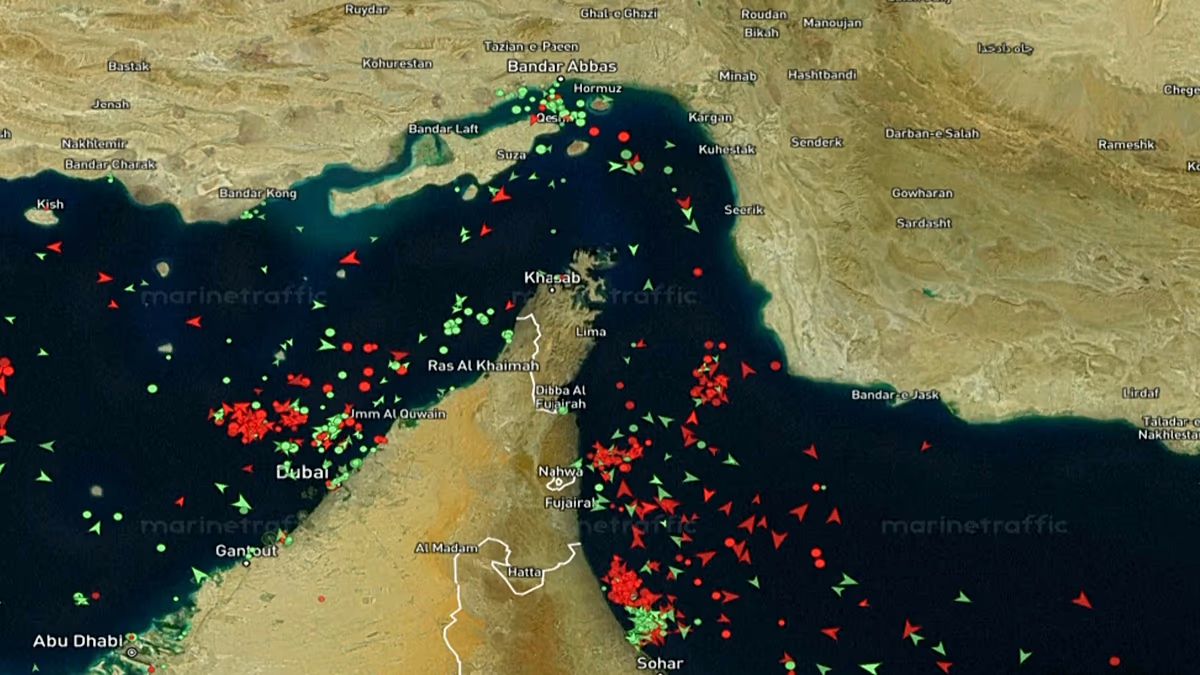
It is a sight many feared they might never see again: a serene, uninterrupted stream of tankers and cargo ships gliding silently through the azure waters of the Strait of Hormuz. This timelapse footage, captured in the early hours of a June morning in 2026, is far more than a routine maritime snapshot. It is a living testament to a profound and hopeful shift in global affairs. After years of escalating tensions, covert operations, and threats that brought the world to the brink of a major regional war, the United States and Iran have signed a landmark agreement. The conflict that choked this vital artery of global commerce has been formally declared over, and the Strait is once again open for unrestricted, secure passage. The vessels in the frame are not just moving goods; they are carrying the collective sigh of relief from international markets, shipping magnates, and governments worldwide.
To understand the weight of this moment, one must recall the Strait’s role as the world’s most critical oil chokepoint. For decades, this narrow passage between Oman and Iran has been the conduit for roughly a fifth of the world’s traded oil and a significant portion of its liquefied natural gas. Every drop of crude from Saudi Arabia, Kuwait, the UAE, and Qatar—the lifeblood of economies from Asia to Europe—had to pass through this 21-mile-wide gateway. The recent years of conflict turned this economic linchpin into a flashpoint, with threats to shipping, insurance premiums skyrocketing, and the constant, gnawing fear of a miscalculation that could trigger a devastating blockade. The timelapse, therefore, symbolizes a return to a fragile but essential normalcy, where energy flows predictably and the gears of global trade can turn without the constant specter of disruption.
The journey to this agreement was neither quick nor easy. It was born from a grinding stalemate that exhausted both nations and their allies, coupled with intense, behind-the-scenes diplomacy often facilitated by neutral powers. The human cost of the conflict, the economic strain of perpetual military readiness, and the urgent needs of a world grappling with other pressing crises finally created a window for compromise. The deal likely addresses a complex web of issues: security guarantees for navigation, the winding down of certain sanctions in exchange for verifiable constraints on Iran’s military activities in the Strait, and mechanisms to prevent provocative incidents at sea. While the full text remains detailed for experts to dissect, its ultimate purpose is beautifully simple, as shown by the timelapse: to replace the image of warships on high alert with one of peaceful merchant vessels.
The immediate human impact is vast and multi-layered. For the sailors on those very ships, it means transiting the Strait without the heart-pounding anxiety of a potential confrontation, able to focus solely on their craft and the horizon. For families in nations dependent on imported energy, it promises a measure of stability in fuel prices and electricity costs. For port workers from Fujairah to Rotterdam, and for every factory and farm that relies on just-in-time deliveries, it reinstates a predictability that is the foundation of modern supply chains. The reopening is a quiet victory for normal people everywhere—a removal of an invisible tax of risk and uncertainty that had been levied on everyday life.
However, seasoned observers are watching this new dawn with cautious optimism rather than unbridled celebration. A signed agreement is a monumental first step, but the true test lies in its enduring implementation and the management of inevitable future disputes. The deep-seated mistrust between Washington and Tehran, built over generations, cannot be erased by a single document. The timelapse shows progress, but it does not show the delicate diplomatic machinery, the joint communication channels, and the on-water protocols that must now work flawlessly to maintain this peace. The world will be watching to see if this calm is a permanent state or merely a tranquil chapter between storms.
Ultimately, that timelapse video, dated June 19, 2026, may become a historical bookmark. It captures the precise moment when a major fault line in global geopolitics began to heal. More than a news update, it is a powerful symbol of what is possible when the relentless logic of conflict is finally outweighed by the pragmatic necessities of peace and interconnected prosperity. As those ships continue their endless, silent parade through the strait, they carry a renewed, if cautious, hope: that the most vital waterways of our world can be corridors for shared commerce, not arenas for division.