



The second matchday of the 2026 World Cup has concluded, injecting a fresh dose of drama and narrative into the tournament’s early stages. After the initial flurry of action in Week One, where all 48 teams made their debut in this expanded format, the focus has sharpened on the desperate scramble for points. The new structure, awarding knockout spots to the top two teams from each of the twelve groups plus eight best third-place finishers, means every goal and every point carries immense weight. The opening week served as a form guide; now, the real battles for survival and supremacy have begun in earnest.
Groups A and B were in the spotlight, and the drama was palpable. In a tense encounter, Czechia and South Africa, both defeated in their openers, fought for a lifeline. Czechia struck early through Michal Sadilek and then battened down the hatches, employing a defensive low block to protect their slender lead. It seemed a shrewd, if nervy, tactic would pay off until a heartbreaking late handball gifted South Africa a penalty. Up stepped the unflappable Teboho Mokoena, whose cool finish in the 83rd minute snatched a vital point for Bafana Bafana, a moment of pure ecstasy for a nation back on the world stage after 16 years. Meanwhile, Switzerland and Bosnia and Herzegovina engaged in a contest that spectacularly exploded to life in the final quarter. After over 70 goalless minutes marked by Swiss frustration, including a stunning Dan Ndoye overhead kick that rattled the crossbar, the floodgates opened. Johan Manzambi’s brilliant volley broke the deadlock, and after Bosnia went down to ten men, Switzerland ran riot with two quick goals. A breathtaking consolation volley from Ermin Mahmic offered a glimpse of Bosnian spirit, but a late Granit Xhaka penalty sealed a emphatic 4-1 win for the Swiss, a result that utterly belied the match’s tense beginnings.
The most dominant performance of the day, however, belonged to co-hosts Canada, who delivered a statement victory that sent a roar across the nation. Facing a Qatar side still searching for its footing on the global stage, the Canadians were ruthless. An early gift from the Qatari goalkeeper allowed Cyle Larin to tap in, setting the tone for a one-sided affair. Jonathan David, with his lethal precision, added a superb volley before Qatar’s collapse was compounded by two red cards, one in each half. Against a demoralized and numerically disadvantaged opponent, Canada showcased both flair and ferocity. David completed a magnificent hat-trick, Alphonso Davies curled in a sublime free-kick, and even a Qatari own goal contributed to the 6-0 rout. The victory, witnessed proudly by Prime Minister Mark Carney in the stands, catapulted Canada to the top of Group B on goal difference, setting up a tantalizing final group match against Switzerland for top spot.
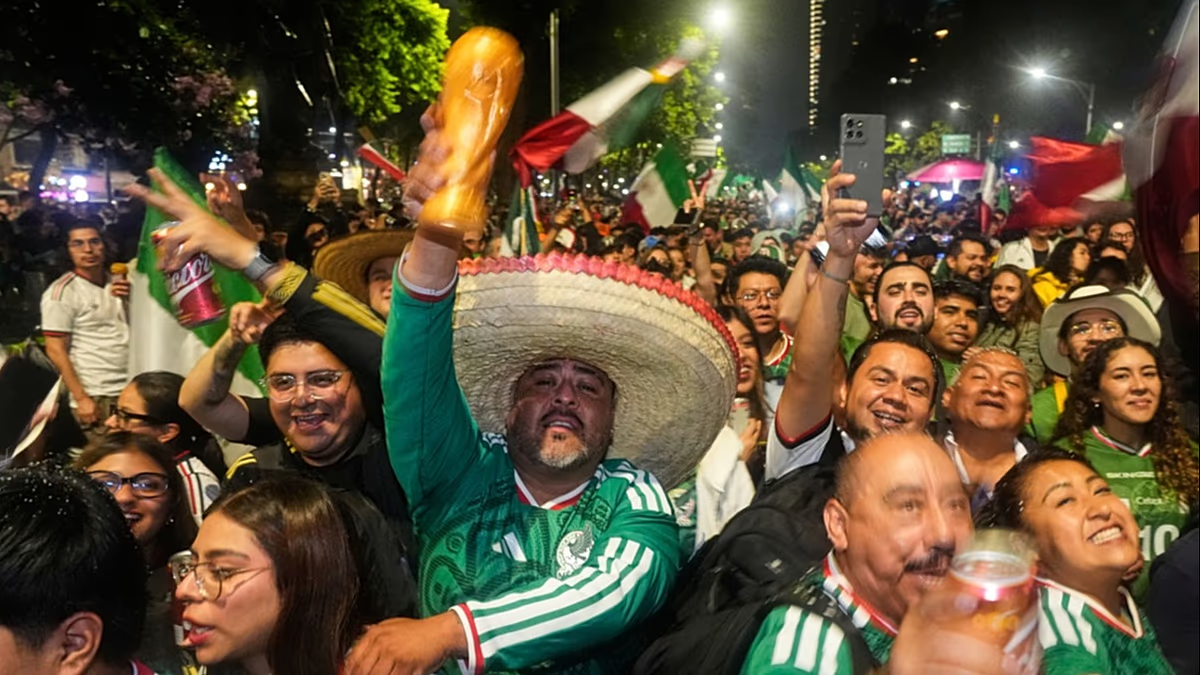
In the day’ subter finale, the other co-hosts, Mexico, achieved a significant milestone. In a tightly-contested battle against a South Korean team spearheaded by the iconic Son Heung-min, El Tri ground out a professional 1-0 victory courtesy of Luis Romo’s second-half strike. The win, secured before a fervent home crowd at Estadio Guadalajara, made Mexico the first team to officially book its place in the knockout rounds with a perfect six points. This early qualification is a strategic masterstroke, allowing them the luxury to rest key players and manage minutes in their final group match against Czechia, while their opponents face the exhausting pressure of a must-win finale.
As the dust settles on a packed Day 8, the tournament storylines are crystallizing. We see the heartbreak of last-minute equalizers and the sheer joy of underdog resilience. We witness the explosive potential of teams like Canada, capable of breathtaking attacking football when the momentum swings their way. And we observe the clinical efficiency of experienced sides like Mexico, who navigate the group stages with pragmatic grace. The human drama is everywhere: in the despair of a conceded penalty, in the exhilaration of a first World Cup goal, and in the collective sigh of relief from a host nation securing passage to the next round.
Looking ahead, the permutations become endlessly fascinating. For teams like Czechia and South Africa, everything hinges on a dramatic final group day. For Canada and Switzerland, a direct duel awaits to decide who advances as group leaders. And for those nations like Mexico, already looking beyond the group, the luxury of planning for the knockout stages begins now. The 2026 World Cup, in its expanded glory, is delivering on its promise: more teams, more matches, and, unequivocally, more moments of unscripted human drama that captivate the globe.