
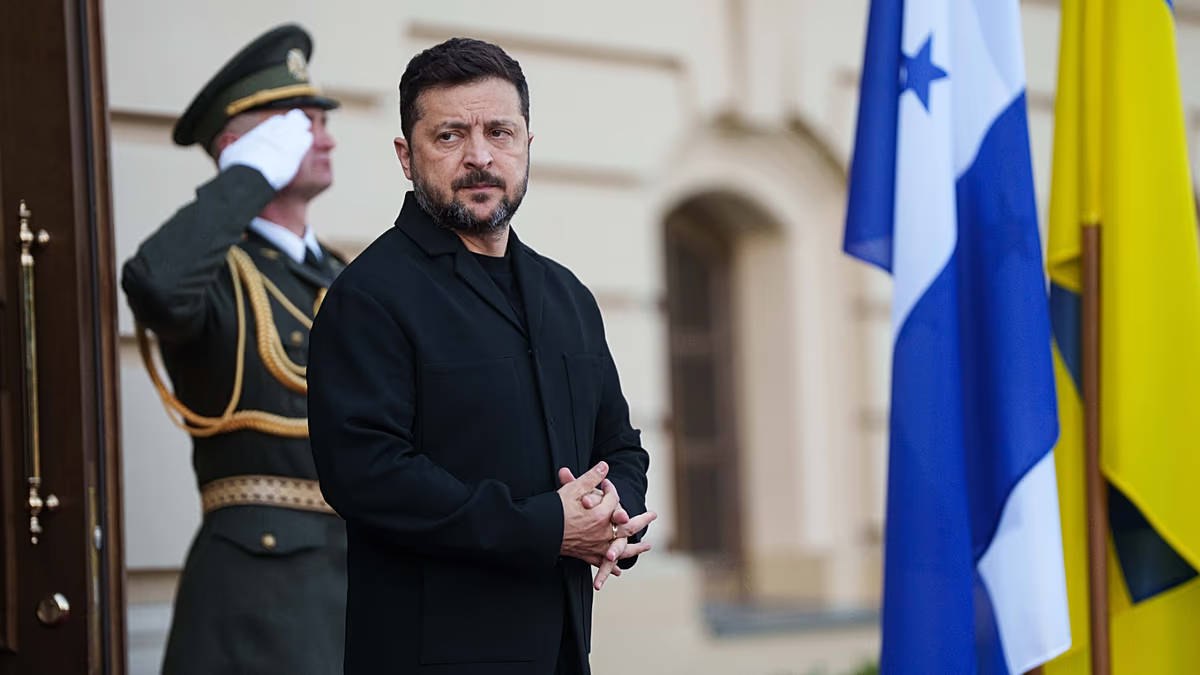


Ukrainian President Volodymyr Zelenskyy has issued a direct and urgent seven-day ultimatum to Belarusian leader Aliaksandr Lukashenka. During a media briefing in Kyiv, Zelenskyy demanded that Belarus deactivate relay equipment stationed on communication towers along their shared border. He asserts this equipment is being used by Russian forces to guide deadly drone attacks into Ukrainian territory, contributing to daily civilian casualties. Standing alongside the visiting President of Honduras, Nasry Asfura, Zelenskyy challenged Lukashenka’s repeated claims of not wanting war, stating, “Can he take them down? What’s the point of saying he doesn’t want war? Just take down that equipment; just shut it down.” The Ukrainian president warned that if Minsk fails to act within the week, Ukrainian forces will take matters into their own hands and disable the systems themselves.
This stark warning underscores the ongoing and deepening involvement of Belarus in Russia’s war effort, despite its official non-combatant status. Since 2022, Belarus has served as a crucial staging ground for the initial invasion, hosting Russian military infrastructure and even nuclear weapons. The nations conduct regular joint military exercises, and Belarusian industry supplies components for Moscow’s war machine. Zelenskyy’s ultimatum follows his earlier statements in May about being prepared to take “preventive” measures against threats from the north, highlighting Kyiv’s growing frustration and concern over the militarization of its border with Belarus. The demand places Lukashenka in a difficult position, forcing him to choose between further enabling his powerful ally, Vladimir Putin, and provoking a direct retaliatory strike from Ukraine.
Zelenskyy’s grave warning arrives amidst a severe escalation in Russian aerial attacks on Ukrainian cities, which have resulted in mounting civilian deaths and the destruction of cultural heritage. Just this week, strikes killed at least eleven people and set fire to the historic 11th-century Dormition Cathedral in Kyiv. The day after Zelenskyy’s statement, the city of Kharkiv, Ukraine’s second-largest, was struck again. Russian guided bombs slammed into a residential area in the early hours, killing at least one person, injuring nine others—including a child—and reducing a low-rise apartment block to rubble. Emergency service footage depicted the grim aftermath: rescuers evacuating the wounded and retrieving a body from the debris hours after the attack.
Amidst these battlefield pressures, President Zelenskyy is also actively working to bolster Ukraine’s defensive capabilities for the long term. Following a meeting with U.S. President Donald Trump at the G7 summit in France, Zelenskyy expressed hope that the United States would grant licenses allowing Ukrainian state and private defense companies to manufacture advanced anti-ballistic interceptor missiles. Such a move would represent a significant strategic shift, moving Ukraine from a recipient of military aid to a producer of critical defense technology. Zelenskyy argued that this would not only strengthen Ukraine’s own air defense but also position it to assist allies in Europe and the Middle East, transforming its defense industry into a key pillar of regional security.
The confluence of these events paints a picture of a nation fighting a multi-front battle: a brutal physical war of attrition on its soil and a complex diplomatic war for sustainable military support. The ultimatum to Belarus is a calculated risk, aimed at mitigating an immediate threat from the north while testing the limits of Minsk’s autonomy from Moscow. Simultaneously, the pursuit of manufacturing licenses speaks to a vision of post-war recovery and sovereignty, where Ukraine is not merely surviving but evolving into a self-reliant defensive power. Each day of delay, as Zelenskyy poignantly noted, costs Ukrainian lives, adding a profound moral urgency to these strategic maneuvers.
As the seven-day clock ticks down on the Belarusian ultimatum, the world watches to see how Lukashenka will respond. Will he risk angering Putin by complying, or risk direct Ukrainian action by refusing? Meanwhile, the people of Kharkiv and cities across Ukraine bury their dead and rescue their wounded, a tragic reminder of the human cost that underpins these high-stakes diplomatic and military decisions. Zelenskyy’s actions reflect a leadership navigating an impossible landscape, where securing a future for Ukraine requires confronting immediate deadly threats, forging vital international partnerships, and laying the groundwork for a future where Ukraine can defend itself and its neighbors.