

After days of escalating violence that threatened to unravel a fragile, broader peace initiative, Israel and the Lebanese militant group Hezbollah have agreed to a ceasefire, according to multiple officials. The agreement, confirmed on Friday, comes amidst a devastating surge in fighting across the southern Lebanese border. This latest flare-up had directly jeopardized a high-stakes preliminary deal signed just two days earlier between the United States and Iran, the primary international sponsors of the conflict’s opposing sides. That wider framework, inked by U.S. President Donald Trump and Iranian President Masoud Pezeshkian, aimed to end a war that began months prior with U.S.-Israeli strikes. However, the cancellation of planned U.S.-Iran negotiations in Switzerland, prompted by the border clashes, underscored how quickly local tensions could derail international diplomacy.
The path to this specific truce was mediated by a coalition of external powers, including Qatar, the United States, and Iran itself, highlighting the complex web of regional and global interests entangled in the conflict. A Hezbollah official, speaking anonymously, confirmed mediators’ intensive efforts and indicated an official announcement was imminent. On the ground, however, the situation remained volatile and deadly until the last moments. The Israeli military reported the deaths of four soldiers, a loss that provoked incendiary rhetoric from far-right Israeli minister Itamar Ben-Gvir, who declared, “All of Lebanon must burn.” In response, Prime Minister Benjamin Netanyahu vowed to extract a “very heavy price,” signaling a relentless military posture even as diplomatic channels worked furiously behind the scenes.
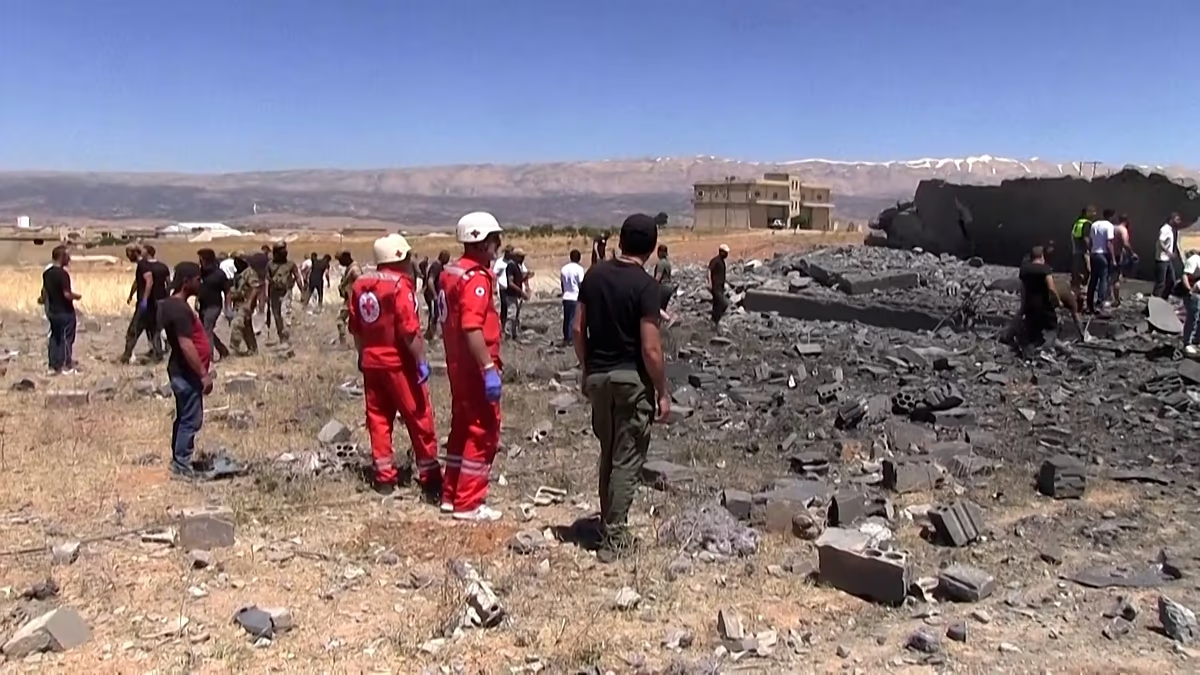
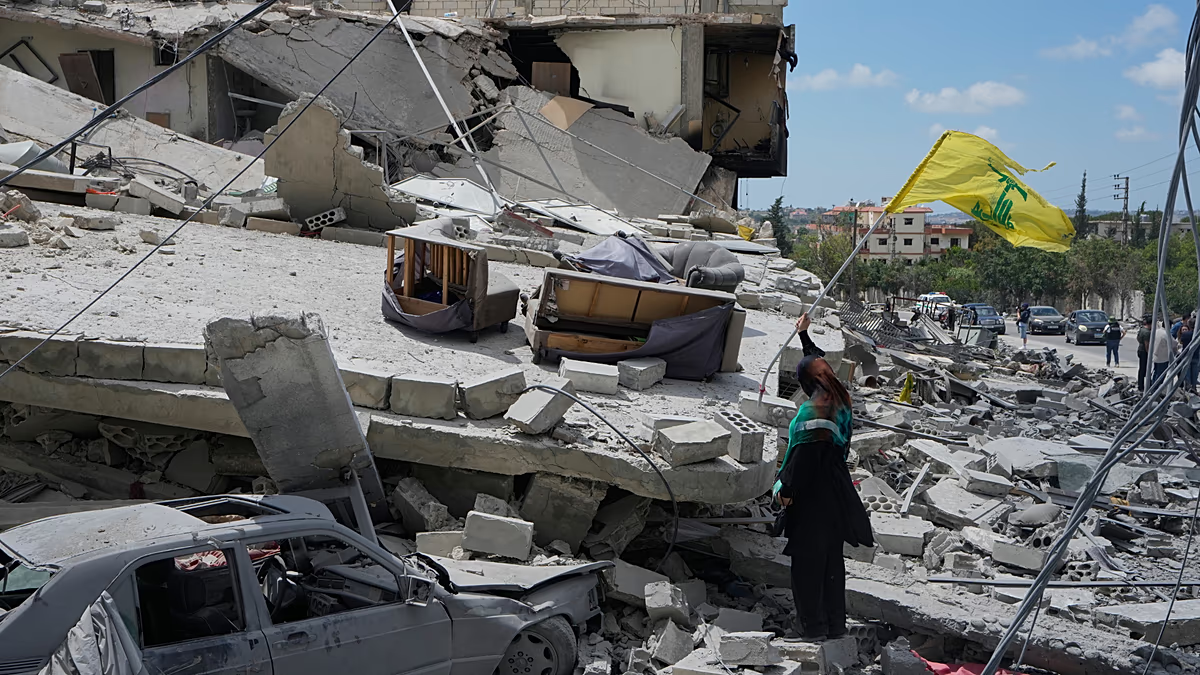
The human cost of the pre-ceasefire escalation was severe and starkly one-sided in its immediate reporting. The Israeli Defence Forces stated they had struck over 80 Hezbollah targets in southern Lebanon, claiming the lives of dozens of militants. The Lebanese perspective, however, painted a grimmer picture of civilian suffering. According to the Lebanese health ministry, Israeli airstrikes and bombardments on Friday alone killed at least 47 people, a toll that included seven women and two children, with nearly a hundred more wounded. These attacks continued even as news of the pending ceasefire circulated, with Lebanese state media reporting a fresh Israeli airstrike shortly after a U.S. official indicated a deal had been reached, emphasizing the fragility of the moment.
A central point of contention that fueled the fighting and will likely challenge the ceasefire’s durability involves the disputed terms of the initial U.S.-Iran deal. Iran has insisted that any comprehensive ceasefire must include Israel’s withdrawal from southern Lebanon, a long-standing Hezbollah demand. Israel, however, has publicly contended that the original agreement did not encompass Lebanese territory, a discrepancy that left a dangerous vacuum. Netanyahu emphasized that Israeli forces would “remain in the security zone in southern Lebanon for as long as required,” a stance directly at odds with Iranian and Hezbollah objectives. This fundamental disagreement over geography and sovereignty remains a unresolved tinderbox beneath the surface of the new truce.
The history of failed ceasefires in this conflict casts a long shadow over the current agreement. Just two months prior, in April, another truce was declared, only to collapse into a cycle of resumed attacks and counter-attacks by both sides. This pattern of breakdowns erodes trust and conditions populations on both sides of the border to expect renewed violence, making each new agreement inherently less stable. The anonymous confirmation from officials, the delayed public announcements, and the continued military posturing—exemplified by an Israeli military spokesman noting they had “not received different instructions”—all reflect a deep-seated mutual suspicion that mediation alone cannot easily dissolve.
In conclusion, while the ceasefire represents a crucial and welcome respite from bloodshed, it exists as a precarious pause rather than a definitive peace. It was born from urgent international intervention to salvage a broader agreement that had nearly shattered under the weight of local hostilities and unresolved core issues. The staggering human loss witnessed in a single day in Lebanon, coupled with the militant rhetoric and military resolve displayed by Israeli leadership, illustrates the powerful forces that any lasting accord must overcome. The world now watches to see if this fragile truce can evolve into a more durable dialogue, one that finally addresses the entrenched grievances over territory, security, and sovereignty that have fueled this destructive border conflict for generations.